Valerie Nangidi Okumu-Ojiambo

Lawyer and Social Sciences Research Consultant
Valerie Nangidi Okumu
Research Coordinator, Pan Africa Association of Judges of Environment Land and Labour | Kenya

 Short Bio:

Ms. Valerie Nangidi Okumu-Ojiambo is a lawyer and social sciences research consultant specializing in gender responsiveness in governance, law, politics, healthcare, and climate change. With a focus on women’s issues, she addresses the intersection of feminism and governance, advocating for purposeful leadership to resolve gender disparities. She has served as the lead researcher at Kenya’s Commission for the Implementation of the Constitution and consults on policy reform and devolution. Currently pursuing a PhD at Tangaza University, Ms. Okumu-Ojiambo also leads research at the Pan-African Association of Judges of Environment, Land, and Labour, focusing on labor, land, and environmental justice.


Event: SDGs Conference 2024

Date: Sept 25, 2024

SPEECH

I am very grateful for this opportunity to speak on this very important topic that will help us identify pathways to achieve the Sustainable Development Goals (SDGs). My argument is that we must pursue this through a purposeful approach. I say this because of my background in constitutional reform. Historically, we have dealt with the exclusion of women, despite numerous legal frameworks at both the international and local levels that seek to ensure women’s inclusion in governance. The leadership provided by women must have a voice to help us move forward. However, at this juncture, we still find ourselves discussing the unlocking of women’s leadership, indicating that we have not yet achieved our goals, despite the conventions, such as the MTO Protocol, and national legislation that actively promotes women’s inclusion. From my experience in the constitutional reform sector, I have observed that, despite the merit of legal frameworks seeking to include women, the space for implementing governance reforms remains rigidly grounded in law. Through the enactment, interpretation, and enforcement of these laws, we have made progress, but we have not yet reached our desired destination, especially concerning the achievement of the SDGs. 

How do we advance at this critical moment in implementing the SDGs? I contend that implementation could be misaligned if the values, norms, mindsets, and cultures that speak to a positive approach in which governance reforms ought to be actualized, are not given the necessary space. 

Unlocking women’s leadership is not just about inclusion; it is about transforming systems to foster justice, peace, and prosperity for all through purposeful, ethically grounded, and skill-driven leadership, which women are known to possess. However, with a patriarchal undertone in the implementation space, there exists a culture where many contributions from women are expected to serve the public good without proper recognition or compensation. Women are often expected to contribute selflessly, which requires significant sacrifice. Even though society thrives through their efforts, they are not recognized or afforded the opportunity to actively engage. In political spaces, there is frequently a stronger push for what is said at the table rather than what occurs outside it. The representation of women in these discussions is a challenge not only in Africa but globally. 

At this critical point, we must ask ourselves: What do we need to change to achieve the goals we have set for sustainable development? The urgent need to sustain development requires us to secure the future, necessitating a different approach to governance. This is why I emphasize the importance of purposeful leadership, which must embody ethical values through the inclusion of everyone in the community, particularly women. This discussion must sustain the concept of unlocking women’s leadership to implement pathways for the future. We can achieve this by questioning the patriarchal entrenchment in governance, which has historically privileged some while excluding others. These values do not speak to equality, justice, or fairness. This brings us to the challenges faced in achieving SDG number five on gender equality. 

When discussing issues of human dignity, we realize that dignity has no gender, it is not exclusively male or female. We must confront the challenges that have marginalized a section of humanity if we are to move forward. In Africa, we speak of Ubuntu values in governance, where we emphasize human equal treatment and collective values. Ubuntu espouses the belief that “I am because we are,” which means we must include every segment of society. 

As we include every segment, we must ask critical questions: Why do we talk about the inclusion of women? Why women? Another important question is: How do we bring women on board so that their inclusion is meaningful rather than tokenistic? What agenda do women bring to the table, especially as we discuss pathways for the future? 

As a feminist, I examine both legal and feminist approaches, which can sometimes be at odds. We have seen political participation in Africa where elaborate laws on women’s participation exist, such as the two-thirds gender rule anchored in my country’s constitution. Despite this, we have not provided the much-needed space for women to engage meaningfully, leaving them still excluded from leadership. 

This raises the question of how we can foster purposeful engagement that is validated and meaningful and responds to the context on the ground. When we speak about women’s inclusion in governance, what exactly do we mean? This pertains to many aspects we must purposefully consider. For instance, while women may aspire to the highest positions of leadership, such as the presidency, they encounter numerous obstacles. In Tanzania, we witnessed the election of a female president. 

The key to her success lay not only in legal frameworks but also in how purposeful the initiative was that propelled her into that position, as she was the deputy president before her election. If we want to employ a purposeful approach, we must make decisions and act in ways that facilitate women’s ascent to leadership positions, allowing them to fulfill their potential. We can see this in the case of Kamala Harris, who, despite challenges, has proved her mettle as she campaigns for the presidency. How can we ensure that similar paths are available for women in Africa, rather than allowing disparate approaches to securing women’s leadership between advanced countries and developing nations? 

Thus, I argue that feminist judgments and approaches can serve as redemptive alternatives to the contradictions that hinder women’s leadership and obstruct the path to the future. We need to empower women, but we must critically ask what empowerment truly means. Whose power are we donating to women? When we talk about empowering women, are we implying that they enter spaces empty-handed, needing power bestowed upon them? We must deconstruct these concepts tied to women’s leadership to determine whether they meaningfully support women’s empowerment or merely perpetuate the notion that we are doing women a favor by including them. 

I also consider the issue of gender responsiveness and how norms and procedures can address and accommodate the unique needs, vulnerabilities, and capabilities of women. This approach should facilitate collaboration and integrate women’s perspectives into policymaking, ensuring equitable outcomes for women. Gender equality and female empowerment are core development objectives fundamental to realizing women’s rights, which are essential for achieving the effective sustainable development outcomes we aspire to. 

I speak from a position of conviction: women are capable, and they are nurturers. If given the chance, women can elevate governance and address many challenges we face today. We are at a crucial moment, where it is imperative to ensure that, within the limited time available to implement the SDGs, we create an environment where every segment of society can contribute their strengths, power, and leadership meaningfully.

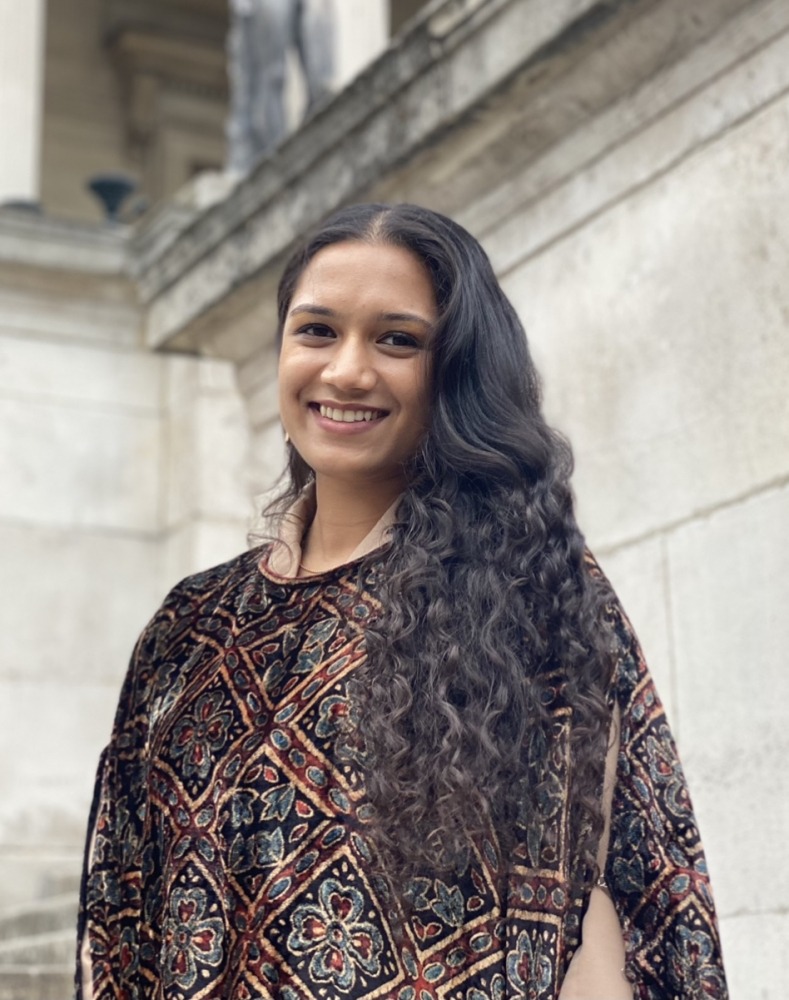
Nudhara Yusuf

Research Associate

Nudhara Yusuf
Co-Chair, 2024 United Nations Civil Society Conference; Executive Coordinator, Global Governance Innovation Network, Stimson |USA-DC

 Short Bio:

Nudhara Yusuf is a Research Associate at the Global Governance, Justice & Security Program and Executive Coordinator of the Global Governance Innovation Network at Stimson. She previously worked with UNDP’s SDG Integration Team and Regional Bureau for Asia Pacific, as well as with the World Federation of UN Associations and the British Shadow Secretary of State for Justice. Ms. Yusuf is the Founder and Trustee of several grassroots NGOs in India and the UK, focusing on governance, globalization, emerging technologies, and youth engagement in multilateral institutions. She is Co-Chair of the 2024 UN Civil Society Conference and a fellow at the Geneva Centre for Security Policy. Nudhara Yusuf has also been a fellow with UN University’s Center for Policy Research and an honorary advisor to the NGO Committee on Sustainable Development-NY. Nudhara graduated with distinction in Philosophy, Politics, and Economics from University College London. 


Event: SDGs Conference 2024

Date: Sept 25, 2024

SPEECH

I would like to share my highlights in three thematic areas by sharing reflections on the Summit of the Future process itself, pulling back to the Nairobi Conference on what we hope we started there and what actions civil society will continue to take forward and finally what do we think about the future implementation phases. On the 22nd of September, we saw the statement from the Russian Federation on the amendment to the Pact for the Future. We then witnessed something that I believe was very powerful; we saw the African group speak up for the Pact. We saw them come forward and indicate that what was created in 1945 is not the version of the United Nations we need; whereas we need a future-oriented United Nations that also speaks to the regions of the future. The support that came from the Africa Group was one of the most powerful outcomes of the Summit of the Future. The adopted text has a lot of aspects that I think civil society can unpack. There is enough content in the Pact that I think we can take some actions forward. But I also agree that many items were taken out at the last minute. It is worth keeping in mind though that 163 countries agreed to the latest version and these Member States are going to be powerful allies for us moving forward as civil society for this process. 

Moving on, I would like to put on my civil society hat to summarize the Nairobi Conference. From the 9th to the 10th of May, we convened the Civil Society Conference in support of the Summit of the Future. It was the first civil society conference to take place in the global south and opened registration to stakeholders beyond just civil society. That was not easy to justify as when it comes to the protection of civic space, there are a lot of aspects and angles. However, we truly felt that this had to go beyond what civil society’s expectations of a process were, but how civil society can support and offer a process about revitalizing the United Nations. We are also very careful about ensuring that we do not homogenize the voice of civil society. This is important to keep in mind as I think that when we are talking about the voice of civil society, it may be very different for everyone. Our perspectives of the future are also not the same, but they are collective. We all have the same collective future, but our versions are different. Therefore, at the Nairobi Conference, we took out a statement at the end of the event. We summarized the discussions that took place and came up with a slightly different outcome. The conference brought together around 3000 people and 317 Member State representatives were present including 22 UN entities. We had %70 of participants from the African region, %58 women, and %40 young people. We were looking at a constituency that we do not usually see on the first and second avenues in New York. The outcome of the conference included 23 impact coalitions. As the negotiations were still happening, we already had several revisions of the text of the Pact for the Future. 

We could either be late to make an input into the Pact or it could be early to start the conversation on implementation. We preferred prioritizing implementation. These 23 impact coalitions, in addition to some others involved later, concluded their work as a result of the Summit of the Future process. Some of these have integrated while some have merged. You can see the details on the UN Civil Society Conference website. They brought together champion member states, civil society groups, and the private sector. Frankly, you cannot have a conversation on artificial intelligence without the private sector in the room and not affecting the regulations and best practices including other international financial institutions. You need to have the fundamental institutions included, however flawed they may be, to have that conversation about reform and regulation. 

The idea behind these impact coalitions is to bring together these stakeholders focused on specific issue areas, from financing for development, artificial intelligence, governance, climate and earth governance to planetary boundaries, and lead the implementation discussion on the Pact. Timewise, many of the impact coalitions that were launched in Nairobi were very active during the Action Days. They are also looking at the question of what comes next in terms of the Financing for Development Conference taking place in Spain, the AI Summit in France, and the upcoming Hamburg Sustainability Conference taking place on sustainable development and future generations. There are many hooks leading up to the World Social Summit next year. The question now is what we can do as civil society to not only be unmuted but unmute ourselves in the process as well. I should also note that there is a UNMUTE campaign that CIVICUS and The Coalition for the UN We Need is also part of this incredible work. 

There are several points that we should address. Firstly, this Pact is heavy for civil society as there are many contexts including the annexes of the Declaration on Future Generations and the Global Digital Compact, which adds digital rights in terms of rights of the future. As civil society, we can be unpacking what that means for Member States, private sector champions, and other stakeholders who would like to get involved to support but do not speak the UN language. We should answer the following key questions: What are some of the key issues and actions? Who are the key anchors that we can work with? Then we need to map out who our champions are from Member States and other development stakeholders. We also need to form a timeline including our big milestones along the way from now to the World Social Summit with a perspective beyond the 2030 Agenda. As we are running out of time, where are we standing in terms of the future of the Sustainable Development Goals? I think we need to start mapping out those long timelines moving forward. 

There was a lot of energy generated and new connections as a result of the Summit of the Future process. I think what is going to be so critical is what we do with this energy and connections now moving forward to help revitalize the Pact because we have only agreed on the action plan and now is the implementation time.


Professor Morten Kjaerum

Adj. Professor Morten Kjaerum

Adj. Prof. Morten Kjaerum
Affiliated Professor, Raoul Wallenberg Institute of Human Rights and Humanitarian Law | Denmark

Short Bio:

Prof. Morten Kjaerum served as Director of the Raoul Wallenberg Institute of Human Rights and Humanitarian Law in Sweden from 2015 to February 2024. Prior to this, he was the first Director of the EU Agency for Fundamental Rights in Vienna from 2008 to 2015. Formerly, Prof. Kjaerum was Executive Director at the Danish Institute for Human Rights. He has written extensively on human rights, lectured globally, and held numerous roles, including serving on the UN Committee on Elimination of Racial Discrimination from 2002 to 2008. He chaired the European Council for Refugees and Exiles from 2015 to 2023 and was appointed by the UN Secretary-General to the UN Voluntary Fund for Technical Cooperation and the Voluntary Fund for Financial and Technical Assistance in 2017, serving as chair for three years.


Event: SDGs Conference 2024

Date: Sept 25, 2024

SPEECH

As we have heard during the UNGA79 we stand at a critical juncture. There is almost a global consensus that we need to change direction. The Pact for the Future will be a key document guiding us in avoiding a complete meltdown. The urgency is dictated by among other factors climate change, wars, hyper inequality. In this time of profound uncertainty, the need for a robust, reformed, and accountable United Nations has never been greater. It is in this context that the vision of “UN 2.0” emerges—a vision of a revitalized multilateral diplomacy and a strengthened UN system. Let me stress from the beginning that these reforms must be firmly anchored in human rights. Human rights is all about people. Since its inception, the UN has played a pivotal role in establishing global norms around human rights. The adoption of the Universal Declaration of Human Rights in 1948 was a monumental achievement, marking a true universal commitment to human dignity. 

However, despite the critical role that human rights play in fostering development, peace, and security, today, only 4% of the UN budget is allocated to human rights. This is simply not enough. Human rights must be given far greater priority in UN 2.0. A budget is a moral document reflecting our values, thus allocating 4% to human rights is not only a financial oversight but an ethical failure. A more equitable budget that reflects the central role of human rights in sustainable development, peacebuilding, and global governance will enable the UN to better fulfill its mandate. The balance between the three pillars of the UN needs to be recalibrated. The structure of the UN, particularly the Security Council, reflects a post-World War II geopolitical reality that no longer aligns with the needs of our time. This legacy is extensively addressed in the Pact for the Future. That is a unique achievement. 

In the discussions that will now follow the Pact, we should not only focus on the balances between countries and regions – important yes, but we need more. We must create a system that reflects the voices of many more people – not only social media but in dynamic participatory processes. We have seen how the voices of the youth have been amplified in the preparation of the Pact for the Future, which is a very promising practice. 

A way to bring in the voices of more people is to recognize that people live locally. More than half the world’s population resides in cities. Cities are on the frontlines of the global challenges we face—climate change, conflict, and economic inequality. 

Sustainable Development Goal 11 emphasizes the importance of cities in creating inclusive, safe, resilient, and sustainable communities. Yet, the role of cities in global governance is overlooked. In the future version of the UN, cities must be given a stronger voice. Mayors and city governments are increasingly innovating and addressing complex challenges. They team up in various global networks such as C40 on climate, human rights cities, and UCLG. Their involvement in international diplomacy can foster more practical, grassroots solutions to human rights, development, and peacebuilding. They can be the epi-center for dialogue. Eventually, this will foster greater accountability and trust in the system. 

One of the greatest threats to human rights and democracy is the growing economic inequality, both between countries and within them. Hyper-economic inequality erodes the social fabric, deepens political instability, and weakens the foundations of democratic governance. 

A reformed UN must place a global emphasis on reducing economic inequality. This is not just an economic issue; it is a human rights and democratic issue. Bold policy reforms aimed at redistributing wealth and opportunity, both within and between nations, are essential to creating a world where every person can live with dignity. Some of the tools are well-known such as the fight against corruption and tax evasion. 

It is high time that financial institutions, such as the IMF and the World Bank, understand that all rights—including economic and social rights—must penetrate the entire spectrum of policies and actions. A rights-based approach to economic governance is the only path forward if we are to achieve true equity and justice. 

The commitment in the Pact for the Future to develop ‘measures of progress on sustainable development to complement and go beyond the traditional GNP’ (Article 53) is very welcome. Civil society should follow it closely and overall push for a human rights-based well-being economy. Human rights monitoring could expand the scope to address systemic issues like economic inequality and environmental justice. 

In conclusion, the Pact for the Future presents a unique opportunity to recalibrate the global governance system to better meet the aspirations of the people it serves. Ultimately, a reformed UN that places human dignity, equality, and justice at its heart will be better equipped to address the current profound crisis.


Anil Wasif

Senior Economist

Anil Wasif

Anil Wasif
Co-Founder, BacharLorai | Canada

 Short Bio:

Anil Wasif is a policy researcher and practitioner with extensive experience in government and non-profit sectors. He is Co-founder, Trustee & Director of Strategy of BacharLorai, a non-profit focused on empowering Bangladeshis worldwide. He is also a Research Manager at Infrastructure Ontario. Mr. Wasif was formerly Senior Economist at the Office of the Budget, Ministry of Finance and Senior Policy Advisor to the Associate Deputy Minister, ServiceOntario. Mr. Wasif serves on the Advisory Board for the Max Bell School of Public Policy at McGill and the Governing Board at the University of Toronto Mississauga. He is also a Senior Fellow at Bangladeshi Canadian Community Services. He holds a Master’s in Public Policy from McGill University and a Bachelor’s in Economics and Political Science from the University of Toronto.


Event: SDGs Conference 2024

Date: Sept 25, 2024

SPEECH

My remarks will focus on one point only: how do you design an organization that empowers young people to take charge? I am a citizen of the world, who is in charge of Strategy at BacharLorai. BacharLorai is a Bangla word that means strive to survive. Bangla is a language spoken by over 180 million people in Bangladesh and over 20 million members of the Bangladeshi diaspora worldwide. We, the people of BacharLorai, have a mandate to empower these communities worldwide through community-building events, research publications, and humanitarian work. 

  • Community building aligns most strongly with sections 4, 14, and 15, which focus on building international cooperation, fostering youth participation, and creating partnerships. 
  • Policy Research aligns with sections 23, 24, and 57, providing evidence-based research and analysis that supports poverty reduction, gender equality, and humanitarian cooperation. 
  • Signature Initiatives finds alignment with sections 15, 23, and 57, focusing on youth leadership, economic opportunities, and humanitarian aid. 

You will notice that, by design, our organization advocates for the Pact of the Future. However, after attending the Summit of the Future and subsequent meetings at the UNGA and listening to my distinguished colleagues at the SDGs Conference, I have also realized that implementation starts today. Every single project launched under our three pillars is tied to one specific SDG and sub-targets. This not only helps us promote the SDGs, but helps the entire team, including senior members of the Board learn about them, and continuously remember them as a guide to our work. Today we are a team of 16 people, working from Dhaka, Toronto, New York City, Washington DC, and London. Over half the team identify themselves as women and over 60% are Gen Z. But my work on this continues every day. This past year, we have successfully delivered 36 youth-led projects, secured over $15,000 in financial support, and volunteered over 10,000 hours to benefit 1500 people in the world. 

The academic term for what we do is called Digital Social Innovation; what we like to call is using technology to transform passion into tangible action. I am very happy to say, we stand as the only non-profit organization that actively engages citizens from around the world, from all backgrounds, to empower Bangladeshis globally. We have disrupted the traditional non-profit space by hosting engaging social events that bridge the gap between having a good time and doing good in this world; channeling input from those events into publishing thought-provoking research and launching local aid initiatives backed by that evidence. That’s our strategy and we invite you to replicate it. At BacharLorai, youth leadership is at the core of our identity. Every event we have hosted has featured young speakers showcasing their ideas, initiatives, and solutions. Whether they are on stage or behind the scenes, every individual is contributing to real-world change. 

We ensure young people in our organization get maximum visibility and that their input is considered seriously. Thus, our talent strategy ensures that young professionals are not only equipped with the tools they need to lead but are active participants in strategic planning. We seek their input on decision-making processes and ensure full transparency, even our financial statements are accessible to all team members. This strategy is proven and replicable, preparing young people for leadership roles far beyond BacharLorai. 

For next year, we are building a People-First Strategic Plan, channeling input from our public-facing events, conferences, staff passions, and leadership opinions. This will decentralize power, allowing each of our nine program managers to deliver their projects with full autonomy, targeting revenue from diverse funding sources such as crowdfunding, corporate gifts, and individual donations. This approach empowers leaders to be creative, innovative, and accountable for their results. During the pandemic, the hashtag model was effective, but it was not sustainable for the long-term. As a leader, I realized that to scale our work while remaining resource-efficient, we needed to build mechanisms for sustainability. 

Today, BacharLorai is focused on creating long-term impact through diversified funding streams and strategic partnerships with governments, non-profits, and the private sector. These partnerships not only enhance our reach but allow us to drive systemic change. One of our proudest achievements is the rigor of our reporting standards. For any cross-border aid initiative, we operate with one of the most rigorous accountability systems in the world. This includes securing confidential contact information for aid recipients to ensure every donation reaches its intended beneficiary. These measures build trust with our donors and communities, ensuring that every contribution is fully transparent and traceable. 

We are also the only organization (in this space) that channels insights from social events into a structured research agenda. Our ability to translate community input into actionable research allows us to not only engage but inform policies and decisions at a higher level. This reinforces the trust we’ve built with our community and helps us influence systemic change through advocacy, policy work, and global partnerships. Nonprofits face unpredictable challenges, and our resilience has been tested many times. Whether it was navigating the complexities of the pandemic or adapting to shifting geopolitical landscapes, BacharLorai has shown its ability to be agile. 

We did this through forging international relationships and meeting our partners at every step of the way. We are committed to being responsive to the needs of the communities we serve while remaining adaptive to global trends. BacharLorai is more than a non-profit, faster than a charity, and cooler than a think tank; we are an agency for young leaders to take charge of their future. From our decentralized leadership model to our rigorous reporting standards, we are setting an example for what is possible when youth are empowered to lead. 

We believe in transparency, innovation, and most importantly, delivering excellence. Our work is an invitation to young people everywhere to replicate our strategy and do better in the world.

Jesselina Rana

United Nations Advisor at CIVICUS’ New York Hub

Jesselina Rana
UN Advisor, CIVICUS | USA – Nepal

 Short Bio:

Jesselina Rana serves as the United Nations Advisor at CIVICUS New York Hub, where she spearheads research and analysis in international law and policy, advocates for civil society participation, and advises on global trends concerning civic space issues from a multilateral and global governance perspective. By engaging closely with member states, UN personnel, and Civil Society Organizations, Ms. Rana actively collaborates with civil society partners in New York and beyond to drive transformative changes in civic space and civil society engagement at the international level. Jesselina Rana holds a master’s degree in law from Harvard Law School.


Event: SDGs Conference 2024

Date: Sept 25, 2024

SPEECH

CIVICUS is a global alliance of civil society organizations dedicated to protecting civic freedoms worldwide and it is headquartered in Johannesburg, South Africa. I would like to provide a brief overview of CIVICUS and share some reflections on the Summit of the Future and the Pact for the Future. One of our key initiatives is our annual participation research publication called the CIVICUS Monitor, where we track civic ratings globally and analyze trends in civic freedoms. In 2023, our data revealed that only 2% of the global population lives in countries classified as having open civic spaces. 

Unfortunately, this situation is well-known to the UN. Civil society faces various multi-layered challenges at the UN, ranging from physical and digital access to meaningful participation. Yet, civil society has always been a vital force for change, playing a crucial role in developing and advocating for more inclusive rights-based international policies at the UN. From the Beijing Declaration and Platform for Action to the Sustainable Development Goals, civil society has consistently championed commitments to inclusivity and accountability in international agreements. However, just as civic space is shrinking globally, access to civil society within the UN has regrettably been narrowing as well. 

CIVICUS has viewed the process of engaging with the Pact for the Future with cautious optimism. We have invested substantial time and effort in attempting to shape the Summit’s processes and outcomes. However, we believe that the diplomatic negotiations on the Pact for the Future have been hampered by disagreements over language. Several forward-looking proposals from civil society found little traction in the final pact adopted on 22 September 2024. Regrettably, we also witnessed the removal of language regarding human rights defenders. After extensive advocacy, we now see the language on civic space protection in the final version, but interestingly, the Global Digital Compact features a more diluted version on the promotion of civic space online. As part of our recommendations, we made three innovative suggestions for the Pact for the Future, including a Human Parliamentary Assembly, a World Citizens Initiative, and a civil society envoy to better connect people’s needs and aspirations to the UN. Unfortunately, these proposals did not make it into the final Pact. 

That stated we do recognize the value of the Pact for the Future`s acknowledgment of the human rights pillar as an equal, interlinked, and mutually reinforcing component of the UN. We also appreciate the request for the UN Secretary-General to assess the need for an adequate, predictable increase in sustainable funding and financing for UN human rights mechanisms, including the Office of the United Nations High Commissioner for Human Rights. Currently, the human rights pillar receives only about 5% of the UN’s regular budget.