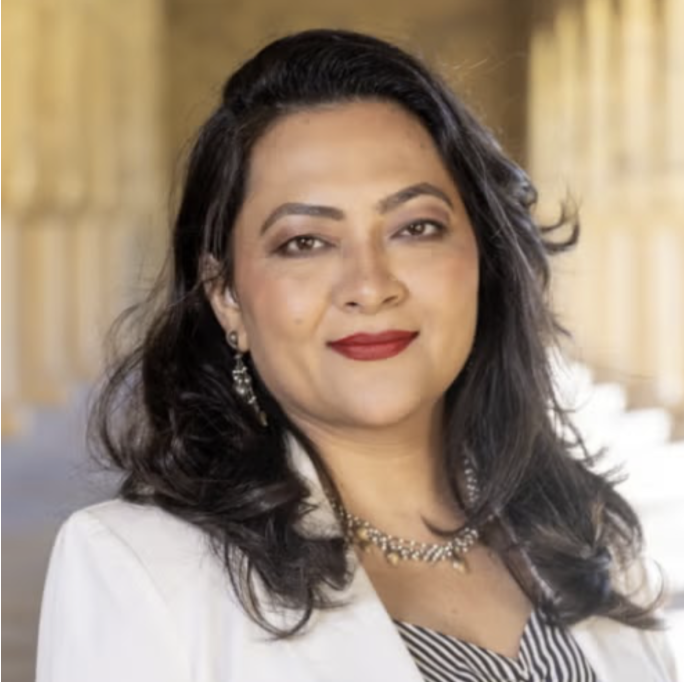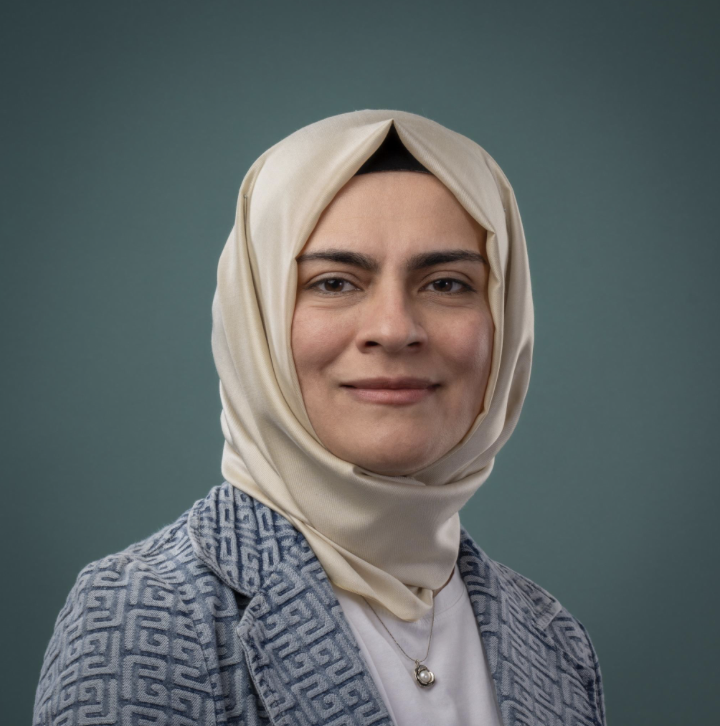
Aslihan Kas

Aslihan Kas

Director, Silent Screams Exhibition Coordinator, Advocates of Silenced Turkey | USA

Short Bio: Ms. Aslihan Kas is a human rights advocate, educator, and filmmaker based in New Jersey. She holds a B.S. in Biology from Istanbul University and worked for 17 years as an educator and General Manager in leading schools, overseeing curriculum, teacher development, and student programs. Since 2018, she has served as a Board Member at Advocates of Silenced Turkey and as Director of the Exhibition of Silent Screams, a traveling exhibition presented across the United States, Canada, and Europe. She has also contributed to human rights reports documenting violations against women, children, and civil society. Ms. Kas is the author of Being the Other in Turkey and director of two award-winning documentaries, Metamorphosis and The Other Children.

Event: SDGs Conference 2025 

Date: September 24, 2025

SPEECH: I would like to share my reflections on how civil society is under pressure, laws are manipulated against activists, and how human rights advocates are attacked just for speaking the truth. These are global problems that we monitor a systemic trend not only in one place, but across the globe. Authoritarian regimes are rising, democracy is under attack, and civic space is shrinking around the world. As an activist from Turkey who closely follows the Middle East, I see this very clearly.

In Turkey, like in many countries, we have seen a growing crackdown on civil society since 2013. After the Gezi Park protests, the government began criminalizing activists, and many organizations faced increased restrictions. Since 2016, following the failed coup attempt, this repression has worsened, with devastating consequences. According to the Economist Democracy Index 2024, Turkey ranks 103rd out of 167 countries and, in CIVICUS assessments, its civic space is classified as “repressed.”

Over 2.2 million investigations have been opened against civil society members and any dissidents who dared to speak out, including journalists, academics, and educators. The media has been heavily censored, with more than 100 outlets shut down. Over 100 journalists have been jailed, and many others face constant threats of arrest. In the 2025 World Press Freedom Index, Turkey ranked 159th out of 180 countries.

In this period, over 3,000 children have grown up in jails with their mothers, and nearly 1,000 people, including children, have lost their lives many due to torture and denial of medical care in prisons, stress-related illnesses, suicides, fatal work accidents in unsafe jobs, and drowning on migration routes after their passports were cancelled. However, behind each of these numbers, there are real human lives, real people whose stories need to be heard.

A very recent example is the imprisonment of Istanbul’s mayor Ekrem İmamoğlu, followed by the detention of hundreds of civil society members and young people after March 19. These arrests show how the right to protest is being violated, and how laws on ‘insult to the president’ or ‘inciting hatred’ are abused to silence dissent.

Like many others, I have faced human rights violations in my own life, losing my job as a general manager in private education, being unjustly detained for political reasons, being separated from my husband for two years while taking care of our children, and leaving many of my friends behind in prison. I felt a deep responsibility to speak up for those whose voices are silenced. We did not commit any crime but were persecuted because we stood up against the authoritarian regime.

This is why I took on the role of coordinating the Silent Screams Exhibition, directing Metamorphosis and The Other Children documentary, which together have won more than ten international awards, including Best Women’s Film at the Cannes World Film Festival and Best Documentary at the Amsterdam New Cinema Film Festival and contributing to many human rights reports and book projects. These projects were born out of the desire to amplify the stories of those who suffer in silence, just as I once did.

As we discuss the cross-cutting threats to democracy, I would like to share some of the most powerful stories from the Exhibition of Silent Screams and Metamorphosis documentary. These works highlight the real human suffering as a form of punishment that comes from oppression and show the strong resilience of those who fight for justice. The Exhibition of Silent Screams has traveled to over 37 locations, showcasing more than 500 personal items that symbolize the persecution faced by many in Turkey. In this exhibition, we brought together hundreds of memories from persecuted and marginalized people of all ethnic identities, beliefs, and ideological views, especially Kurds, members of the Hizmet Movement, women, children, journalists, politicians and activists.

Journalist Mehmet Baransu’s Radio
Mehmet Baransu was arrested just for his journalistic activities and given 17 years in prison. In this exhibition, we display the radio that he was allowed to use for only one week before it was taken away in prison, symbolizing the ongoing suppression of freedom of expression he suffered.

Ali İsmail Korkmaz’s Letter and Photographs
Ali İsmail Korkmaz, a young Alevi man from a religious minority community in Turkey, was killed by a police officer during the Gezi Park protests in 2013 for exercising his right to protest. His courage to stand up against injustice is remembered through his photographs and his handwritten letter, “Authoritarian regimes give rise to individuals who stand up against their order.”

Teacher Mesude and her son, 18-month-old Enes
Ms. Mesude was a primary school teacher dismissed under the state of emergency decrees and had a travel ban. She couldn’t get a passport for her son, as she could not go to the official authorities due to the risk of being arrested. Her husband and other children had already left the country, and despite all the risks, she succeeded in reuniting with her family. She gave Enes sleeping medicine and hid him in a suitcase to cross the border. Such journeys are extremely dangerous, and tragically, many people have already lost their lives on these routes.” In this exhibition, you can see the suitcase that Enes was carried in.

After Turkey’s withdrawal from the Istanbul Convention, women’s legal protections against violence were disregarded. Following this decision, over a thousand women were murdered. Since 2016, hundreds of women have lost their lives in prisons, on migration routes, and under oppression. Tens of thousands have been forced to flee their countries, risking death. In this context, I am honored to be the director of the award-winning documentary “Metamorphosis,” where we interviewed four courageous women: A writer who was imprisoned for her writings, a dormitory manager who was sexually harassed during detention, a judge who was arrested alongside her husband, and a mother of four who was subjected to a strip search while in custody.

Today, in addition to these women’s stories, I would like to focus specifically on the Kurdish writer Meral Şimşek. Meral Şimşek was interrogated solely because of her literary works and charged with terrorism. Due to the restrictions and prison sentence against her, she attempted to leave the country but was unfortunately subjected to a pushback and was forcibly returned. During this return process, she narrowly escaped death. Meral did not only fight as a writer, but also for the right to exist with her Kurdish identity. She is currently in Germany, continuing her literary career and human rights activism.

In Metamorphosis, we say: Despite all oppression, women continue to fight for justice, freedom, and equality. This was not just their story; it was a test for all of us. They resisted, and we were witnesses. The rise of authoritarian regimes and attacks on civil society are global threats. They affect us all, directly or indirectly. International cooperation is vital. Powerful countries must act, impose sanctions, and protect democracy and human rights. This is not just about witnessing; it is about taking action. We all have a responsibility. The time to act is now.


Dr. Karina Stange Calandrin

Dr. Karina Stange Calandrin
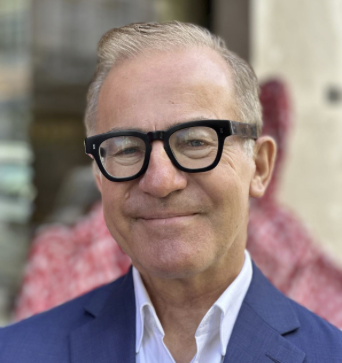
Professor of International Relations, Brazilian Institute of Capital

Markets, Postdoctoral Researcher, Institute of International Relations at the University of São Paulo | BRAZIL

Short Bio: Dr. Karina Stange Calandrin is a Professor of International Relations at Ibmec-SP. She is currently a Postdoctoral Researcher at the Institute of International Relations at the University of São Paulo, where she conducts research on public opinion and foreign policy. Karina holds a PhD in International Relations from the San Tiago Dantas Graduate Program, with a dissertation focused on foreign policy analysis. Dr. Calandrin has extensive experience in teaching, research, and academic publishing in the fields of international relations theory, foreign policy, and global political dynamics. Dr. Karina Stange Calandrin has also been interviewed as an expert by major Brazilian media outlets, including Globo, CNN Brasil, Band, Record, O Estado de S. Paulo, Folha de S.Paulo, and CBN. She is a columnist for Interesse Nacional.

Event: SDGs Conference 2025 

Date: September 24, 2025

SPEECH: In the margins of the 80th United Nations General Assembly, it is a privilege to reflect on one of the most urgent questions of our time: How do we protect democratic values in a digital world that both empowers and endangers them?

I come from Brazil, a country of immense cultural richness and democratic resilience, but also of deep inequalities and political volatility. In Brazil, as in many parts of the Global South, the relationship between technology, democracy, and human rights has evolved rapidly, and not without consequences. Social media has transformed the way politics is practiced and perceived. It has given voice to historically silenced groups: 

Indigenous activists denouncing illegal mining in protected lands, women organizing against gender violence, and young Black leaders challenging institutional racism. And yet, the same platforms have been weaponized to spread lies, fuel polarization, and incite attacks on democratic institutions.

In the 2018 and 2022 elections, Brazil became a global laboratory for political disinformation. A report published by Avaaz and the Institute for Technology and Society of Rio de Janeiro (ITS) found that 62% of the most viral political images sent on WhatsApp in Brazil during the four weeks leading up to the 2018 election contained false or misleading information. In 2022, similar patterns reemerged, only faster, more coordinated, and often harder to trace.

The attack on Brazil’s democratic institutions on January 8th, 2023, when thousands of radicalized individuals invaded the presidential palace, the Supreme Court and Congress, did not come out of nowhere. It was the culmination of years of digital radicalization, coordinated in Telegram groups, amplified by influencers on YouTube and TikTok, and legitimized by elected officials. Much like the January 6th insurrection in the United States, Brazil’s January 8th was an algorithmic insurrection, organized not through secret meetings, but in public posts, livestreams, and viral memes. This convergence of technological infrastructure and authoritarian narrative reveals a central contradiction of our time: The same digital tools that connect us can also tear us apart.

What happened in Brazil is not unique; it is part of a global and deeply alarming trend in which democratic backsliding increasingly operates through digital infrastructure. Facebook, X, YouTube, and TikTok profit from attention, regardless of whether that attention is democratic or destructive. Their algorithms optimize for engagement, which often means outrage and fear, the very emotional conditions that autocracies exploit. We have a lot of examples from Hungary to Israel, from the Philippines to the US. These examples are not isolated crises. 

They form a coherent authoritarian playbook in which digital tools are not only communication channels, but mechanisms of power consolidation. Without coordinated action, we risk entering an era where formally democratic regimes, with elections and constitutions, operate as digitally enabled authoritarian systems, in which consent is manufactured, dissent is discredited, and citizens are gradually transformed into followers, not participants.

Let me give you another example from Brazil: In many rural areas, WhatsApp is the only source of news. Entire communities receive political content often false, emotional, and unchecked through chains forwarded by friends and relatives. This creates information bubbles resistant to fact-checking or dialogue.

Why does this matter for democracy? Democracy is not just about voting. It is about shared truth, mutual recognition, and legitimate disagreement. When public debate is hijacked by disinformation, when social trust collapses, when the idea of “the people” is split into enemies and allies, democracy begins to rot from within. In Brazil, recent polls have shown that over 40% of the population distrusts the electoral system, despite its international recognition for security and transparency. This erosion of trust is not the result of facts, but of narratives strategically constructed and emotionally amplified online.

We cannot ignore the complicity of major platforms in this process. Despite years of warnings, companies like Meta, Google and X have:

  • Delayed responses to election-related disinformation.
  • Underfunded content moderation in non-English languages.
  • And refused transparency about how algorithms influence public opinion.

In Brazil, civil society organizations like SaferNet, InternetLab and Democracia em Xeque have demanded accountability. But change remains slow because the incentive structures of these platforms prioritize engagement over safety, profit over democracy. We must insist: Free speech is not a license to destroy the very foundations of democratic life. So, what can we do? Neither censorship nor naïve optimism will suffice. 

We need action on at least three levels:

  1. Regulation: Governments must create legal frameworks that ensure platform accountability, especially during elections. But these regulations must be grounded in human rights, not political revenge.
  2. Digital education: Citizens, especially youth, must be equipped with critical tools to navigate digital ecosystems, detect manipulation, and participate responsibly in public debate.
  3. Global coordination: The UN, regional bodies, and transnational coalitions must push for binding norms of digital governance, focused on transparency, equity, and linguistic diversity.

We must also support independent journalism, protect whistleblowers, and strengthen civic institutions. Technology alone cannot save democracy, but without democratic oversight, technology can destroy it. Let me end with a note of hope. The future of democracy will not be decided only in parliaments or courtrooms. It will be decided in feeds, threads, and group chats, where millions of people learn, decide, and act every day. We must reclaim these spaces, not through fear, but through collective imagination. Democracy is not only about protecting institutions, but also about preserving dignity, fostering empathy, and building trust, even in disagreement. And in that effort, we all have a role to play, as scholars, educators, policy makers, platform designers, and citizens of a shared, fragile world.

Michael Bociurkiw

Michael Bociurkiw

Global Affairs Analyst, Former Spokesperson, UNICEF and OSCE

Short Bio: Mr. Michael Bociurkiw is a New York Times-published opinion writer, former journalist, and respected global affairs analyst. He is the creator of the influential World Briefing newsletter on Substack and the author of Digital Pandemic: How Tech Went from Bad to Good. Mr. Bociurkiw served as UNICEF Spokesperson in the Occupied Palestinian Territory and later as the organization’s global spokesperson in Geneva, leading communications in several high-profile emergencies worldwide. He also brought his diplomatic expertise to the role of spokesperson for the Organization for Security and Co-Operation in Europe in Ukraine. A trusted voice on international crises, he is a regular contributor to BBC World Television, BBC World Service Radio, CNN, Al Jazeera, Times Radio, and other leading global outlets.

Event: SDGs Conference 2025 

Date: September 24, 2025

SPEECH: I am based in Odesa, Ukraine, which is currently a war zone. Just a few minutes ago, the air raid sirens went off in the region; it is probably the fifth one today. Whenever sirens go off, as it is night-time now in Ukraine, children are woken from their sleep. If they are not sleeping and they are in school, classes stop, and they rush to bomb shelters. Imagine the disruption and Post-Traumatic Stress Disorder (PTSD) people get after so many air raid sirens every day. I would like to start my reflections by acknowledging this dire situation.

I am a Canadian citizen, and this is my first time entering the United States since Trump took office again (Trump 2.0). I have several notes on this because we are talking about democracies and autocrats. I used to live in a Canadian-US border town on Vancouver Island. It is the first time ever that I felt so anxious entering the U.S. – and I have crossed a lot of borders in my lifetime, very challenging borders. I never thought that the day would come when we could be denied entry based on what we [journalists] said on air, put in print, and posted on social media. This is a very disturbing time when a lot of Canadians have had problems going in and to the point where, I included, we delete the social media apps on our telephones in case we are taken to secondary examination. They have been known to look through our belongings, and they could ask us: “What do you think of Trump?”. It is not a good place for what is supposed to be the leader of the free world.

There is some good news at the end of my speech but let me get the bad news first. When we take everything into consideration about what is happening around the world, we cannot blame it all on the current occupant of the White House, though he can take a lot of credit. It feels like the rules-based international order is in free fall. As we convene on the sidelines of the UN General Assembly, I must say that severe financial cuts to the United Nations have been very deep. All organizations, including the one I used to work for, UNICEF, are having to decide what to cut. At the end of the day, whether you are talking about UNICEF, the World Food Program, or UNAIDS, this does cascade down very quickly to the field and to the point where managers of certain UN organizations have to decide, “Do we bring out this vaccine or do we not? Who lives, who does not, who gets fed, who does not?”

What is happening in Gaza is beyond belief. It is horrible on every level. As the UNICEF spokesperson at the time for the Occupied Palestinian Territory (OPT), I got to know almost every inch of the Gaza Strip. I have spent a lot of time there and also in the West Bank. When I hear of this man-made starvation, famine, genocide, it just brings me back to the faces of young kids that we used to work with there. It is very difficult to watch. I am often asked on air about my views on the stance of the European Union and European allies to end the war in Ukraine. I reply by noting that there is a man-made famine happening on their doorstep in Gaza, and yet – they are either unwilling or unable to end it. So that is all everyone needs to know. It is very disheartening to watch the kind of impotence right now of these major powers.

We are now in a very unenviable situation in which what were formerly red lines are now dotted lines or ambiguous lines. For example, consider what happened recently in Poland with Russian drones and in Estonia. They [European leaders] have either the inability or the unwillingness to tell their own populations that they have to switch our economies to war economies, as done by Russia, given the fact that almost 40% of their GDP is aimed towards the war.

The other theme I would like to cover is that attacks on the media have a cascading effect, not only within the United States but worldwide. What I mean is attacking journalists not by shooting them, as done in some states, but by inviting the (pro-Trump) ’tech brothers’ to launch court cases against journalists or media outlets that they do not like. It opens the door for ordinary people to intimidate journalists. It opens the way for copycat attacks, including autocrats creating laws that make it impossible for journalists to operate. What is happening right now is very worrisome in terms of the restrictions on coverage, whether it is for the Oval Office or the Pentagon. Additionally, what is worrisome are some of the legal costs that Mr. Trump has launched against a publication I have written for – the New York Times, which is around $1 – 1.5 billion. Do not believe for a minute that this does not cause journalists to really shudder, not out of fear, but out of what could happen. I would like to remind everybody that journalists are not a target and, in fact, deliberately targeting a journalist is a war crime.

It is important for me to note this because I am based in Ukraine. Democratically-elected leaders there are very much lionized by the foreign media, like President Volodymyr Zelensky. But his team are also using tools to corral the media or control them. 

As soon as the war started, Mr. Zelensky said that all the main government-friendly TV channels would become part of what is called a 24/7 tele-marathon- a 24/7 TV show with all the different outlets. It has become a very patriotic, pro-Zelensky forum as no one there has criticized the government, and it features Mr. Zelensky quite prominently.

There are huge threats to democracies and countries that neighbor Russia. This Sunday in Moldova, there is a very important parliamentary election where the ruling party may actually lose. If you look back at the recent referendum on EU ascension and the presidential election where Maia Sandu got re-elected, it was razor thin. And if it were not for the votes counted by the diaspora, it would not have gone through. In the past weeks and months, Russia has devoted tens of millions of dollars to disrupt the elections, but also to sway the outcome. They are using incredible tactics that we have not seen before. They put a verification process of Russian-linked agents in Moldova paying masquerades journalists. They go around, film people, and if they get an anti-government comment or response, they throw that out on social media. Even though Moldova is a very small country, some of these types of posts have got 20 million views, which is quite disturbing.

Other techniques also include bots and fake accounts. There is also soft power techniques such as funding sports teams and cultural events. There are unfortunately a lot of gaps in international law where it makes it very difficult to prosecute the wrongdoers, whether it is an idea of soldier shooting at a young child for asking for food, or it is a Russian soldier kidnapping Ukrainian children so that they can be put up for forced adoption in Russia. Universal jurisdiction allows countries to try a war crime suspect in a third-party state. For example, a Russian soldier identified, perhaps through AI, killing a child could be tried in Argentina. Technology has often been maligned, but it can also be used for good purposes, including facial recognition to identify perpetrators of genocide.

Arfa Khanum Sherwani

Arfa Khanum Sherwani
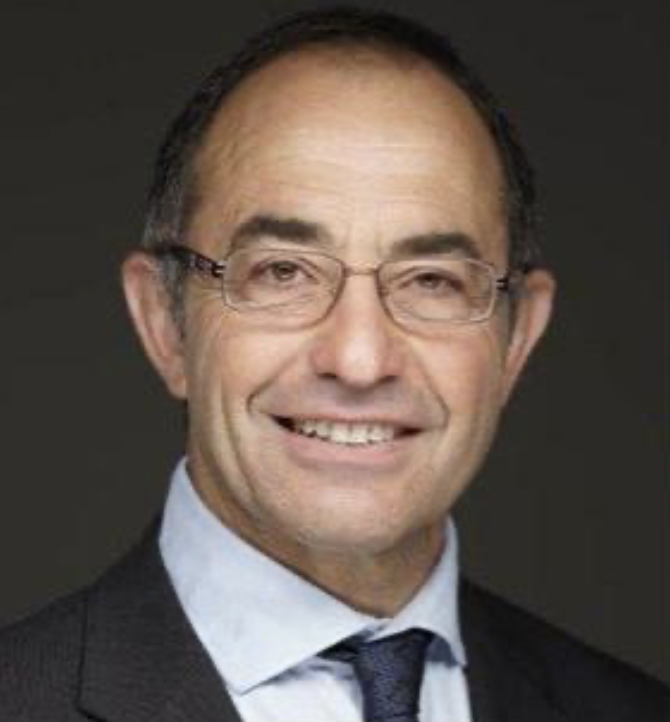
Senior Editor, The Wire | INDIA

Short Bio: Ms. Arfa Khanum is a Senior Editor at The Wire, an independent news website published in Hindi, English, Urdu and Marathi. She leads the multimedia team and hosts one of the most popular online video programs in India, which is primarily devoted to the issues of people living on the margins of Indian democracy. In 2019, Ms. Khanum was one of the first journalists to visit the Kashmir Valley after the Indian government stripped Kashmir of its autonomy and imposed a complete security and communication lockdown. Her journalism is focused on covering politics and policy, with a special focus on social justice. Ms. Arfa Khanum previously worked for NDTV, one of the largest television news networks in India. She is a recipient of the Red Ink Award for Excellence in Journalism from the Mumbai Press Club and the Chameli Devi Jain Award for Outstanding Woman Journalist of the year from The Media Foundation.

Event: SDGs Conference 2025 

Date: September 24, 2025

SPEECH: Cohesion and Peacefulness: As the United Nations turns 80, with so much conflict around us and the tragic loss of lives, we are all asking: How relevant is this institution in 2025? But the truth is, the UN remains a crucial platform for international dialogue, for peace, and for security efforts.

Tribute to Journalists in Palestine: Before I begin, I want to take a moment to remember my colleagues in Gaza Palestine, who are no longer with us. In the past 22 months, more than 200 journalists have been killed there. Those who have survived continue to report every single day, often counting their own days as well. They put everything on the line, including their lives, to bring us the stories of one of the most persecuted people on this planet. I want to take this moment to honor their courage, their work, and their service to humanity.

India: The Global Battle for Democracy: With 1.45 billion people, India is now officially the most populous country on Earth. And today, India is where the global battle for democracy is being fought. In many ways, India exemplifies the global democratic recession, and, I must say, America is giving us tough competition. It is, as I often say, the worst time to be a journalist in India, and yet, the best time to be a journalist in India.

The Media Landscape in India: India’s media landscape is vast and diverse. We have over 140,000 registered newspapers and periodicals, including more than 22,000 daily publications. Stories are told in 189 languages and dialects. The television landscape is equally sprawling — with over 900 channels, 350 of which are dedicated to news, many broadcasting around the clock. By 2026, India is projected to be the world’s fifth-largest media market, both in print and broadcast television. And yet, despite this incredible scale, the state of media and the state of democracy in India have never been more worrying than they are today.

The Crisis of Information: Despite hundreds of media organizations and thousands of journalists, India is going through a crisis of information. People are not getting the information they deserve. Why so? Because there are two sides to Indian media: The pro-establishment media, and the free, progressive media.

Political Context: It is now the 12th year of Prime Minister Narendra Modi’s rule, his third term in power. The pro-establishment media sees no fault in his work, not even during the five million deaths during COVID, rising unemployment, or deepening social unrest.

Meanwhile, the progressive media faces constant suppression. For instance, the I&B Ministry ordered the takedown of 138 videos and 83 Instagram posts about the Adani Group, using ex-parte court orders. Those who are still reporting the truth, are doing so at great personal risk, often against one of the richest men in the world. Although the election last year resulted in a coalition government, the Modi administration continues to target political opponents, dissenters, journalists, activists, and even comedians, who, today, are not allowed to crack a joke.

Mainstream Media’s Role: Most of the mainstream media in India today are spreading misinformation, disinformation, and suppressing information. Many are actively colluding with the ruling party and its agenda of religious supremacy. This agenda involves polarizing the country daily, demonizing the Muslim minority, and inciting hate and violence. This cycle of media suppression to lack of information to uninformed citizens and weakened democracy is what defines the current crisis.

Rise of the Alternate Media: In response, we are witnessing the rise of alternate media, independent, citizen-led, digital platforms that are challenging narratives and restoring truth. But they too face intimidation, censorship, and financial pressure.

Conclusion: We all agree that democracy rests on an informed citizenry. Citizens must know how governments perform, where policies succeed, and where they fail, in order to make fair choices at the ballot box. But the way Indian media is functioning today, it is polarizing communities and undermining any possibility of reconciliation or peaceful dialogue. Especially in a country as diverse as India, where unity in diversity has been the very foundation of our democracy, rebuilding trust in media is essential, not through control or censorship, but through transparency, accountability, and ethical journalism.

On the sidelines of this 80th UN General Assembly, it is vital to recognize that safeguarding democracy is not only about protecting elections or institutions, but also about protecting the credibility of information that binds citizens together, in trust and peaceful coexistence. At 80, the United Nations reminds us that peace and democracy are inseparable. For India, safeguarding democracy requires restoring faith in the fourth pillar, our media, so that citizens can hold governments accountable and participate in democracy from a place of knowledge, not misinformation.


Chief Justice Chris Kourakis

Hon. Chief Justice Chris Kourakis

Supreme Court of South Australia | AUSTRALIA

Short Bio: The Honourable Chief Justice Kourakis was the Legal Services Commissioner for the State of South Australia from 1993-1997 and then the Solicitor-General for the State of South Australia from 2003-2008. His Honour was appointed to the bench of the Supreme Court of South Australia in 2008 and then appointed as Chief Justice in 2012. The Honourable Chief Justice Kourakis has served as National Patron of the Hellenic Australian Lawyers Association and the Chairperson of the Judicial Council on Cultural Diversity since 2014 and 2018 respectively. Chief Justice was appointed as the Chair of the National Judicial Council of Australia on 17 April 2020 but has now resigned from that position.

Event: SDGs Conference 2025 

Date: September 24, 2025

SPEECH: I intend to address the rule of law as a constitutional concept in the internal government of nation-states. I will not address the rules-based international order, an order which, in recent times, is more honored in its breach than its observation. However, similar geopolitical tensions are threatening both. Those tensions radiate out from the fault line between the world’s two great economic powers, the United States and China, in their competition for global hegemony. 

The fallout adversely affects both superpowers as well as developed and developing countries around the world, by undermining their national economies, the living standards of their people, and their sovereignty. Historically, it is not surprising that in this period of existential threats, so many look to demagogues and authoritarians for their salvation. Nations around the world are riven by bitter divisions that threaten democracy and the rule of law.

But let me first quickly trace the history of our liberal democratic tradition and the related principles of the rule of law and the independence of the judiciary. The democratic government adopted by ancient Athens, interspersed by periods of tyrannical rule, was exercised directly by its citizenry and not mediated through parliamentary representatives. It was radically participatory, but it was not a liberal democracy: it recognized only one of what we now know as human rights, the right to free speech. Pericles, in his famous funeral oration, explained: We Athenians, subject our decisions on policy to proper discussions, for the worst thing is to rush into action before the consequences have been properly debated.

Athens’ participatory democracy extended to the administration of the law. The legal codes of law makers such as Draco and Solon were enforced by juries comprising upwards of several hundred citizens who cast their decisions by ballot in accordance with which orator most appealed, usually to their reasoning, but all too often to their passions and biases. However, in the same period, a concept of justice closer to ours was conceived. 

The Aristotelian ideal is that the law be governed by reason and morality, unaffected by passion. Aristotle warned that the direct administration of the law by the sovereign, even if it be an assembly of the citizenry, allowed passion to pervert the reason of even the best of rulers. The just resolution of disputes is a deeply rooted human need. It is the cornerstone of the social contract. The Aristotelian ideal has been passed down through the religious precepts and philosophical thought.

Think the fourth Beatitude: “blessed are those who hunger and thirst for justice, for they shall be filled.” And Leviticus: “Do no pervert justice; do not show partiality to the poor or favouritism to the great”, commands which still find voice in many judicial oaths to this time. However, the constitutional adoption of the Aristotelian ideal was many centuries in the making.

The 17th century was an era of great political turmoil in England. James II was crowned in 1685, but by 1688 had become deeply unpopular. He ruled by decree, dismissed judges who disagreed with him, and fermented religious and political divisions. All this in a period of shifting European alliances. All too familiar stuff. Fearing a return of civil war, the Dutch prince William of Orange was invited by the parliament to invade and save the nation and the religion. He ruled in collaboration with the Parliament, in a way that laid the foundation for what has become the Westminster form of constitutional and democratic monarchy.

In 1701, Parliament, with his assent, passed the Act of Settlement, which provided that judges retained their office for life unless both Houses of Parliament voted to remove them for misbehavior. The monarch’s power to control the judiciary, by threats, punishment, or dismissal, was abrogated forever. Montesquieu (1689–1755) based his treatise ‘The Spirit of Laws’ on that legislated separation of powers. He argued that “there is no liberty if the [power of judges] be not separated from the legislative and executive [powers]’ because ‘the life and liberty of the subject would be exposed to arbitrary control.” He contended that an independent judiciary would decide cases by reasoning from the circumstances of each case, in accordance with the law.

Montesquieu, however, did not favor the establishment of an institutionally independent judiciary appointed from the ranks of the preeminent jurists. To this day, the inquisitorial courts of the civil law jurisdictions comprise university graduates trained to be judges and not lawyers, organized like a department of a state, with promotion and short-term leadership positions decided by the executive government. Features which make those courts more vulnerable to executive interference, a trend which emerged strongly in Europe from 2010, including Poland`s muzzle law in 2019. Judges remain in prison to this day in Turkey as a result of repressive measures taken in 2016.

On the other hand, the English jurist Sir William Blackstone (1723–1780) contended that the public’s liberty could only be preserved by the distinct and separate existence of the judicial power if it was exercised by a corps of independently minded and organized judges learned in the law, appointed by the Crown but not removable at its pleasure. Blackstone’s view was undoubtedly influenced by the historical fact that English common law was developed by judges who studied judicial precedents and applied them logically and coherently. Whereas the law in civil law jurisdictions was codified by the legislature.

On either approach, the judiciary is, as one of the founders of the US Constitution, Alexander Hamilton wrote, ‘from the nature of its functions, the least dangerous to the political rights of the Constitution, having neither force, nor will, but merely judgment’. A former Chief Justice of Australia explicated that theme when he said that ‘the judiciary has public confidence as its necessary and sufficient power base. It does not have, nor does it need, the power of the purse or the power of the sword to make the rule of law effective, provided the people whom [it serves] have confidence in the exercise of the power of judgment.

At the close of the 20th century, many were celebrating what was called the ‘end of history’ and the dawn of a liberal democratic eternity. Constitutional limitations on governmental power, the rule of law, and an independent judiciary were proclaimed as the gold standard for all nations to follow. Liberal democratic constitutions guaranteed an ever-increasing range of human rights, protected by the independent judiciary. The autocratic demagogue ruling by decree was relegated to history or so it seemed.

Well, history’s wheel has not stopped turning. Geopolitical rivalry, global economic uncertainty, and internal crises are back. However, whereas the crisis in 17th century England gave birth to liberal democracy, and the aftermath of World War II to a rule based international order with the United Nations at its core, opposing reactionary forces are at work today. Nations are at war with themselves. Divisions are deep, and political rhetoric can be hateful and even violent, resulting in an aggressive majoritarianism that challenges the legitimacy of the independent judiciary.

Traditional and social media now pass judgment before trial and without ever hearing both sides, in a perversion of the Athenian jury, or they condemn the decisions made by judges after the event, not caring to inform themselves of the law or the facts. Growing numbers of sovereign-citizens who refuse to recognize any legal authority clog up courts with pseudo-law defenses, and, increasingly, take the law into their own hands. The problem is exacerbated when the executive anticipates constitutional obstacles to its agenda by appointing judges who it believes will be subservient to its political program, trashing the until recently accepted convention that only those who are most skilled and most independently minded will be appointed judges.

The identification of a court with a political party becomes complete when judges breach convention by not distancing themselves, or their close family members, from political parties to which they are sympathetic. Watching from Australia, where constitutional protections and conventions remain strongly embedded and institutions robust, it is deeply disturbing to hear frequent references to the political connections of a judge when reporting on court decisions.

The capacity, or even the will, of political leaders to fix this, at least in the short term, is questionable. It is of first importance, therefore, that judges adhere strictly to the judicial method and continue to fully explain their reasoning in their judgments. They must not sit on a case if there is a reasonable apprehension of bias. They must distance themselves from the politically or financially powerful. They must model respectful behavior which recognizes the equal human dignity of all people.

Most importantly, the judiciary and legal profession must show themselves to be the servants of the public by substantially expanding timely and cost-effective access to courts so that wrongs are remedied. If courts do not satisfy the public’s thirst for justice, then the public will see no value in the independence of the legal system and have no reason to defend it when it is threatened by powerful interests.