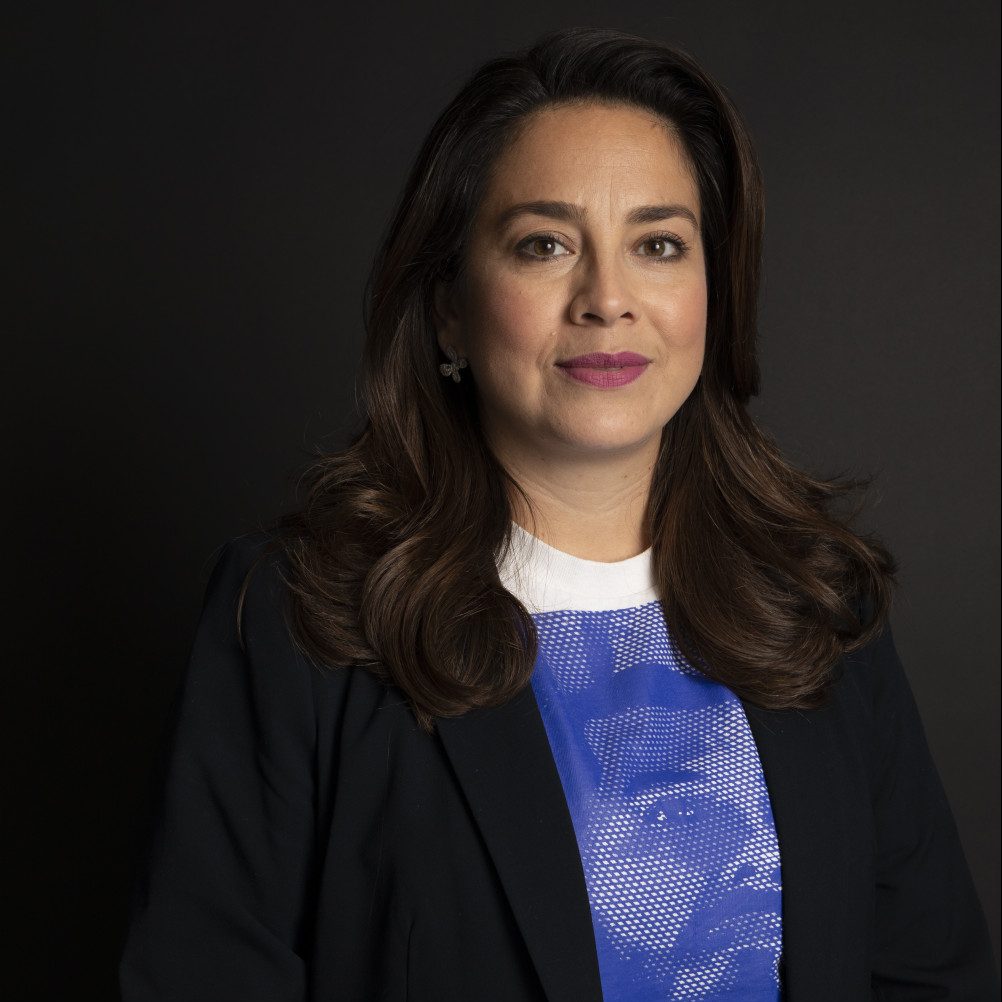
Berta Valle

Berta Valle, Nicaraguan Journalist, Human Rights Defender | Nicaragua

Berta Valle is a recognised Nicaraguan activist, journalist, and human rights defender. With fifteen years of experience as a senior television anchor and station manager working with top morning shows in Nicaragua, Ms. Valle is one of the most-recognized broadcasters in the country. In 2016, she was nominated as an independent to represent Managua in the National Assembly by the Independent Liberal Party as part of its National Coalition for Democracy. However, Nicaragua’s Supreme Court, controlled by Ortega loyalists, disqualified the party’s electoral coalition and Valle was blocked from running. Since 2018, Valle, her daughter and mother-in-law have been living in exile due to the political persecution faced by her husband Félix Maradiaga and his family. Maradiaga was forcibly disappeared by the regime in June 2021 after announcing his intention to run against Daniel Ortega in November’s presidential elections.


Video Link:


Event Title: SDGs Conference 2023 Date: Sept 20, 2023
 

SPEECH

Berta Valle, Human Rights Defender, Nicaraguan Journalist, Nicaragua

Keeping a spotlight on human rights defenders in distress and advocating for the release of political prisoners

I stand before you today as a human rights defender from Nicaragua, as a woman, the wife of a former political prisoner, and as a mother, but also as someone who has dedicated over 20 years to working alongside journalists and media outlets. Over the course of my career, I have had the privilege of hosting television programs and serving as a general manager for a prominent television channel in Nicaragua. However, the most impactful chapter of my journey has been my involvement with “Voces en Libertad” over the last five years. 

“Voces en Libertad” was founded by a group of journalists in exile, aimed at supporting those who are fleeing persecution under Daniel Ortega’s regime. I am deeply grateful for the opportunity to shed light on a matter that is often overlooked: the personal sacrifices made by human rights defenders who courageously stand on the front lines to protect our liberties, rights, and democracy in the face of increasing authoritarianism.  I want to be very clear that journalists are human rights defenders – even though they might not always be recognized as such. Today, the contributions of journalists are more important than ever.  

Nicaragua is rapidly turning into a totalitarian regime, bringing with it death, destruction, and poverty. This authoritarian decline, which gained momentum in 2018, seeks to eliminate any space where democracy could survive, both in public and private spheres, similar to North Korea and Cuba. This model has taken the lives of over 350 citizens, injured thousands, and forced hundreds of thousands into exile. In February of this year, the regime stripped the nationality from another hundred people it sees as threats – including me – leaving us de facto stateless. 

Additionally, more than 1200 people have been imprisoned and tortured for political reasons. My husband Félix was arrested by Ortega’s regime in June 2021.  Although many political prisoners were released in February of this year, including Félix and more than 200 others who were expelled to the United States, it is essential to remember that there are still more than 80 political prisoners in Nicaragua’s jails, including Bishop Monsignor Rolando Alvarez.

Despite the tremendous efforts of the global community, Daniel Ortega and Rosario Murillo continue to commit severe human rights violations and crimes against humanity that surpass even those experienced during the civil conflicts of our recent history. This is a painful reality to witness, and urgent action is necessary to bring an end to these atrocities.

The Ortega regime has engaged in extrajudicial killings, torture, arbitrary detention, and all manner of violations of our civil and political rights.  Especially severe have been the regime’s attacks on the Catholic Church, including closing private universities like the Jesuit Order’s Central American University and others, arresting priests for their sermons, and depriving over a million Nicaraguans of the philanthropic and humanitarian services offered by more than 3000 civic organizations represents an inhumane act of monumental proportions.

In the last 16 months, over 20 private universities have been closed and seized, and media outlets face censorship, leaving no free space to express oneself anywhere in the country, whether public or private. Those who dare to dissent face repression, confinement, or exile; being a journalist and covering a religious event can result in an 8-year prison sentence. Anyone can be jailed or exiled for publishing a tweet or making any public or even private denunciation on social media, which are obsessively monitored by the regime.

The totalitarian model has taken a further step, as the confiscation and theft of properties from individuals, businessmen, and private parties have become commonplace throughout the country; any attempt at protest can be met with death, exile, or imprisonment.

Nicaragua is at a turning point. With the right international intervention, the regime could be pressured to make changes and avoid an economic collapse. However, the plight of the Nicaraguans largely goes unnoticed, especially by international agencies and development banks that continue to fuel the government’s totalitarian state agenda and project.

My country is grappling with a severe human rights crisis. But I am not here just to speak about the specific challenges we face in Nicaragua. I wanted to shed light on a global issue that threatens the very essence of democracy and human rights worldwide. An aspect of great concern that is not discussed enough is the enormous danger faced by human rights defenders who are on the front lines of denouncing authoritarian regimes. Never in recent history has being a human rights defender been such a perilous profession. International treaties that uphold and protect the role of human rights defenders are increasingly being ignored, and these defenders often become the primary targets of totalitarian regimes. Consequently, the decision to take on the challenging role of a human rights defender is an exceedingly difficult one. Many defenders are forced into exile, leaving a significant portion of the population defenseless. This same reality applies to the role of journalists working in dangerous areas or where all civic spaces are closed. For instance, in Nicaragua, journalists like Victor Ticay from Canal 10 are imprisoned for covering a religious event in a public space. Even religious figures are being arrested for speaking from the pulpit, as is the case with Monsignor Rolando Alvarez and Father Jaime Montesinos, who are among the six priests in prison. 

One aspect that I want to emphasize today is the critical role of keeping a spotlight on human rights defenders in distress. These brave individuals risk their lives daily to stand up for justice, democracy, and the rights of their fellow citizens. They are the guardians of human dignity and the last line of defense against the erosion of our most fundamental rights.

In Nicaragua, as in other autocratic regimes, arbitrary detention and the persecution of human rights defenders have become disturbingly commonplace. While speaking out against my husband’s imprisonment, the regime labeled me a traitor to the homeland.  It is not just about silencing dissent; it’s about dismantling the very institutions and values that underpin democracy and human rights. But Nicaragua is not an isolated case. Similar stories are emerging from every corner of the world, from Venezuela to Belarus, from Myanmar to Russia.

The rise of authoritarian regimes and their united front poses a grave threat to global peace. When dictators collaborate and support each other, they not only perpetuate suffering within their own countries but also export their tactics, undermining the foundations of democracy and human rights everywhere. The world cannot afford to ignore this perilous trend.  Allowing one dictator to abuse the rights of his citizens with impunity shows other dictators around the world that they can do so, too. 

We, as human rights defenders, and advocates, must work together to ensure that the world does not turn a blind eye to the plight of those who stand for freedom and justice. We must amplify the voices of those in distress and hold autocratic regimes accountable for their actions. It is our collective responsibility to keep the spotlight on human rights defenders in peril, for they are the beacon of hope in these troubled times.

By shining a light on their struggles, we not only empower them but also send a clear message to autocrats: that the world is watching, and that their actions will not go unnoticed or unchallenged. We must leverage our collective strength to pressure governments, institutions, and international bodies to take a stand for democracy, human rights, and the rule of law.

In conclusion, the widening gap between the erosion of democracies and the rise of autocracies is a global crisis that demands a united response. We must recognize that the dramatic increase in transnational crimes is not confined to the borders of any one nation; it threatens the peace and prosperity of the entire world. By keeping a spotlight on human rights defenders in distress, we can raise awareness, build solidarity, and take concrete actions to protect the values we hold dear.

We know we are strongest when we stand together to confront the obstacles we face. Let us remember that the struggle for human rights is not confined by borders or political ideologies. It is a shared responsibility, a universal cause that unites us all. Together, we can be a powerful force for change, working tirelessly to ensure that democracy, freedom, and human rights prevail over autocracy and oppression.

Mr. Naseer A. Faiq

Mr. Naseer A. Faiq, Chargé d’Affaires, Permanent Mission of Afghanistan to the UN | Afghanistan

Mr. Naseer Faiq is the current Charge d’Affaires of the Permanent Mission of Afghanistan to the United Nations in New York. Born and raised in Afghanistan, Mr. Faiq began his career in politics after joining the Afghanistan Foreign Service in 2005. Over the years, Mr. Faiq has held various high-profile positions within the Ministry of Foreign Affairs of Afghanistan. He has served as the Deputy Director General for Regional Cooperation Directorate twice (2012-2013 and 2016-2019). Mr. Faiq has also served as a Minister Counsellor, Counsellor, and Third Secretary at the Permanent Mission of Afghanistan to the United Nations from 2008-2019. Mr. Faiq received a Bachelor’s Degree in Administration and Diplomacy from Kabul University and a Master’s Degree in Administrative Science from Farleigh Dickinson University.


Video Link:


Event Title: SDGs Conference 2023 Date: Sept 20, 2023
 

SPEECH

Permanent Mission to the United Nations Permanent Mission of Afghanistan to the UN

The world leaders are in New York to discuss global issues, distinguished guests, panelists, honorable members of JWF and esteemed faculty of students of John Jay College, respected delegates, and participants who are joining us online today. I stand before you to address a pressing global concern that has come to the forefront of our collective consciousness in recent times, drawing from recent words of the Secretary-General of the United Nations around the globe, old tensions fester while new risks emerge. 

Our discussion focuses on the widening gap between the erosion of democracy and the rise of autocracy within this very global canvas of mounting crisis across Africa, a continent with rich history and vibrant culture. We have observed and settled political upheavals, and the series of coups in nations like Niger, Mali, Chad, Burkina Faso, and Gabo signify a deeper regional struggle for democracy. As the Secretary-General pointed out, the Sahel faces its share of disturbances with a series of coups further destabilizing the region as terrorism gains ground. I would like to focus on my country, Afghanistan. I am sure you are well aware that nearly 20 years after being ousted from power, the Taliban took over control of Afghanistan in August 2021. It has now been a little over two years and there isn’t the slightest way of hope for a positive future for the 28 million people that are in dire need of humanitarian assistance. 

Among them are millions of Afghan refugees, disabled people, youth, and most importantly, women and girls. Speaking at this panel is very fitting for me. As the events that unfolded in Afghanistan served as a stark reminder of the complex interplay between democracy and autocracy, I, along with the international community, have had to witness the slow yet appalling erosion of democracy in my beloved country. Under Taliban Rule, autocracy has been on a rapid rise with them continuing to consolidate their power and authority through acts that intimidate, repress, restrict, and isolate the people of Afghanistan. They have returned to the draconian policies of the 1990s ethnic cleansing and forced evictions among a lot more. The fall of Afghanistan to the Taliban raises patent questions about the fragility of democracies in the face of determined autocratic forces. Furthermore, it also highlights the vulnerability of democracies when confronted with extremism, corruption, and internal divisions. 

Our primary anguish lies with their treatment of women. Nearly two decades after women regained their rights, women and girls in Afghanistan have been again banned from receiving quality education from entering amusement parks, gyms, and sports clubs. Women have been banned from working in NGO offices. They quite literally have been wholly excluded from Public Offices and the Judiciary. Today, Afghanistan’s women and girls face gender apartheid and gender persecution, they are required to adhere to a strict dress code and are not permitted to travel without a male guardian, the Taliban is systematically violating the rights of women and young girls while regressing with time and resorting to cruel and inhuman practices. The rise of autocracies in the world, often under the guise of stability and security, poses a formidable challenge to the global order based on democratic values. Autocrats driven by personal interests and antique power disregard the rights and aspirations of their citizens. 

As per an Amnesty International report, the Taliban have directed collective punishment, particularly upon communities where the Taliban have established and deployed their forces. They have retaliated against former security and defense forces and targeted the civilian population to force submission and compliance, especially those suspected of being associated with the former government. The list of war crimes and violations of international humanitarian law committed by the Taliban is long and I do not want to calculate all of them or mention all of them. As we reflect on the Afghanistan crisis, it is important to draw lessons that can guide us in addressing the widening gap between the erosion of democracies and the rise of autocracies. First and foremost, it is crucial to recognize that nation-building efforts cannot be imposed from the outside. We recognize that bringing peace to our country is a responsibility that primarily belongs to us, the people of Afghanistan. 

Genuine democracy must emerge from within, rooted in the cultural, historical, and social context of a nation. External interventions can support this process but cannot substitute for it. Over the past two years, Afghans from all walks of life and age groups inside and outside Afghanistan have tirelessly worked and raised their voices in defending their rights, hard-earned achievements of the past two decades, and national values. In the past year, civil society, women and youth groups, and political parties have mobilized and initiated organized political activity. While various groups present diverse views for a solution, the main objective is to converge under a national agenda that is based on national unity. Moreover, we must acknowledge that the global community has a responsibility to promote and protect democratic values. The international community must stand united and its commitment to defend democracy, human rights, and the rules of law. Not just when it is convenient but especially when these principles are under threat. 

The lessons learned from Afghanistan should lead to a more nuanced and thoughtful approach to promoting democracy worldwide. The erosion of democracy is a cause for serious concern. However, it is vital that we do not lose hope. It is through our collective commitment to democratic values and our ability to adapt and learn from our mistakes, that we can bridge the gap between the erosion of democracies and the rise of autocracies. The world’s future depends on our ability to strike this balance and uphold the principles that ensure justice, freedom, and dignity for all. In this context, the challenges in Afghanistan, as well as in the African nations mentioned, serve as a historic reminder that our global commitment to democracy, peace, and stability, remains paramount. We must not only discuss but also act ensuring that democratic values persist and thrive. “I urge all countries to step up and to fund fully the global humanitarian appeal” – were the Secretary General’s closing remarks yesterday. Let it resonate with us as we transition from dialogue to tangible action, ensuring that the spirit of democracy and the hope for a just world prevails across all nations.

Melissa Mahtani

Melissa Mahtani, Journalist, Senior Producer | USA

Melissa Mahtani is an Emmy-nominated Senior Producer and Reporter for CNN’s award-winning digital team where she produces, writes and creates content across all platforms since 2012. Mahtani has interviewed change-makers across the globe such as Vladimir Kara-Murza from Russia, Masih Alinejad from Iran, Afghanistan’s youngest Mayor Zarifa Ghafari and the first lady of Namibia as well as celebrities like Naomi Campbell, Kristin Davis, Adwoa Aboah and Lin-Manuel Miranda. In addition to writing breaking news stories and feature articles, Mahtani currently reports for CNN’s award-winning gender focused “As Equals” team, hosting and moderating events for wider impact and engagement. She also plays a key role in designing the social strategy around special events including bespoke CNN Town Halls, CNN Heroes and coverage from the United Nations General Assembly.


Video Link:


Event Title: SDGs Conference 2023 Date: Sept 20, 2023
 

SPEECH

Freedom cannot be taken for granted. 

The idea of democracy quite literally means rule by the people, where a population gets to decide what decisions are made through an elected, represented government. Democracy can only exist when there are free and fair, transparent elections, accountability, a pluralistic system of political parties, freedom of expression, an independent judiciary, and respect for human rights. These democratic values do not vanish in an instant; but as the Israeli Supreme Court justice indicated: democracy dies in a series of small steps. 

Steps such as stifling opposition candidates, silencing the media, laws making it harder for certain types of people to vote, or rigging voting machines. Those things sound like they would be easy to see. 

But when a population can not distinguish between what is true or false due to disinformation campaigns, technology that is manipulated, or a justice system that is slowly weaponized, how can one even see the line where democracy ends and autocracy begins? 

This is what we are witnessing in many countries around the world. A slow eradication of democratic values, in countries once cherished as stalwarts of freedom like here in America, and others from South Africa to India and Israel. Even in countries that are known as autocracies, like China, Venezuela, and Russia, we are seeing their leaders take more ruthless actions and more worryingly, work more closely together to build and strengthen global undemocratic factions that make it harder to break through. 

Thinking about solutions is not an abstract thought or discussion that relates to a planet in outer space. This is our world. For those of us who do live and work in democracies, what can we do to strengthen them? How can we shine a light on the injustices we see in other countries? Every one of us has power. Power to shape the communities and world that we want to live in, and more importantly, the kind of world we want to leave to future generations. 

As Nelson Mandela famously said in 1999, “Freedom can never be taken for granted. Every generation must safeguard it and extend it”. It is up to each and every one of us to do our part to make sure freedom and democracy are rights that we enjoy, strengthen, and sustain.

Ivy Murugi

Ivy Murugi, Global Youth Representative, World Organization of the Scout Movement | Kenya

Ivy Murugi is the Global Youth Representative of the World Organization of the Scout Movement. She is experienced in Mental Health and Sexual Reproductive Health Advocacy working with Youth-Led and Youth-Serving organizations. Over the last 3 years, Ivy Murugi has served as the Team Lead for a Mental Health initiative dubbed Healing Invisible Wounds. Involved in resource mobilization & fundraising , program design and delivery as well as overall team coordination to meet set objectives in providing innovative solutions that promote the overall wellbeing and resilience of young people and communities. I am committed to ensuring individuals have access to advanced mental health care services, transforming the stigma narrative surrounding mental health and supporting integration of MHPSS into thematic areas such as Peacebuilding and Climate Action.


Video Link:


Event Title: SDGs Conference 2023 Date: Sept 20, 2023
 

SPEECH

I wanted to be a journalist when I was growing up and I do not know whether to be relieved that I did not become one but I love the resilience that individuals have. I represent a movement of 56 million young people from across the globe in the world’s largest youth contribution to the Sustainable Development Goals. As a young person from Generation Z, I see endless opportunities in digital transformation that is happening around the globe. I recognize the importance of both social and mainstream media as a tool to connect people to foster dialogues, ignite change, and hold people accountable. The current media landscape is more diverse and the industry is attracting high levels of investment in capital in both mainstream and digital media platforms.

I pay tribute to the vocal and fearless men and women in the media who have had to lose their lives in the spirit of uncovering ills and telling stories of change. I also celebrate a million others, some of them in this panel who have the willingness to continue informing the world and telling personal stories of abusing people from across the globe. I believe that press freedom is an essential pillar of any democracy as it provides the platform for a multiplicity of voices to be heard at the national, regional, and local levels. Individuals working as public watchdogs, activists, and guardians are also educators, entertainers, and contemporary chroniclers. I have seen the media thrive and do their best in the context of both liberal and authoritarian regimes. I come from Kenya, we had our general elections very recently and the media did an amazing job in its reporting. Their coverage gave people the confidence to believe in the final tallies that were given, especially for the very tightly contested presidential seat.

However sadly, a few months down, one of the cabinet appointees of the current president made a full appearance on one of the media houses in Kenya who have been very brave in uncovering truths and telling stories without fear in two case scenarios. I’ll speak about one in one of them, he said, “XX Media Group, you must now decide where, whether you are a newspaper, a broadcasting house, a media house, or a political party. I have said from tomorrow, from today, even the government, any government department that is found placing an advertisement with the XX Media Group, should consider itself out of the government.” These are some of the media-captured intimidation lawsuits but I am more than sure that this is just one of the many existing situations in so many contexts with some having it more often than others from the statistics that we had. 

The fundamental right to seek and disseminate information through an independent press is under attack, not just in Kenya but also in many other contexts. The threats have now taken new dimensions as they are publicly defended and even boldly justified by some of these perpetrators’ elected leaders who should be press freedoms. Despite the robust legislation, media freedoms have been constantly curtailed. Freedom of the press is a right that every entity in society must care about and commit to. Protecting press freedom can rebound from even lengthening the states of depression when given the opportunity. In this regard, there is a need for sustained conversations and multi-sectoral approaches to achieve a free press in all contexts.

I hope that the discussions today will help us spark actionable ways to be able to do this. Governments should not interfere with this freedom or censor media that are critical of state power. We need to safeguard press freedom and promote freedom of expression to ensure and facilitate global democracy and uphold the rule of law and human rights for all journalists. Please remember that people are more often than not going to take opinions as facts, but you are the remedy to set this right. Keep on fighting for the truth and holding those in power accountable. Be the watchdog that sheds light on wrongdoing, even in the wake of a shrinking media space. Keep giving accurate, fair, and unbiased information.

Christina Piaia

Christina Piaia, ProJourn Legal Manager, Reporters Committee for the Freedom of the Press | USA

Christina Piaia is the legal manager for the Protecting Journalists Pro Bono Program at the Reporters Committee for Freedom of the Press. She oversees legal intakes for pro bono matters concerning prepublication review and access to public records and develops relationships with law firms and corporate partners to provide journalists with pro bono legal assistance. Prior to ProJourn, Ms. Piaia served as a trial attorney with the Equal Employment Opportunity Commission and supervised the Gender-Based Harassment Unit at the NYC Commission on Human Rights, working extensively on gender discrimination claims with a focus on community outreach and education. Before the Commission, Christina Piaia spent three years as an international human rights attorney, working on the ground with local grassroots organizations. As a passionate public interest attorney, she serves as pro bono counsel for several nonprofits and on the board of the Chris Hondros Fund.


Video Link:


Event Title: SDGs Conference 2023 Date: Sept 20, 2023
 

SPEECH

Upholding the rule of law for the protection of journalists: Increasing legal harassment towards media members

As a former journalist, now a lawyer, I have incredible respect for reporting the most pressing news. I think sometimes we see legal harassment that journalists are facing on a global scale as something that is an attack against the press. However, some of these attacks are not being housed in terms of press freedom but using different areas of law to target journalists and make it more difficult to do their work. 

At the Reporters Committee for the Freedom of the Press, we have a US Press Freedom Tracker that takes a look at what is happening here on the ground, for journalists both from illegal perspective as well as attacks, assaults, and imprisonment against journalists. Since 2017, in the US, there have been thousands of assaults, mostly at the hands of law enforcement, against journalists in the United States. 2020 and 2021, not surprisingly, were exceptionally bad. 630 journalists in 2020 were assaulted, 145 in 2021 and although the numbers are lower this year, we continue to remain troubled about the state of press freedom here in the US, which of course boasts to have the First Amendment and some incredible legal protections for press. However, as you can tell from those numbers, not by any means free from issues. 

At the top of my mind are the recent deaths of two journalists here in the US. Jeff Kerman, a veteran investigative reporter for the Las Vegas Review-Journal, was killed last September, allegedly by the subject of one of his investigations. A few months after that, Dylan Lyons, a reporter for Spectrum News in Florida was fatally shot while reporting on the scene. We know that journalists should not have to fear reporting information. They should not have to fear challenging public officials, who have been accused of misusing their office or betraying the public trust. It remains crucial to know that these journalists are out there covering these communities and how we have to make sure that communities are informed and that we hold those in power accountable for their actions. 

We have an inability to make sure that we are protecting journalists’ access to local records. Journalists are often forwarded by government officials to obtain requests for certain government records. Legal protections can help kind of make sure that critical information is in the hands of journalists as they need it. Turning to more of the legal elements, again, we have a lot of protections here on the ground. In the US, journalists have been confronted with a wide range of legal threats, including subpoenas and prior restraints. 

For those who might not be familiar with prior restraint, those are court orders that prevent news organizations or journalists from publishing newsworthy information. So, they essentially barred journalists from reporting on matters of public interest. In 2022, we saw several prior restraint cases here in the US and thankfully some of the judicial systems are working and most of those were reversed or dissolved. However these orders have a significant chilling effect and unless they are ultimately blocked, they can stop reporters from reporting on crucial stories. I think it is a bright spot in journalism here in the US and also across the globe, that has always existed but it might be coming more into the public eye, which is local journalism, community reporting where individuals from their community go to open meetings, making sure that they are covering whether it be a school board hearing or how election funds are being spent in their district or community. 

I have spent most of this past year working on the ground in several states here in the US looking at smaller news organizations, sometimes two or three journalists reporting on police accountability, local government officials, and abuse. These individuals are doing such crucial work, that they really are sometimes in the eyes and ears of the community. So, I do see a bright spot of local journalism happening across the country. Whether or not you can find this local journalism, I think there is still a lot of crucial work that we have to do to make sure that we are looking at all aspects of reporting. However, what I am seeing from a legal perspective becoming a threat is the actual status of the organization itself. 

So, as you can imagine, many newspapers have shuttered news organizations or have been dissolved and individuals are starting to find creative models to encourage news and reporting. One of the ways is by creating nonprofit institutions that still have the journalistic ethics of a news organization but they are built in to be able to receive grants and individual donations to cover their reporting. Part of this is to support what is happening on the ground and what we are seeing from a legal perspective. Unfortunately, when reporting, these smaller news organizations are generally a handful of people and they are almost always from the community, born, raised, and living in the communities where they are reporting and they are often working potentially in a language that is not English. Individuals are threatening their nonprofit status. So, essentially without their nonprofit status, they would not be able to report the news because they would have no funding. So, we have seen threats against that type of status, kind of a new way to threaten reporting. 

Then, when we turn global and think about press freedom, governments have become very clever about talking more about press freedom, perhaps even enacting laws across different countries to help show if they are on the press’s side. However, I think what is happening is that the legal rhetoric and ways in which the press is being threatened have changed. Governments and leaders have learned to talk very expressively about press freedom and the protection of journalists but oftentimes, other areas of law often complex and difficult-to-navigate areas of law are happening. We have seen this in the case of Maria Russa who faced a barrage of charges from the Filipino government. These charges were a series of criminal and civil cases, including tax evasion violations of foreign ownership rules. These areas of law are so complex and so difficult to navigate without expert legal counsel. 

They know that it is difficult to be able to have the funding to do this work. It is difficult to be able, when an individual gets a complaint like this, to be able to even navigate the area of law or how they respond to this request. Thankfully there is pro bono support for some journalists but a lot of times these threats are not related to press freedom laws themselves. Still, they are criminal cases that involve significant legal action, also, legal action that takes years to evaluate and change. So, as an eternal optimist, I would like to close by ending with a few potential solutions. 

We have to make sure that individual journalist newsrooms across the country and the globe understand how critical legal support is and how legal support needs to be an infrastructure that is funded, whether by civil society, individuals, or community groups. We need to make sure that journalists who are doing this difficult work are supported from a legal perspective. We need to make sure that they have access to legal assistance at every stage of reporting investigation. We have to increase training on how they can be helped. Potential law enforcement officials do not even know what to do or they do not have the bandwidth or they just do not bother. In that vein, we need to make sure that we are growing attorneys who are serving journalists, making sure that legal counsel is available to mitigate risks and address these non-press freedom areas of law that often include these criminal and complex areas of law.