Dr. Kamran Bokhari

Senior Director of the Eurasian Security and Prosperity
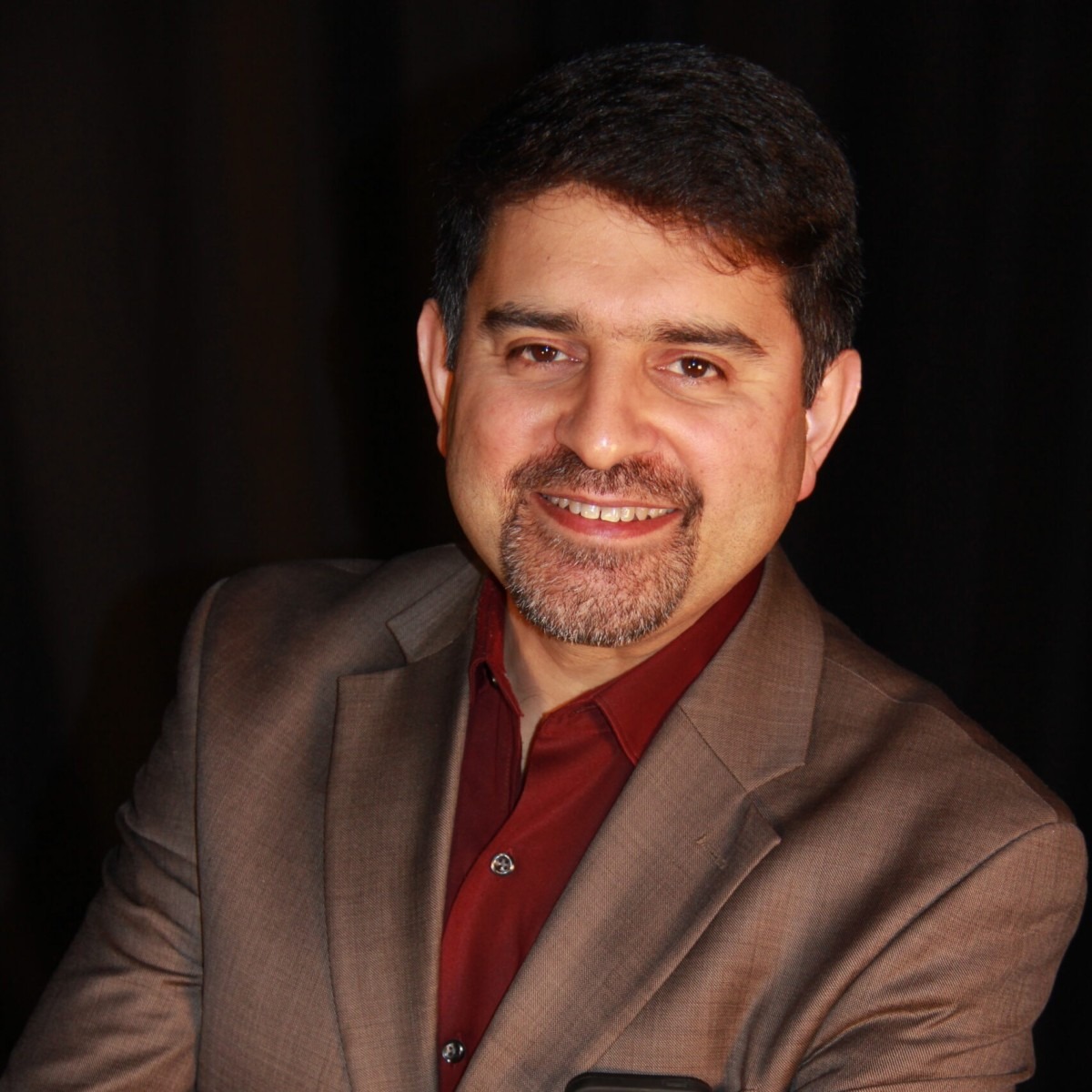
Dr. Kamran Bokhari

Senior Director, Eurasian Security and Prosperity, New LinesInstitute | USA-DC

 Short Bio:

Dr. Kamran Bokhari is the Senior Director of the Eurasian Security and Prosperity portfolio at the New Lines Institute. He served as Director of the Analytical Development Department from 2019 to 2023. He is also a national Security and Foreign Policy Specialist at the University of Ottawa’s Professional Development Institute. Dr. Bokhari has also served as the Central Asia Studies Course Coordinator at the U.S. State Department’s Foreign Service Institute. He has been a Senior Consultant with the World Bank since 2009. He has 15 years of experience in the private sector intelligence space, where he provided intellectual leadership in publishing cutting-edge geopolitical analysis and forecasts. He is the author of “Political Islam in the Age of Democratization”.


Event : SDGs Conference 2024

Date: Sept 25, 2024

SPEECH

While we need to discuss Sustainable Development Goals, we must do so in the context of reality. We aspire to achieve these goals, but we must consider how we can get from where we are to where we want to be. That requires a geopolitical roadmap. We need to understand the world as it is today, which is difficult due to information overload. Everyone on this planet is suffering from it. I will not speak for anyone else, but I still remember the days when there were fewer sources of information. I remember the daily newspaper, and I had a choice between which paper to read. There was the evening news, the morning news, and maybe something like Time Magazine or a competitor like Newsweek. 

That was it. If I wanted more information, I had to glance through encyclopedias or go to libraries. Barnes and Noble was not a thing just yet, and I am only talking about 30 or 35 years ago. Back then, the world was simpler, and there were fewer sources of information. With the advent of the Internet, followed by social media, and now Artificial Intelligence (AI) in real-time, we are witnessing an explosion of information. The amount of available information has reached levels that the human brain was not designed to process. While this is one trend, another trend is the decline in our analytical abilities to analyze what is happening.

You will notice that even the best speakers on TV or elsewhere often conflate what is happening with what has happened and back and forth. There is not a serious attempt to say, “Okay, let’s first figure out what’s happening,” and then chart the course for the future based on where we are today. On top of this, everything has become politicized, including partisan politics. This is true not just in the United States but everywhere in the world. There exists a left-right spectrum, and even if you are not somewhere on that spectrum, you are still part of the conflict occurring at multiple levels in every single country.

As a result, people are not talking to each other. If you pick up TikTok or Twitter, you will see people screaming out there as if they are arguing with their neighbors. No one is listening. This is a huge problem that will not go away easily. This is the challenge of our times. When I was growing up in this very city, my parents worried about whether I would do drugs. That was probably the main concern. Now, I worry about my kids and whether they have the right information. Are they being persuaded by fake news or by ideology disguised as social science? This is a real problem we are not talking about, and there needs to be a bigger conversation. 

This is an issue that transcends borders. It is not limited to one area. The political debate in this country, as we get closer to the election, is emblematic of what I am trying to discuss. Everybody has their way of explaining reality, and we are not addressing it. Now, let’s drop down from that meta-narrative problem level to the level of states and their conflicts. The last 30 years have seen different drivers of conflict and factors exacerbating geopolitical conditions. Someone mentioned Francis Fukuyama and The End of History. That was a great time. Life was much simpler. We thought, “Okay, the Soviet Union has imploded, and the world will be one nice democracy where everybody sings Kumbaya.” That did not happen. It was wishful thinking. 

The reality is that we have fragmentation at all levels. The nation-state, as an entity that emerged after World War I and World War II, is either failing or has already completely failed in many parts of the world, which is why we have conflict. The idea that there is an international rules-based order, while true and built post-World War II with the United Nations, the World Bank, and the International Monetary Fund, faces multiple problems.

If you look at an arc of crisis extending from the southern tip of the Eurasian supercontinent, as Zbigniew Brzezinski identified, you will see that starting from Southeast Asia, we have Myanmar, where five rebel groups are holding territory and challenging the regime. Moving forward, there are problems in Bangladesh, and while India is a rising geo-economic player and the fifth-largest economy, an impressive demonstration of development, it has its challenges. 

But if you keep moving westward, you reach Afghanistan, Iran, and the Middle East, and you complete a full 360 with Russia and China. There are multiple problems, and the institutions that are supposed to address these challenges cannot currently do so. This is why we need out-of-the-box thinking. We are still stuck in old paradigms, and there is a need for fresh thinking that is not constrained by certain disciplinary boundaries and is not confused by the information problem I mentioned earlier.

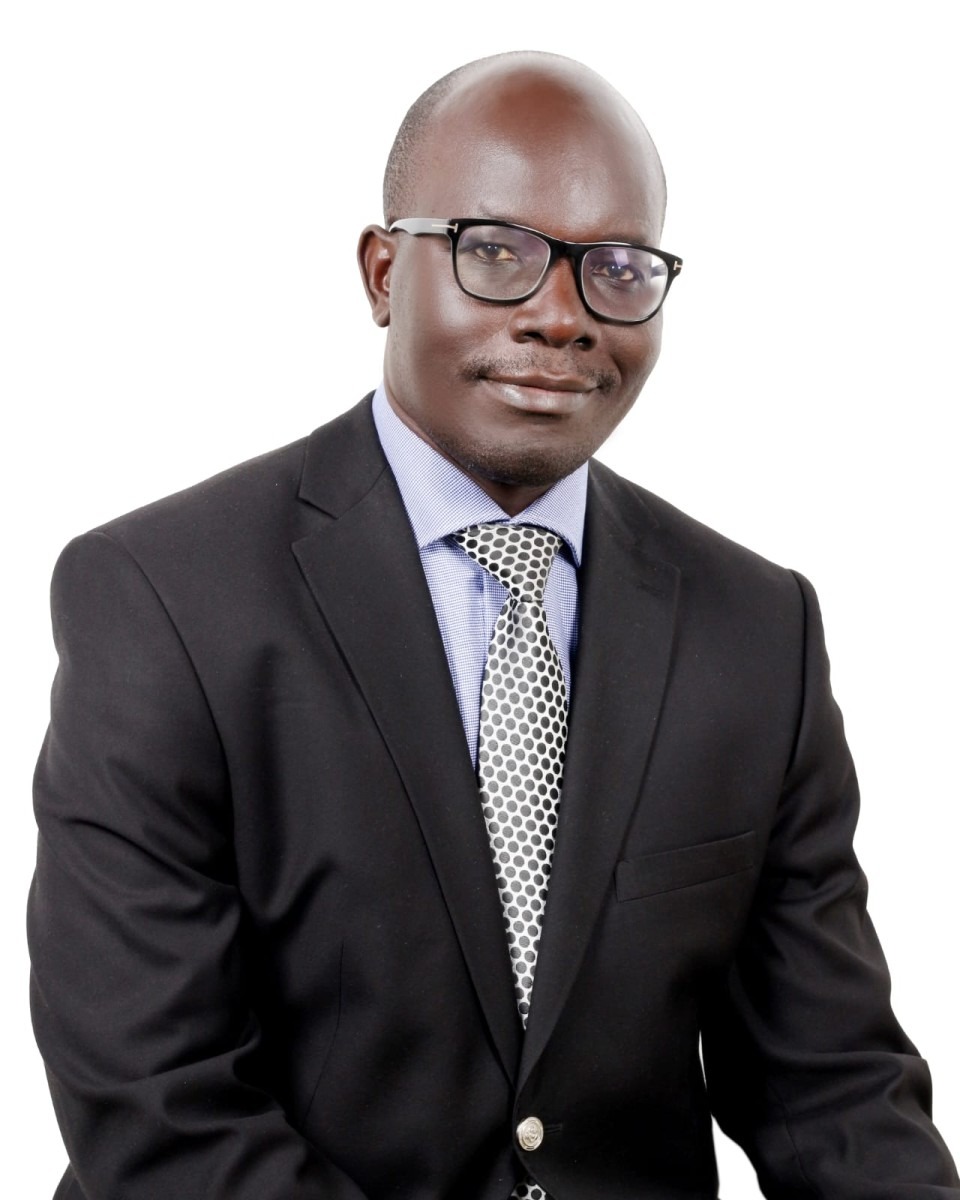
Prof Collins Odote

Associate Professor of Law, Associate Dean at the Faculty of Law

Prof. Collins Odote

Associate Dean of Faculty of Law, University of Nairobi,Chairman, Council of Legal Education | South Africa

 Short Bio:

Prof. Collins Odote is an Advocate of the High Court of Kenya with a Doctor of Philosophy in Law from the University of Nairobi. He is an Associate Professor of Law, Associate Dean at the Faculty of Law, and Research Director of the Centre for Advanced Studies in Environmental Law and Policy at the University of Nairobi. He is also an arbitrator, a Fellow of the Chartered Institute of Arbitrators, and a member of the Law Society of Kenya. Prof. Odote is the Chairman of the Council of Legal Education and the President of the Association of Environmental Law Lecturers in Africa, which focuses on capacity building and knowledge exchange in environmental law across African universities. His research interests include governance, elections, land law, and environmental and natural resource management. Prof. Odote has consulted various government bodies, non-state actors, and international organizations.


Event: SDGs Conference 2024

Date: Sept 25, 2024

SPEECH

Nine years ago today, on the 25 September 2015 when the 17 Sustainable Development Goals were adopted the title of the document was “Transforming Our World”. Therefore, it is important to ask ourselves why the word is transforming at the heart of inclusive governance. I think it is at the forefront of our conversations because the current pace and direction of global governance are not delivering the dividends required. The Pact for the Future notes that sustainable development is impaired. If the UN Charter that was adopted 79 years ago were fully implemented, we would be able to address ensuring peace, upholding human rights, and promoting dignity, justice, and social progress. As we see today, those same challenges that existed decades ago require us to transform how we govern the globe. Establishing peaceful and accountable public institutions requires strengthening and adherence to the rule of law. The Pact for the Future mentions the “rule of law” seven times in the context of the declaration. Sustainable Development Goal (SDGs) 16 also underscores that the rule of law is essential to the realization of SDGs. Addressing the gaps in the rule of law concerns many relevant topics ranging from violations that journalists encounter, shrinking space of civil society, protecting religious rights, and many others. However, the reality across the globe is that the principles and quality of institutions that guarantee the rule of law are under threat.

Therefore, we need to ask ourselves what we can do to ensure judicial independence. If one must choose between the three arms of government, I think the most critical one is the judiciary as it focuses on the rights of the minority and the rights of the disadvantaged individuals. Therefore, strengthening judiciaries must form a core component of the work that we do because it is the judiciary members who will ensure that there are checks and balances so that we can avoid living under the pressure of individuals with power. Therefore, my first point is that we need to strengthen judiciaries and the rule of law as part of our process of ensuring the transformation of local governance. The importance of education and empowerment of young people will be my next emphasis.

I would like to suggest that we need to look at education as a tool for empowering youth and engaging them in public institutions at the national level. The 79th Session of the UN General Assembly has been celebrated for spotlighting youth and global governance. However, I think we need to move beyond celebration to integration. We need to integrate young people into a global government, not just celebrating young individuals. It is only through young advocates that we would be able to achieve the first mention of intergenerational equity in the 1992 Rio Declaration on Environment and Development adopted by Brazil. We need to ensure that young people are given agency so that they can be meaningfully involved. In Kenya, in June this year, we had a demonstration by Generation Z that shows that the conversation we had about the youth ballot must stop being a conversation, but we must act on it.

The first action we must take is to invest in public education institutions critically to achieve SDG #4, the quality of education. We should also take into account the content and the cost of education. Next, we need to ensure that there are linkages between educational institutions and global governance so that young people can be able to participate in these platforms at a younger age. So that the gentleman that I met from Bosnia can experience what it means to work at the United Nations (UN) in Nairobi. The ladies from Nairobi should also access opportunities to work at the UN headquarters so that we can have a new set of global citizens who reimagine global governance from their perspectives. That is the only way that we can be able to strengthen global governance.

My last point is that sustainable development is about thriving economies, society, and the environment. I think many of the conflicts that we face are about how it relates to the environment, and I would like to make a case that we need to finance environmental protection institutions. UNEP’s 2021 Report on Making Peace with Nature makes the point that our relationship with nature is one of extraction. We see nature as an object and a consequence. I think we need to change that relationship. We need to see nature as one of the entities that also has rights, but also, we need to put more effort into funding public institutions working on capacity building for environmental protection. As the UN Secretary-General Antonio Guterres said in the last Conference of Parties (COP) that took place in Africa in 2022, we are in a fight for our lives, and we are losing it. As I conclude my remarks, I think we need to ensure that to change global governance institutions, we must recognize that we must act both at the global and national levels. We must also prioritize local actions because it is only through strengthening public institutions at the national level that will deliver true dividends to the people and will make global governments inclusive and realistic for the 21st century.

Ana Carolina Evangelista

Political Scientist

Ana Carolina Evangelista 

Executive Director, ISER, Institute of Studies in Religion | Brazil

 Short Bio:

Ana Carolina Evangelista is a Political Scientist with MSc in International Relations (PUC-SP), MA in Public Management and Policy (FGV/EAESP) and a PhD Candidate in Social Sciences and Contemporary History at CPDO/FGV. With more than twenty years of experience in civil society organizations and political and technical advisory activities on governmental institutions, she is a Senior Researcher and the Executive Director of Institute of Studies in Religion in Río de Janeiro (Brazil). Her research studies are focused on democratic innovation in Latin America, the Brazilian political system, elections and the role of religious groups in politics. Ms. Evangelista is also a Political Columnist at Revista Piauí and Canal O Meio.


Event: SDGs Conference 2024

Date: Sept 25, 2024

SPEECH

At the 9th Annual SDGs Conference, I represent the Institute of Studies in Religion, a research organization on the importance of faith-based communities and religion for social life in Brazil. In my reflections, I will be stressing the challenges we are facing regarding politics and the work we need to accomplish to promote the diversity of the religious groups in Brazil. Religion comes at the frontline everywhere when politics is discussed in Brazil nowadays in election coverage or in regard to the latest situation in the National Congress, especially about Christian voting intentions or a politician justifying his vote or a new legislative proposal based on religious references. Why are we seeing more religion in politics in Brazil today or in other countries? Whether the influence of religion in public and political life is a positive or a negative aspect, Brazilian society is divided in between. 

Significant differences have been viewed between Evangelicals, Catholics, and people with other religious affiliations or no religion at all in Brazil including older and younger adults. There is also an important division in Brazilian society between those who agree and disagree that the federal government should promote specific Christian moral values. But is everything really about religion? I will say no as most of it is about political polarization and the use of religion for specific political purposes. What we see in Brazil today is not an indiscriminate invasion of religion in politics. We are witnessing a systematic radical and instrumental incorporation of religion or a conception of religion and especially certain Christian values like the anti-democratic far-right political Pope increasing its influence in our countries. I am not referring to the Christian values of solidarity, community, social justice, and universal human rights. 

What is happening to democratic principles and threats to a plural democracy in Brazil and elsewhere? Who is using who? We are talking about politicians using certain religious leaders and narratives, and religious businessmen using the institutional political environment to increase their influence and therefore their religious corporations. The terms religious businessmen and religious corporations are not by chance. I would like to stress that because we have a vast and diverse Christian Evangelical and Catholic field in Brazil. I am talking about a part of some churches, denominations, and leaders who are more worried about their entire religious empire than their role as a religious leader. In a broader sense, the resident population has been dealing with different social, economic, and public security crises for several years.

Brazil is not the only country facing such a crisis. Far-end political forces are the ones most mobilizing religion in specific ways when dealing with people’s daily and concrete challenges referring to the social, economic, and security crises. In this context, politicians and religious figures are not mobilizing religion, even the well-known religious ones, in a more individualistic and dogmatic contemporary form as a way to offer alternatives for restoring order, predictability, security, and unity. Religiousness is also being used as a rhetorical resource of belonging and restoring order, or at least what they call order, by ultra-conservatives to advance their agendas in institutional spaces, especially in terms of liberty and rights of certain social groups as women and LGBTQ+ communities.

At the same time, it is not only about certain religious groups seeking to impose their morals on society through state policies but also about the new dimensions using religion to communicate with people and boost symbolic and emotional ties with society. Today, this construction makes it nearly impossible to separate religious traditional morals, political agendas, social demands, and personal expectations from Brazil’s Presidential elections. This social state is new for us, and it is challenging the plurality and the quality of our democracy.

For instance, we have always had an important presence of different religious leaders in the public and political spheres in Brazil in a more plural way. But today, the religious leaders with political strength and a prominent public voice are predominantly ultra-conservatives coming from various groups being represented in politics. They are not taking into account the religious diversity of Brazil and neither the separation between church and state that we have had since the 19th century. 

It was especially after 2010, that public opinion and voting in polls in Brazil started highlighting divisions related to religious identity and belonging, and none of this happened by chance. It was a period of reaction to the third national human rights program presented by the second term of President Luiz Inácio Lula da Silva. This reaction led to an unprecedented alliance between Catholics and Evangelical branches in Congress to defend the fighting against the advances in women’s reproductive rights and the recognition of LGBTQ+ rights. This issue dominated the presidential election at that time and remained central to public opinion until today. In subsequent national polls, this growing alliance expanded to other agendas such as education and public security, a sort of new more radical religious cross-cutting conservative agenda that became a pillar of our national Congress today.

Today, this has been an important vector of anti-democratic political radicalization including intolerance and imposing specific norms and rules of behavior to the entire society. Just like in the USA, more than a problem of polarization, we are facing a providential and dangerous fundamentalist use of religion as a sort of political weapon. In conclusion of my remarks, I would like to underline that we do not fully apprehend all the layers behind the rise of a far-right that has expanded its social base and also occupies the public space to vocalize its demands in our society today. Understanding the role of religious groups in contemporary institutional politics, not only in Brazil, and how this is being played by anti-democratic and fundamentalist political groups has become essential. This is just the tip of the iceberg to better understand the ways to protect plural democracy in our countries.

Firmesk O. Rahim

Fulbright Scholar

Firmesk Rahim

Fulbright Scholar, Global Governance and Human Security, University of Massachusetts Boston | Iraq-Kurdistan

 Short Bio:

Firmesk Othman Rahim is currently a Fulbright Scholar pursuing a master’s degree in Global Governance and Human Security at the University of Massachusetts Boston. She is from the Kurdistan Region of Iraq and holds a master’s degree in English literature from the University of Sulaimani. Ms. Rahim has served as an Assistant Lecturer at the University of Garmian and as a Project Coordinator at the American University of Iraq, Sulaimani, where she contributed to numerous initiatives and projects supporting young Iraqi innovators. Beyond academia, her interest in politics has made me an active member of society. Firmesk Rahim has participated in several leadership and development programs, including being a Perennial Leadership Fellow in 2020 and an Iraq Leadership Fellow in 2019. From 2018 to 2019, Ms. Rahim worked as a Political Assistant in the Office of the Presidency of Iraq.


Event: SDGs Conference 2024

Date: Sept 25, 2024

SPEECH

It is a great honor to discuss a topic of immense significance in our world: the role of civil society in global governance. This role is embodied by each of you and the invaluable contributions your organizations make across various aspects of human life. At times, those who work toward the improvement of humanity may not think about the extent of their impact on global governance. Imagine a world without the broad networks of civil society—without the voices and diverse perspectives advocating for the people and our communities. No matter how much we discuss the role of civil society, its true significance is difficult to fully capture in words. 

I recognize that civil society is not limited to formal institutions. The academic definition of civil society is ever-evolving, especially in our technological age, where movements and informal groups can play a powerful role in driving positive global change. In an increasingly interconnected world, where we can move across borders with ease, challenges also transcend national boundaries.

The power of states alone is insufficient to address these issues. We need the active participation of diverse groups to support governments with fresh, innovative solutions and to amplify voices that can improve the human condition. This role goes beyond simply driving improvement; it involves actively shaping policies, supplying crucial information to governments, monitoring their actions, holding them accountable, and ensuring that governance becomes more inclusive.

Civil society is often at the forefront of pushing for reforms within global governance institutions. Whether it is advocating for more inclusive decision-making processes, greater transparency, or reforms to international bodies like the United Nations or World Bank, civil society helps shape the evolution of global governance systems. For instance, many civil society organizations are calling for reforms to the UN Security Council to make it more democratic and representative of the contemporary global order.

Before mentioning some of the roles of civil society in global governance, let me mention the characteristics of Inclusive governance which refers to a system that ensures the participation and representation of all individuals and groups in society, particularly marginalized or underrepresented populations. The goal is to create a fair, equitable, and just governance structure where everyone has a voice.

What are some of the Roles of civil society in Global Governance: 

  1. Policy Shaping and Expertise – Civil society contributes significantly to policy formulation by providing expert knowledge, research, and innovative solutions to global challenges. Many CSOs possess specialized expertise in areas such as environmental protection, global health, human rights, and conflict resolution making them valuable contributors to global governance debates. They often help draft international agreements, influence policy design, and offer technical input during international negotiations. For example, civil society played a key role in shaping global health responses to the COVID-19 pandemic by providing valuable data, advocating for equitable access to vaccines, and ensuring that marginalized communities were not left behind.
  2. Supporting Conflict Resolution and Peacebuilding – Civil society organizations are critical in conflict zones and post-conflict settings, working to mediate disputes, foster dialogue, and promote reconciliation. CSOs often serve as neutral actors that can bridge divides between warring parties and help rebuild communities after conflicts.
  3. Implementing Global Agreements at the Local Level – While international agreements are often made at the global level, their implementation depends on action at the local level. Civil society plays a critical role in translating global agreements, such as the United Nations Sustainable Development Goals (SDGs), into concrete actions in communities around the world. CSOs work directly with local communities to ensure that global initiatives are effective on the ground.

Why Civil Society Is Important in Global Governance? 

Civil society is an essential pillar of global governance. Its independence, advocacy and deep connection to communities allow it to fill gaps left by states and international organizations, making governance more inclusive, responsive, and accountable. Despite their important roles, civil society faces several challenges that may affect inclusive governance.


  1. Limited Access: Many global institutions prioritize governments, making it hard for civil society to participate in decision-making.
  2. Resource Constraints: CSOs often lack funding and expertise, limiting their ability to engage effectively. Global problems like climate change or trade require specialized knowledge, which many CSOs may not have.
  3. Unequal Representation: Groups from countries with crisis or marginalized communities struggle to be heard.
  4. Government Opposition: Some governments restrict or repress civil society, making participation dangerous.

Disunity: Civil society is diverse, and organizations often struggle to coordinate their efforts. Disunity has consequences like weakened influence, and fragmented civil society struggles to be credible in negotiations, leading to less attention from governments. It prevents CSOs from advocating for integrated solutions on interconnected issues like climate change and social justice. 

This has some factors like resource competition, cultural differences, or coordination gaps such as a lack of platforms for collaboration limiting joint action opportunities. These challenges make it difficult for civil society to fully contribute to global governance, despite their importance in making it more inclusive and accountable.

Luciana Micha

Directora General CEPI/UBA

Luciana Micha

Director, Center for International Policy Studies, University of Buenos Aires | Argentina

 Short Bio:

Luciana Micha is an accomplished professional with a distinguished career in political science, public management, and education. She holds a bachelor’s degree in political science, graduating with honors from the University of Buenos Aires (UBA), where she has been a tenured professor since her graduation. She also holds a master’s in communication and is currently a PhD candidate in Political Science, with postgraduate studies in educational planning, public resource management, human rights, and leadership. Currently, Ms. Micha serves as the Director of the Center for International Policy Studies at UBA, where she is responsible for academic management, research, and fostering international educational cooperation. With 24 years of teaching experience, she has contributed to various academic institutions, including UBA, UADE, and the National Institute of Aeronautical and Space Law (INDAE).