
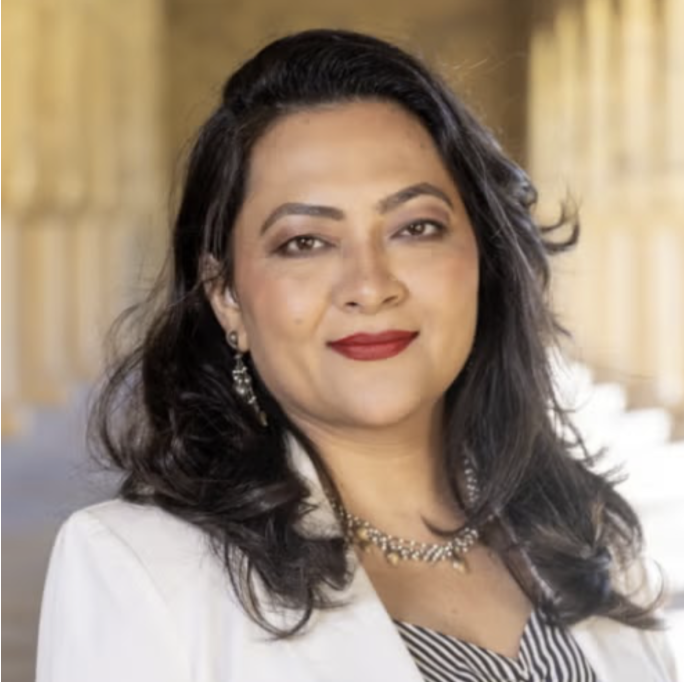
 Arfa Khanum Sherwani
Senior Editor, The Wire | INDIA
Short Bio: Ms. Arfa Khanum is a Senior Editor at The Wire, an independent news website published in Hindi, English, Urdu and Marathi. She leads the multimedia team and hosts one of the most popular online video programs in India, which is primarily devoted to the issues of people living on the margins of Indian democracy. In 2019, Ms. Khanum was one of the first journalists to visit the Kashmir Valley after the Indian government stripped Kashmir of its autonomy and imposed a complete security and communication lockdown. Her journalism is focused on covering politics and policy, with a special focus on social justice. Ms. Arfa Khanum previously worked for NDTV, one of the largest television news networks in India. She is a recipient of the Red Ink Award for Excellence in Journalism from the Mumbai Press Club and the Chameli Devi Jain Award for Outstanding Woman Journalist of the year from The Media Foundation.
Event: SDGs Conference 2025
Date: September 24, 2025
SPEECH: Cohesion and Peacefulness: As the United Nations turns 80, with so much conflict around us and the tragic loss of lives, we are all asking: How relevant is this institution in 2025? But the truth is, the UN remains a crucial platform for international dialogue, for peace, and for security efforts.
Tribute to Journalists in Palestine: Before I begin, I want to take a moment to remember my colleagues in Gaza Palestine, who are no longer with us. In the past 22 months, more than 200 journalists have been killed there. Those who have survived continue to report every single day, often counting their own days as well. They put everything on the line, including their lives, to bring us the stories of one of the most persecuted people on this planet. I want to take this moment to honor their courage, their work, and their service to humanity.
India: The Global Battle for Democracy: With 1.45 billion people, India is now officially the most populous country on Earth. And today, India is where the global battle for democracy is being fought. In many ways, India exemplifies the global democratic recession, and, I must say, America is giving us tough competition. It is, as I often say, the worst time to be a journalist in India, and yet, the best time to be a journalist in India.
The Media Landscape in India: India’s media landscape is vast and diverse. We have over 140,000 registered newspapers and periodicals, including more than 22,000 daily publications. Stories are told in 189 languages and dialects. The television landscape is equally sprawling — with over 900 channels, 350 of which are dedicated to news, many broadcasting around the clock. By 2026, India is projected to be the world’s fifth-largest media market, both in print and broadcast television. And yet, despite this incredible scale, the state of media and the state of democracy in India have never been more worrying than they are today.
The Crisis of Information: Despite hundreds of media organizations and thousands of journalists, India is going through a crisis of information. People are not getting the information they deserve. Why so? Because there are two sides to Indian media: The pro-establishment media, and the free, progressive media.
Political Context: It is now the 12th year of Prime Minister Narendra Modi’s rule, his third term in power. The pro-establishment media sees no fault in his work, not even during the five million deaths during COVID, rising unemployment, or deepening social unrest.
Meanwhile, the progressive media faces constant suppression. For instance, the I&B Ministry ordered the takedown of 138 videos and 83 Instagram posts about the Adani Group, using ex-parte court orders. Those who are still reporting the truth, are doing so at great personal risk, often against one of the richest men in the world. Although the election last year resulted in a coalition government, the Modi administration continues to target political opponents, dissenters, journalists, activists, and even comedians, who, today, are not allowed to crack a joke.
Mainstream Media’s Role: Most of the mainstream media in India today are spreading misinformation, disinformation, and suppressing information. Many are actively colluding with the ruling party and its agenda of religious supremacy. This agenda involves polarizing the country daily, demonizing the Muslim minority, and inciting hate and violence. This cycle of media suppression to lack of information to uninformed citizens and weakened democracy is what defines the current crisis.
Rise of the Alternate Media: In response, we are witnessing the rise of alternate media, independent, citizen-led, digital platforms that are challenging narratives and restoring truth. But they too face intimidation, censorship, and financial pressure.
Conclusion: We all agree that democracy rests on an informed citizenry. Citizens must know how governments perform, where policies succeed, and where they fail, in order to make fair choices at the ballot box. But the way Indian media is functioning today, it is polarizing communities and undermining any possibility of reconciliation or peaceful dialogue. Especially in a country as diverse as India, where unity in diversity has been the very foundation of our democracy, rebuilding trust in media is essential, not through control or censorship, but through transparency, accountability, and ethical journalism.
On the sidelines of this 80th UN General Assembly, it is vital to recognize that safeguarding democracy is not only about protecting elections or institutions, but also about protecting the credibility of information that binds citizens together, in trust and peaceful coexistence. At 80, the United Nations reminds us that peace and democracy are inseparable. For India, safeguarding democracy requires restoring faith in the fourth pillar, our media, so that citizens can hold governments accountable and participate in democracy from a place of knowledge, not misinformation.