
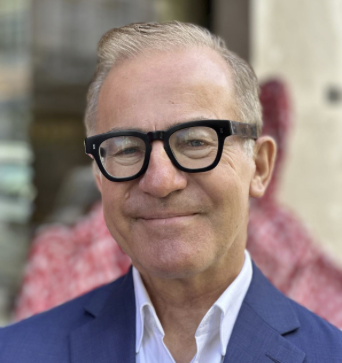
 Michael Bociurkiw
Global Affairs Analyst, Former Spokesperson, UNICEF and OSCE
Short Bio: Mr. Michael Bociurkiw is a New York Times-published opinion writer, former journalist, and respected global affairs analyst. He is the creator of the influential World Briefing newsletter on Substack and the author of Digital Pandemic: How Tech Went from Bad to Good. Mr. Bociurkiw served as UNICEF Spokesperson in the Occupied Palestinian Territory and later as the organization’s global spokesperson in Geneva, leading communications in several high-profile emergencies worldwide. He also brought his diplomatic expertise to the role of spokesperson for the Organization for Security and Co-Operation in Europe in Ukraine. A trusted voice on international crises, he is a regular contributor to BBC World Television, BBC World Service Radio, CNN, Al Jazeera, Times Radio, and other leading global outlets.
Event: SDGs Conference 2025
Date: September 24, 2025
SPEECH: I am based in Odesa, Ukraine, which is currently a war zone. Just a few minutes ago, the air raid sirens went off in the region; it is probably the fifth one today. Whenever sirens go off, as it is night-time now in Ukraine, children are woken from their sleep. If they are not sleeping and they are in school, classes stop, and they rush to bomb shelters. Imagine the disruption and Post-Traumatic Stress Disorder (PTSD) people get after so many air raid sirens every day. I would like to start my reflections by acknowledging this dire situation.
I am a Canadian citizen, and this is my first time entering the United States since Trump took office again (Trump 2.0). I have several notes on this because we are talking about democracies and autocrats. I used to live in a Canadian-US border town on Vancouver Island. It is the first time ever that I felt so anxious entering the U.S. – and I have crossed a lot of borders in my lifetime, very challenging borders. I never thought that the day would come when we could be denied entry based on what we [journalists] said on air, put in print, and posted on social media. This is a very disturbing time when a lot of Canadians have had problems going in and to the point where, I included, we delete the social media apps on our telephones in case we are taken to secondary examination. They have been known to look through our belongings, and they could ask us: “What do you think of Trump?”. It is not a good place for what is supposed to be the leader of the free world.
There is some good news at the end of my speech but let me get the bad news first. When we take everything into consideration about what is happening around the world, we cannot blame it all on the current occupant of the White House, though he can take a lot of credit. It feels like the rules-based international order is in free fall. As we convene on the sidelines of the UN General Assembly, I must say that severe financial cuts to the United Nations have been very deep. All organizations, including the one I used to work for, UNICEF, are having to decide what to cut. At the end of the day, whether you are talking about UNICEF, the World Food Program, or UNAIDS, this does cascade down very quickly to the field and to the point where managers of certain UN organizations have to decide, “Do we bring out this vaccine or do we not? Who lives, who does not, who gets fed, who does not?”
What is happening in Gaza is beyond belief. It is horrible on every level. As the UNICEF spokesperson at the time for the Occupied Palestinian Territory (OPT), I got to know almost every inch of the Gaza Strip. I have spent a lot of time there and also in the West Bank. When I hear of this man-made starvation, famine, genocide, it just brings me back to the faces of young kids that we used to work with there. It is very difficult to watch. I am often asked on air about my views on the stance of the European Union and European allies to end the war in Ukraine. I reply by noting that there is a man-made famine happening on their doorstep in Gaza, and yet – they are either unwilling or unable to end it. So that is all everyone needs to know. It is very disheartening to watch the kind of impotence right now of these major powers.
We are now in a very unenviable situation in which what were formerly red lines are now dotted lines or ambiguous lines. For example, consider what happened recently in Poland with Russian drones and in Estonia. They [European leaders] have either the inability or the unwillingness to tell their own populations that they have to switch our economies to war economies, as done by Russia, given the fact that almost 40% of their GDP is aimed towards the war.
The other theme I would like to cover is that attacks on the media have a cascading effect, not only within the United States but worldwide. What I mean is attacking journalists not by shooting them, as done in some states, but by inviting the (pro-Trump) ’tech brothers’ to launch court cases against journalists or media outlets that they do not like. It opens the door for ordinary people to intimidate journalists. It opens the way for copycat attacks, including autocrats creating laws that make it impossible for journalists to operate. What is happening right now is very worrisome in terms of the restrictions on coverage, whether it is for the Oval Office or the Pentagon. Additionally, what is worrisome are some of the legal costs that Mr. Trump has launched against a publication I have written for – the New York Times, which is around $1 – 1.5 billion. Do not believe for a minute that this does not cause journalists to really shudder, not out of fear, but out of what could happen. I would like to remind everybody that journalists are not a target and, in fact, deliberately targeting a journalist is a war crime.
It is important for me to note this because I am based in Ukraine. Democratically-elected leaders there are very much lionized by the foreign media, like President Volodymyr Zelensky. But his team are also using tools to corral the media or control them.
As soon as the war started, Mr. Zelensky said that all the main government-friendly TV channels would become part of what is called a 24/7 tele-marathon- a 24/7 TV show with all the different outlets. It has become a very patriotic, pro-Zelensky forum as no one there has criticized the government, and it features Mr. Zelensky quite prominently.
There are huge threats to democracies and countries that neighbor Russia. This Sunday in Moldova, there is a very important parliamentary election where the ruling party may actually lose. If you look back at the recent referendum on EU ascension and the presidential election where Maia Sandu got re-elected, it was razor thin. And if it were not for the votes counted by the diaspora, it would not have gone through. In the past weeks and months, Russia has devoted tens of millions of dollars to disrupt the elections, but also to sway the outcome. They are using incredible tactics that we have not seen before. They put a verification process of Russian-linked agents in Moldova paying masquerades journalists. They go around, film people, and if they get an anti-government comment or response, they throw that out on social media. Even though Moldova is a very small country, some of these types of posts have got 20 million views, which is quite disturbing.
Other techniques also include bots and fake accounts. There is also soft power techniques such as funding sports teams and cultural events. There are unfortunately a lot of gaps in international law where it makes it very difficult to prosecute the wrongdoers, whether it is an idea of soldier shooting at a young child for asking for food, or it is a Russian soldier kidnapping Ukrainian children so that they can be put up for forced adoption in Russia. Universal jurisdiction allows countries to try a war crime suspect in a third-party state. For example, a Russian soldier identified, perhaps through AI, killing a child could be tried in Argentina. Technology has often been maligned, but it can also be used for good purposes, including facial recognition to identify perpetrators of genocide.