
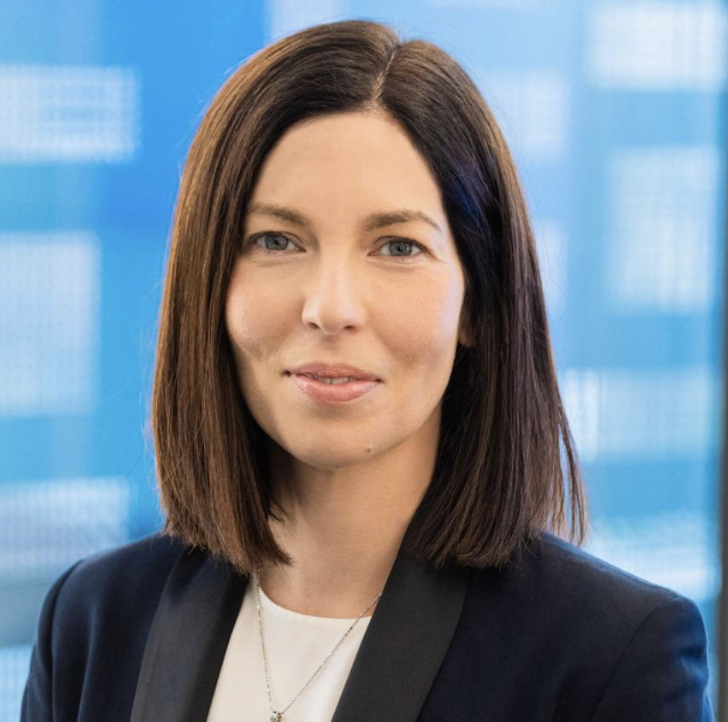
 Sophie Farthing
Head of Responsible Technology Program, Human Technology Institute | AUSTRALIA
Short Bio: Ms. Sophie Farthing is Head of the Responsible Technology Program at the Human Technology Institute at the University of Technology Sydney. A human rights lawyer, her work encompasses human centered approaches to new and emerging technologies, with a current focus on AI governance and regulation. Previously, Ms. Farthing was the Senior Policy Adviser to the Australian Human Rights Commissioner. She has held legal policy roles at the Public Interest Advocacy Centre in Sydney, at National Council for Civil Liberties in the United Kingdom and was appointed the Research Assistant to Baroness Hale of Richmond in the United Kingdom Supreme Court. Ms. Sophie Farthing recently served on the Australian Human Rights Commission Expert Reference Group on Neurotechnology and Human Rights.
Event: SDGs Conference 2025
Date: September 24, 2025
SPEECH: As a human rights lawyer, I have been working in AI, governance, and technology policy for almost a decade now. The Human Technology Institute, based in Australia, is coming to this fourth industrial revolution, looking to see how we can ensure new and emerging technology is adopted in a way that is human-centric, so that we get the benefits from this very powerful technology, and we do not steer towards that dystopian future that we definitely all fear. First, I would like to give a proper framing for what civic technologies are. Like artificial intelligence, there is no fixed definition, but as we think about civic technologies, we are looking for the positive examples. The ones where the use of technology is transparent, where there is accountability, and it is used for the public interest. Therefore, when we are talking about the revitalization of the Sustainable Development Goals, we are in an incredible era where there is so much potential and a lot of peril.
Artificial intelligence is one technology, and there will be other examples of civic technologies that are going to be relevant to the SDGs. My focus on AI is because of how transformative this technology is. So, if we are thinking about potential, it is incredible what AI is going to be able to achieve because it is pervasive and now touching on all parts of societies and economies in very different ways. We surely have a huge digital divide, and we are getting an AI divide as well. As we have had past technologies that have completely transformed societies, that is what AI has the potential to do if we make the right choices with the right questions. If we approach the AI in the right way, then we will be able to use these technologies to revitalize and to work towards the attainment of the SDGs.
I also would like to note that we steer between two extremes, with a polar extreme headline of “AI could wipe out humanity,” which had many political ramifications, to the claim that “AI can be worth trillions,” referring to huge productivity and jobs. But what we are doing at the Human Technology Institute is focusing on examples showcasing how AI is being used now. We can get very distracted with the AI debate, and that is certainly occurring in particular environments globally. We can talk about the promise of AI transition from the promise of AI as one extreme to claiming that it will wipe us all out, taking our jobs. We must have practical conversations to make the right choices.
I would like to elaborate on the promise and the peril when it comes to using AI to achieve the SDGs, and the best way to do this is by speaking of examples. As I am coming from Australia, I have got a very particular example of AI from my country and how we are approaching it. During the week, I have met an obstetrician who specializes in high-risk pregnancies in Australia, where there is an excellent health system, but in our rural and remote areas, there are a lot of challenges. This woman`s health professional was talking about diagnostic tools; the majority are powered by AI. She was saying that this new tool is not replacing what she does when she goes out to rural and remote Australia, but it is speeding up the time she must make a diagnosis quickly and therefore see more people and offer more help. These kinds of examples about health are very incredible when it comes to the use of AI. Ending hunger is another area with life-changing impacts of AI. I spoke with another person from Mali who has developed an app that is launching this week. The application will provide local people, including farmers and non-farmers, with information about growing food using the land around them, with the kind of information about weather and possible crops that could be planted. This is about the accessibility of information.
My computer scientist colleagues at the Human Technology Institute are globally leading a Bayesian statistical analysis and deep machine learning, looking at the education system in New South Wales, the state in which I come from. They have taken huge swaths of data held by the New South Wales Department of Education. After organizing that data and feeding it into their very spectacular mathematical formulas, they receive incredible algorithms.
What they are doing is looking at all this data that has been held for decades, and they are trying to understand why some kids finish school particularly strongly, and some finish at a disadvantage. One of the interesting findings is the unexpected causal relationships. Not only the correlation, but they are using AI to understand causation, which is the lower socioeconomic status that might indicate how well a child finishes school, if they finish school at all. In fact, they are finding a sense of belonging. These kinds of examples of AI use are the ones we need to really lean into when it comes to achieving the SDGs. We, of course, have a lot of frightening examples of how AI is undermining human rights and dismantling democracy. We must have a kind of environment in which healthy and well-functioning democratic institutions can operate. And AI is really undermining that ecosystem when it comes to misinformation. Social media is another good example of how powerful business models that are driving particular social media trends are having impacts on the health of young people and all of us. Seeking to understand how AI is reshaping public discourse in Australia and everywhere around the world is really important when we think about this promise and peril. How do we get the most out of AI?
We could have many different futures when it comes to AI and achieving the SDGs, but we need to be very careful about our decision making. We need active leadership at this point in time. As we are talking about AI revitalizing the attainment of the SDGs, it is addressing that global divide which is hugely significant. We are talking about the benefits of AI streaming to developing countries and even echelons within developed countries. We need good governance, ethical regulation, and human rights protection at the very core of all those regulatory instruments.