
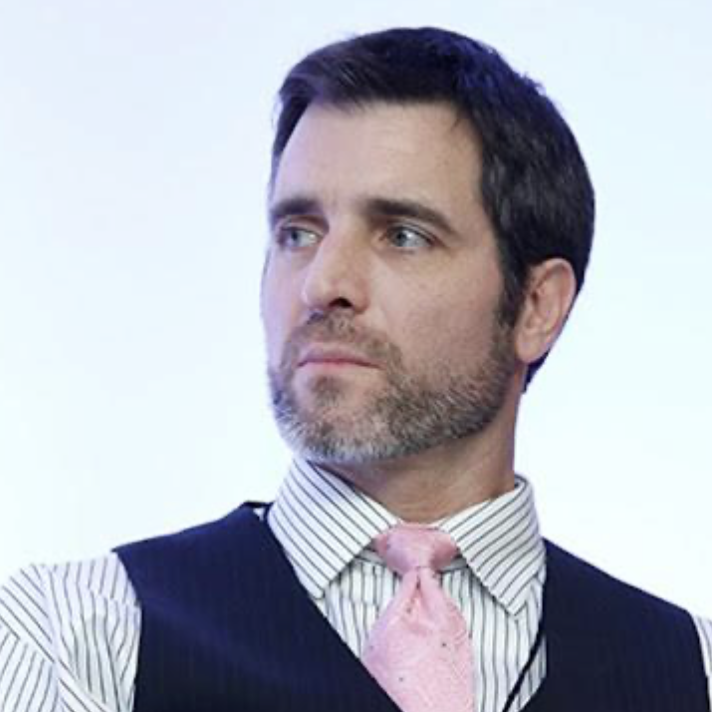
 James Patton
Founding Partner, Lead Integrity | USA
Short Bio: Mr. James Patton is a Founding Partner of the women-led consulting firm, Lead Integrity and an Environmental and Social Impact Consultant for the Inter-American Development Bank. He has conducted conflict transformation, reconciliation, and economic development for 25 years in 40 countries. His advisory roles include the U.S. Department of State’s Working Group on Religion and Foreign Policy, the UN Multi-Faith Advisory Council to the Task Force on Religion and Development, and Religion and Conflict Co-Chair for the G20 Interfaith Forum. Mr. Patton is a Lifetime Member of the Council on Foreign Relations, Advisory Council Member for the Center for Women, Faith and Leadership, Faculty Advisor at Brigham Young University’s Wheatley Institution, and Senior Fellow at the Rumi Forum. James holds a Master of Divinity from Harvard University and a Master of Law and Diplomacy from the Fletcher School at Tufts University.
Event: SDGs Conference 2025
Date: September 24, 2025
SPEECH: In 2010-2011, I was a State Department conflict mitigation expert in what was then southern Sudan during the referendum for independence. There was an almost universal consensus in the South, widely promoted by southern politicians, that divorce from the North was the solution to generations of suffering and violence. As part of my work, I was in Northern Bahr El-Ghazal, near the border with Darfur, as an election observer. 99% of ballots were clearly marked for secession and independence, but what surprised me most was the celebration among community members when they found the few and far between ballots marked for sustaining unification with the north. Considering the histories involved, it seemed deeply illogical to me. But it turned out that they were so excited because these few dissenting votes showed clearly that the Referendum was “free and fair” – something that they knew was important to show the world that their birth as a new democratic state was legitimate.
Two years ago, I was conversing with a university student in Utah, exploring ways that faith might support civic engagement, and she was lamenting the state of the US democracy. She put it quite simply, “politically, I have nowhere to go”. Her complaint was not about candidates as much as it was about how party politics and the need to stay in power had created reductionist, essentialist platforms with implied loyalty tests.
We discussed how voters used to push ideas up into political parties, moving legislative priorities, but now the parties push down into the populace their own priorities, not grounded in either legislation or even logic but rather in a polarized power struggle that not only fails to capture the great diversity of ideas in society, but is actively working to eliminate them in favor of a false binary that is often illogical and is increasingly destructive, thriving on, rather than positively transforming, conflict.
It is true that democracy has never been anything but deeply flawed. Among the foundations of all democracies are littered the bricks of injustice, corruption, disenfranchisement, and myriad other failures. But a functioning democracy is not an experiment in perfection; it is an experiment in improvement. The failures of democracy’s promise are both a lament and an opportunity. Democracy understands that we get things wrong, it enshrines the need to change and adapt, and it is illuminated by the practical hope that we can have difficult dialogues that will guide us from the inevitable conflict of ideas and needs that mark human society towards more fair and functional structures and social relationships, rather than deteriorating into absolutism, authoritarianism, and exclusivist bloodshed.
In 2022, Freedom House described democracy as a “governing system based on the will and consent of the governed, institutions that are accountable to all citizens, adherence to the rule of law, and respect for human rights.” Consent, Accountability, Rule of Law, and Human Rights are among the principles that consistently appear in descriptions of democracy, including within the UN system.
The institutions of democracy, as well as those core ideals that uphold them, are groaning under the pressures of polarization. Perhaps the most nuanced measure of global democracy, produced by the V-Dem Institute at the University of Gothenburg, applies around 600 “attributes of democracy”. Some highlights include:
- 72% of people now live in autocracies; the highest since 1978.
- Average levels of democracy for global citizens have retreated to 1985 levels – before the end of the Cold War.
Those who are given power are greatly seduced by the temptation to erode controls on their power. And I don’t mean this as any kind of partisan or moral judgment; I mean it in very practical terms with respect to the careful architecture surrounding democracies that acknowledge and respond to this temptation by insulating popular governance against power consolidation, corruption, and other abuses.
But when people lose faith that their system of governance can help them, they either turn from those institutions or seek to take them over and rebuild them in their own image – not to preserve and protect a participatory and pluralist system, but to preserve their own policy and values priorities – at the cost of others. Democracy needs preservation and constant repair to defend against our all-too-human inclination to take power, but also to maintain the basic trust of the citizens who participatory governance is meant to represent.