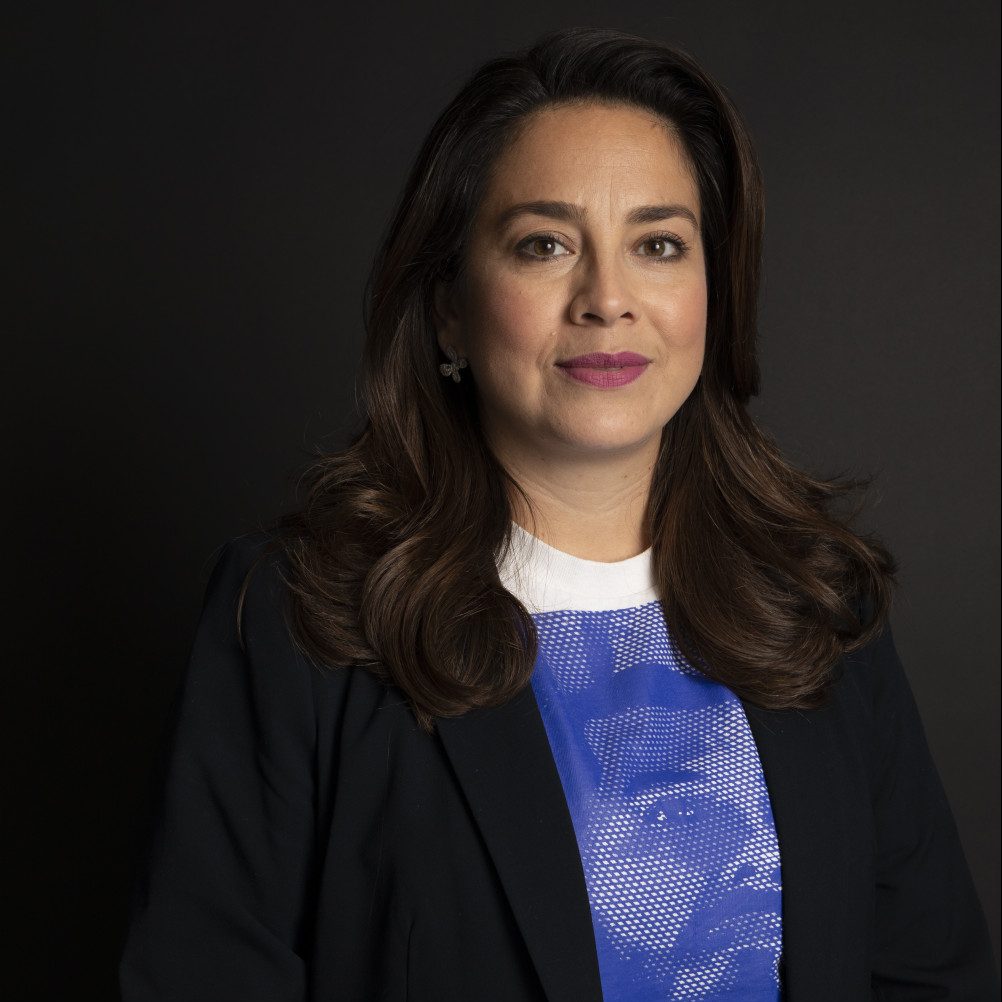
Johan Heymans

Johan Heymans, Managing Partner, Venote Criminal Law and Human Rights | Belgium

Johan Heymans is the Managing Partner of Venote Criminal Law and Human Rights. He obtained his Bachelor’s Degree in Law from Namur University in 2010 and his master’s degree from Leuven and Tilburg in 2012. He then took a master of laws (LL.M.) in international and US criminal law at New York University. Mr. Heymans later worked in Phnom Penh for the prosecutor’s office at the Khmer Rouge Tribunal and was also a guest lecturer in international criminal law at the Royal University of Law and Economics in Cambodia. He has been a teaching assistant in criminal procedure at the Law Faculty of the Antwerp University since 2015. He also gives guest lectures at Ghent University and at the Belgian Institute for Judicial Training. Johan Heymans is also active as a human rights expert at the Council of Bars and Law Societies of Europe (CCBE) and at Fair Trials.


Video Link:


Event Title: SDGs Conference 2023 Date: Sept 20, 2023
 

SPEECH

Strengthening the rule of law to combat the rise of authoritarianism: Intergovernmental Responses

As a group of human rights lawyers, we work on different human rights problems in the world. Sadly enough, we have worked a lot in Turkey in the last seven years. It is in light of these experiences that I want to make some reflections, particularly in regard to Goal 16. There is a need for more peace, justice, and stronger institutions because as we see in today’s world, the rule of law is under threat and pressure. There is one specific tendency that I want to highlight that is really close to my heart and it is a tendency that concerns abductions that have been the rapporteur to the Turkey Tribunal Opinions Tribunal.

It is a tendency that we see increasing in the world today. On the one hand, we have domestic abductions, which have existed for a really long time but are really increasing in frequency. However, these techniques are used to eliminate political opponents in most cases, or any event, critical voices towards the regime. There is also some other tendency that is, in a way, newer but is increasing very rapidly, that concerns international abductions where countries do not limit themselves to their boundaries. They go abroad to eliminate the people who were thinking that was safe, who were thinking that they could construct a new life and suddenly they are captured and illegally brought back to their home countries where they were tortured.

If I take the example of Turkey, in the last seven years, it has abducted individuals from 23 other countries, critical voices, and people whom they consider to be opponents of the regime. So, if you think about it, 1 in 9 countries have been working together with Turkey to eliminate critical voices that have nothing to do with but concern a purely Turkish affair. The second worrying aspect of that tendency is that countries like Turkey are not limited by the fact that these people enjoy the protection of the United Nations. They are not limited by the fact that these people have double nationalities. They are not even limited by the fact that these people have not lived in their respective countries for many years and are doing something completely different in another country.

Abductions are very worrying because it is normalizing an act that is an international crime. Countries are working together; they are sharing the same practices, finding strength with each other to normalize crimes that should not be normal. It forces different countries to work and collaborate on these practices towards a more authoritarian regime, a more authoritarian way of working and thinking. How we can solve that issue is through the intervention of different actors. One of these actors is, of course, civil society. I have seen it in the past; if they are quick to react and intervene immediately after someone has been adopted, they mobilize the international community. Sometimes you can stop the abduction and people are released again.

You also have human rights defenders, who start litigating, when people disappear, either in the host state or in the country where the person has been abducted to challenge the judges to release the person and to help them to find the person. We have also seen that happen in different countries, notably in countries that were working together with Turkey but then if a person disappears, that means that they end up in these secret detention facilities where they are tortured and abused. It is also important to take action and human rights defenders do that by filing complaints to the United Nations Human Rights Committee, which then renders provisional measures and imposes pressure on the different countries to release the people or at least make them resurface in the normal, official, and the judiciary system.

Then eventually, if the people resurface, most often that happens after a few weeks but usually it is a few months, a few years, and sometimes they never resurface again. It is important to get these people released as quickly as possible because they are pressured into not talking about what they suffered, and about not sharing the torture experiences that they have gone through. So, it is only when they are out that they can fully speak up and let us know what happened to them but these categories of people will be more familiar.

There is one category of people that we tend to forget and they are really important, which are judges; they have a huge responsibility in stopping these international crimes because in case there is a shift towards an authoritarian regime in a democratic state, a strong institutional and judicial framework can stop this deterioration.

We often see that when there is this strong judicial backbone democracy, even if it is harmed, it manages to survive for a number of years. However, it is at the moment when even the judicial backbone gives up that democracy and it has disappeared at lightning speed. It is really important to also focus on the judges.

If I take the example of Turkey again, over the last few years, thousands of people have been convicted of long sentences. We have been speaking about it for eight years as prolonged sentences are given on empty case files. If you open it, there is nothing in there; but even when there is something in the case files, it is evidence that a first-year law student would see that is not credible at all. Still, these judges convict the people and put them in prison.

I do not want to completely destroy the very honorable profession of being a judge because it is a very important profession. I know it is not easy what they have to do but because I have also seen lots of cases where judges were arrested in their courtrooms. I have one case that comes to my mind where a judge made a decision that was not in favor of the government policy. He was arrested in his courtroom and replaced by another who did the same thing because of the fact there was nothing in the case file. So, they said this person should be released. He was also arrested and then the third one came in and he saw his two colleagues being escorted to jail and he came to a different conclusion. However, I know that it is not easy but if you take on that responsibility, you have to make a choice. Either you do it properly or you do not do it at all.

It is really important, on the one hand, to support the judges who try to do a wonderful job in very hard circumstances. However, on the other hand, we should send out a wake-up call to show them that there are consequences for covering up these international crimes. For instance, the Turkey Tribunal is an opinions tribunal with no legally binding powers but we brought together judges from all over the world, all continents, and people with lots of experience. We presented them with five topics of serious human rights violations in Turkey. They looked at it independently and they came to a conclusion that crimes against humanity are being committed in Turkey.

Notably, they dedicated a lot of attention to the judges who are assisting, covering up these crimes, or not investigating the crimes that are being committed, for instance Turkey. Consequently, we also filed a complaint at the International Criminal Court, in this context, because it was remarkable. The Turkey Tribunal was followed by 2 million people and the most feedback that we got, reactions from the audience, came from judges who were asking, will there be consequences for me? Will I be held accountable because I am functioning in this defunct system? So for us, it showed that the work had an impact and that it could lead a change. That was also the reason why we filed the complaint before the International Criminal Court, not only against the politicians, the secret services, and the police officers who are participating in these crimes but also against the judges covering up everything that the other actors in this context have been doing.

We are also working around universal jurisdiction. It is a little bit comparable to sanctions in other countries like Russia. It all sounds or feels for them like there will be no consequences but then if they want to travel abroad for a holiday or their children study in some place and they want to go to visit them, the risk that they might be arrested for the crimes, the complicity in the crimes that they have been helping to commit. That sometimes helps to change the mindset of the people. It is not that I have the pretension to say that certainly will change the entire system and the rule of law in Turkey but also in other countries.

Still, I think it is important to know that every single one of us has skills and is good at something and that everybody if we unite and we keep on fighting for these things, that with these very small efforts combined and consistently done, can make great social impact and change. I think that it is important to remember for all of us that we should try to think about what we keep and what we can do. How can we help to make a difference? Often when you look at these big questions, you have the feeling that it is overwhelming and too complicated for an individual to do something. However, every single one of us can do something to change these situations.

Guilherme Stolle Paixão e Casarões

Guilherme Stolle Paixão e Casarões, Professor of Political Science and International Relations | Brazil

Guilherme Stolle Paixão e Casarões is a Doctor and Master of Political Science from the University of São Paulo, a Master of International Relations from the University of Campinas (San Tiago Dantas Program), a specialist in History and Political Cultures from the Federal University of Minas Gerais. He has a degree in International Relations from the Pontifical Catholic University of Minas Gerais. He is Vice-Coordinator of the Graduation in Public Administration of the Getulio Vargas Foundation (FGV EAESP) and Professor of FGV in the areas of Public Administration, Political Science and International Relations. He was a visiting fellow at the Tel Aviv University (2011) and Brandeis University (2015). Guilherme Stolle Paixão e Casarões has published researches and articles in the areas of Brazilian Foreign Policy, Brazil-Middle East Relations and International Relations Theory.


Video Link:


Event Title: SDGs Conference 2023 Date: Sept 20, 2023
 

SPEECH

Rising trends of populism: Threats to global peace and security

Foremost, I would like to address the concept of populism, to which I draw on the already classic works of Cas Mudde and Benjamin Moffitt. I acknowledge this is not a new idea to most of you, but some clarification might be necessary. In academic circles, there are endless debates on the nature of populism or whether it is an ideology or a political strategy. Nevertheless, the main features of populism are well-known:


  1. Populists divide societies in binary terms, usually between what they understand as ‘the true people’ versus ‘the corrupt elites.’ In some cases, the division takes place between pure good versus pure evil. By doing so, they advance a view of politics as war, in which the ‘other’ must be defeated or even eliminated from political life.
  2. Populists despise technocrats and democratic institutions, especially those whose members have not been elected. They want to tap into the common sense of the average person. They do so by resorting to bad manners and, most importantly, by offering simplistic solutions to complex problems – from violent crime to health emergencies such as the COVID-19 pandemic.
  3. Populists thrive on chaos and insecurity. They feed from people’s anxieties, grievances, resentment, and fear, and transform them into an unstoppable political force based on hate. This is why populists are always fostering crises and breakdowns as the necessary fuel for their political strategies.

* * *

The second part of my discussion seeks to discuss what populists are not (necessarily).

  1. Populists are not necessarily authoritarian – although they might easily slip into authoritarianism as they do not like political institutions to hold them back. They also advance the idea of a homogeneous society that most times leaves no room for the pluralism of civil society movements.
  2. Populists are not necessarily serial liars – although they often feel tempted to construct ambitious narratives about the people (and of themselves) through disinformation tools, from straight-up fake news to sophisticated algorithms, from rewriting history to banning (or even burning) books.
  3. Populists are not always right-wing – although they tend to favor socially conservative agendas based on race, ethnicity, and/or religion. Even left-wing populists, despite embracing revolutionary motifs and progressive causes at times, tend to privilege the majority to the detriment of minorities, instead of protecting the latter.

* * *

In part 3, I will answer the following questions: what does a populist foreign policy look like? How does it threaten global peace and security? In this effort, I draw my points on Sandra Destradi and Johannes Plagemann’s work on India’s foreign policy, which may be generalized to think about other cases of global populism.

  1. Populists threaten global security because they are suspicious of and often hostile to, global governance mechanisms and multilateral treaties that have been critical to world peace.
  2. Populists threaten global security because they prefer bilateral over multilateral relations, leading to complicity towards great-power conflicts or to unilateral violence and repression (in case a great power is ruled by a populist).
  3. Populists are a threat to democracy and political stability not just at home, but also abroad, as they frequently expand their understanding of the people to diaspora or religious communities across the world, and weaponize them to the populist’s own political interests.
  4. Populists threaten global security because they are not bound by traditional foreign policy institutions and diplomatic rituals that often prevent disruptive events from taking place.
  5. Populists threaten global security and stability because they are able to permanently mobilize ‘their’ people against democracy, fundamental rights, and basic freedoms.

* * *

Finally, in the last part, allow me to look into how populism affects the attainment of SDGs, which are at the heart of this conference. Brazil’s president Luiz Inácio Lula da Silva spoke at the UN General Assembly yesterday (Tuesday, September 19). In his speech, he underlined two points I consider crucial to the future of multilateralism and the SDGs:

  1. SDGs are the UN’s most ambitious initiative, but they may become the UN’s most shameful failure if countries fail to cooperate wholeheartedly and urgently.
  2. Most political problems in the world today – brutal conflicts, democratic breakdowns, and the rise of extremism – share the common root of poverty and inequality.

Although populists are not necessarily against ending poverty and hunger (Goals 1 and 2), they will only commit to cooperation if there is no one else to blame. Populists are certainly not committed to quality education (Goal 4) and gender equality (Goal 5), as they feel the state should only serve those who share their values. Populists do not seem to care about clean energy (Goal 7) and climate change (Goal 13), often reducing these concerns to mere conspiracies advanced by transnational elites, which include scientists, activists, and politicians (dismissed as liberal or communist). They are all accused of disregarding the true needs of the people.


Having said all that, it comes as no surprise that populists are not willing to embrace Goal 16, peace, justice, and strong institutions. I am confident that populists uncommitted to global peace and security may lose momentum soon. It requires solid institutions, brave activists, and increased cooperation.

Berta Valle

Berta Valle, Nicaraguan Journalist, Human Rights Defender | Nicaragua

Berta Valle is a recognised Nicaraguan activist, journalist, and human rights defender. With fifteen years of experience as a senior television anchor and station manager working with top morning shows in Nicaragua, Ms. Valle is one of the most-recognized broadcasters in the country. In 2016, she was nominated as an independent to represent Managua in the National Assembly by the Independent Liberal Party as part of its National Coalition for Democracy. However, Nicaragua’s Supreme Court, controlled by Ortega loyalists, disqualified the party’s electoral coalition and Valle was blocked from running. Since 2018, Valle, her daughter and mother-in-law have been living in exile due to the political persecution faced by her husband Félix Maradiaga and his family. Maradiaga was forcibly disappeared by the regime in June 2021 after announcing his intention to run against Daniel Ortega in November’s presidential elections.


Video Link:


Event Title: SDGs Conference 2023 Date: Sept 20, 2023
 

SPEECH

Berta Valle, Human Rights Defender, Nicaraguan Journalist, Nicaragua

Keeping a spotlight on human rights defenders in distress and advocating for the release of political prisoners

I stand before you today as a human rights defender from Nicaragua, as a woman, the wife of a former political prisoner, and as a mother, but also as someone who has dedicated over 20 years to working alongside journalists and media outlets. Over the course of my career, I have had the privilege of hosting television programs and serving as a general manager for a prominent television channel in Nicaragua. However, the most impactful chapter of my journey has been my involvement with “Voces en Libertad” over the last five years. 

“Voces en Libertad” was founded by a group of journalists in exile, aimed at supporting those who are fleeing persecution under Daniel Ortega’s regime. I am deeply grateful for the opportunity to shed light on a matter that is often overlooked: the personal sacrifices made by human rights defenders who courageously stand on the front lines to protect our liberties, rights, and democracy in the face of increasing authoritarianism.  I want to be very clear that journalists are human rights defenders – even though they might not always be recognized as such. Today, the contributions of journalists are more important than ever.  

Nicaragua is rapidly turning into a totalitarian regime, bringing with it death, destruction, and poverty. This authoritarian decline, which gained momentum in 2018, seeks to eliminate any space where democracy could survive, both in public and private spheres, similar to North Korea and Cuba. This model has taken the lives of over 350 citizens, injured thousands, and forced hundreds of thousands into exile. In February of this year, the regime stripped the nationality from another hundred people it sees as threats – including me – leaving us de facto stateless. 

Additionally, more than 1200 people have been imprisoned and tortured for political reasons. My husband Félix was arrested by Ortega’s regime in June 2021.  Although many political prisoners were released in February of this year, including Félix and more than 200 others who were expelled to the United States, it is essential to remember that there are still more than 80 political prisoners in Nicaragua’s jails, including Bishop Monsignor Rolando Alvarez.

Despite the tremendous efforts of the global community, Daniel Ortega and Rosario Murillo continue to commit severe human rights violations and crimes against humanity that surpass even those experienced during the civil conflicts of our recent history. This is a painful reality to witness, and urgent action is necessary to bring an end to these atrocities.

The Ortega regime has engaged in extrajudicial killings, torture, arbitrary detention, and all manner of violations of our civil and political rights.  Especially severe have been the regime’s attacks on the Catholic Church, including closing private universities like the Jesuit Order’s Central American University and others, arresting priests for their sermons, and depriving over a million Nicaraguans of the philanthropic and humanitarian services offered by more than 3000 civic organizations represents an inhumane act of monumental proportions.

In the last 16 months, over 20 private universities have been closed and seized, and media outlets face censorship, leaving no free space to express oneself anywhere in the country, whether public or private. Those who dare to dissent face repression, confinement, or exile; being a journalist and covering a religious event can result in an 8-year prison sentence. Anyone can be jailed or exiled for publishing a tweet or making any public or even private denunciation on social media, which are obsessively monitored by the regime.

The totalitarian model has taken a further step, as the confiscation and theft of properties from individuals, businessmen, and private parties have become commonplace throughout the country; any attempt at protest can be met with death, exile, or imprisonment.

Nicaragua is at a turning point. With the right international intervention, the regime could be pressured to make changes and avoid an economic collapse. However, the plight of the Nicaraguans largely goes unnoticed, especially by international agencies and development banks that continue to fuel the government’s totalitarian state agenda and project.

My country is grappling with a severe human rights crisis. But I am not here just to speak about the specific challenges we face in Nicaragua. I wanted to shed light on a global issue that threatens the very essence of democracy and human rights worldwide. An aspect of great concern that is not discussed enough is the enormous danger faced by human rights defenders who are on the front lines of denouncing authoritarian regimes. Never in recent history has being a human rights defender been such a perilous profession. International treaties that uphold and protect the role of human rights defenders are increasingly being ignored, and these defenders often become the primary targets of totalitarian regimes. Consequently, the decision to take on the challenging role of a human rights defender is an exceedingly difficult one. Many defenders are forced into exile, leaving a significant portion of the population defenseless. This same reality applies to the role of journalists working in dangerous areas or where all civic spaces are closed. For instance, in Nicaragua, journalists like Victor Ticay from Canal 10 are imprisoned for covering a religious event in a public space. Even religious figures are being arrested for speaking from the pulpit, as is the case with Monsignor Rolando Alvarez and Father Jaime Montesinos, who are among the six priests in prison. 

One aspect that I want to emphasize today is the critical role of keeping a spotlight on human rights defenders in distress. These brave individuals risk their lives daily to stand up for justice, democracy, and the rights of their fellow citizens. They are the guardians of human dignity and the last line of defense against the erosion of our most fundamental rights.

In Nicaragua, as in other autocratic regimes, arbitrary detention and the persecution of human rights defenders have become disturbingly commonplace. While speaking out against my husband’s imprisonment, the regime labeled me a traitor to the homeland.  It is not just about silencing dissent; it’s about dismantling the very institutions and values that underpin democracy and human rights. But Nicaragua is not an isolated case. Similar stories are emerging from every corner of the world, from Venezuela to Belarus, from Myanmar to Russia.

The rise of authoritarian regimes and their united front poses a grave threat to global peace. When dictators collaborate and support each other, they not only perpetuate suffering within their own countries but also export their tactics, undermining the foundations of democracy and human rights everywhere. The world cannot afford to ignore this perilous trend.  Allowing one dictator to abuse the rights of his citizens with impunity shows other dictators around the world that they can do so, too. 

We, as human rights defenders, and advocates, must work together to ensure that the world does not turn a blind eye to the plight of those who stand for freedom and justice. We must amplify the voices of those in distress and hold autocratic regimes accountable for their actions. It is our collective responsibility to keep the spotlight on human rights defenders in peril, for they are the beacon of hope in these troubled times.

By shining a light on their struggles, we not only empower them but also send a clear message to autocrats: that the world is watching, and that their actions will not go unnoticed or unchallenged. We must leverage our collective strength to pressure governments, institutions, and international bodies to take a stand for democracy, human rights, and the rule of law.

In conclusion, the widening gap between the erosion of democracies and the rise of autocracies is a global crisis that demands a united response. We must recognize that the dramatic increase in transnational crimes is not confined to the borders of any one nation; it threatens the peace and prosperity of the entire world. By keeping a spotlight on human rights defenders in distress, we can raise awareness, build solidarity, and take concrete actions to protect the values we hold dear.

We know we are strongest when we stand together to confront the obstacles we face. Let us remember that the struggle for human rights is not confined by borders or political ideologies. It is a shared responsibility, a universal cause that unites us all. Together, we can be a powerful force for change, working tirelessly to ensure that democracy, freedom, and human rights prevail over autocracy and oppression.

Mr. Naseer A. Faiq

Mr. Naseer A. Faiq, Chargé d’Affaires, Permanent Mission of Afghanistan to the UN | Afghanistan

Mr. Naseer Faiq is the current Charge d’Affaires of the Permanent Mission of Afghanistan to the United Nations in New York. Born and raised in Afghanistan, Mr. Faiq began his career in politics after joining the Afghanistan Foreign Service in 2005. Over the years, Mr. Faiq has held various high-profile positions within the Ministry of Foreign Affairs of Afghanistan. He has served as the Deputy Director General for Regional Cooperation Directorate twice (2012-2013 and 2016-2019). Mr. Faiq has also served as a Minister Counsellor, Counsellor, and Third Secretary at the Permanent Mission of Afghanistan to the United Nations from 2008-2019. Mr. Faiq received a Bachelor’s Degree in Administration and Diplomacy from Kabul University and a Master’s Degree in Administrative Science from Farleigh Dickinson University.


Video Link:


Event Title: SDGs Conference 2023 Date: Sept 20, 2023
 

SPEECH

Permanent Mission to the United Nations Permanent Mission of Afghanistan to the UN

The world leaders are in New York to discuss global issues, distinguished guests, panelists, honorable members of JWF and esteemed faculty of students of John Jay College, respected delegates, and participants who are joining us online today. I stand before you to address a pressing global concern that has come to the forefront of our collective consciousness in recent times, drawing from recent words of the Secretary-General of the United Nations around the globe, old tensions fester while new risks emerge. 

Our discussion focuses on the widening gap between the erosion of democracy and the rise of autocracy within this very global canvas of mounting crisis across Africa, a continent with rich history and vibrant culture. We have observed and settled political upheavals, and the series of coups in nations like Niger, Mali, Chad, Burkina Faso, and Gabo signify a deeper regional struggle for democracy. As the Secretary-General pointed out, the Sahel faces its share of disturbances with a series of coups further destabilizing the region as terrorism gains ground. I would like to focus on my country, Afghanistan. I am sure you are well aware that nearly 20 years after being ousted from power, the Taliban took over control of Afghanistan in August 2021. It has now been a little over two years and there isn’t the slightest way of hope for a positive future for the 28 million people that are in dire need of humanitarian assistance. 

Among them are millions of Afghan refugees, disabled people, youth, and most importantly, women and girls. Speaking at this panel is very fitting for me. As the events that unfolded in Afghanistan served as a stark reminder of the complex interplay between democracy and autocracy, I, along with the international community, have had to witness the slow yet appalling erosion of democracy in my beloved country. Under Taliban Rule, autocracy has been on a rapid rise with them continuing to consolidate their power and authority through acts that intimidate, repress, restrict, and isolate the people of Afghanistan. They have returned to the draconian policies of the 1990s ethnic cleansing and forced evictions among a lot more. The fall of Afghanistan to the Taliban raises patent questions about the fragility of democracies in the face of determined autocratic forces. Furthermore, it also highlights the vulnerability of democracies when confronted with extremism, corruption, and internal divisions. 

Our primary anguish lies with their treatment of women. Nearly two decades after women regained their rights, women and girls in Afghanistan have been again banned from receiving quality education from entering amusement parks, gyms, and sports clubs. Women have been banned from working in NGO offices. They quite literally have been wholly excluded from Public Offices and the Judiciary. Today, Afghanistan’s women and girls face gender apartheid and gender persecution, they are required to adhere to a strict dress code and are not permitted to travel without a male guardian, the Taliban is systematically violating the rights of women and young girls while regressing with time and resorting to cruel and inhuman practices. The rise of autocracies in the world, often under the guise of stability and security, poses a formidable challenge to the global order based on democratic values. Autocrats driven by personal interests and antique power disregard the rights and aspirations of their citizens. 

As per an Amnesty International report, the Taliban have directed collective punishment, particularly upon communities where the Taliban have established and deployed their forces. They have retaliated against former security and defense forces and targeted the civilian population to force submission and compliance, especially those suspected of being associated with the former government. The list of war crimes and violations of international humanitarian law committed by the Taliban is long and I do not want to calculate all of them or mention all of them. As we reflect on the Afghanistan crisis, it is important to draw lessons that can guide us in addressing the widening gap between the erosion of democracies and the rise of autocracies. First and foremost, it is crucial to recognize that nation-building efforts cannot be imposed from the outside. We recognize that bringing peace to our country is a responsibility that primarily belongs to us, the people of Afghanistan. 

Genuine democracy must emerge from within, rooted in the cultural, historical, and social context of a nation. External interventions can support this process but cannot substitute for it. Over the past two years, Afghans from all walks of life and age groups inside and outside Afghanistan have tirelessly worked and raised their voices in defending their rights, hard-earned achievements of the past two decades, and national values. In the past year, civil society, women and youth groups, and political parties have mobilized and initiated organized political activity. While various groups present diverse views for a solution, the main objective is to converge under a national agenda that is based on national unity. Moreover, we must acknowledge that the global community has a responsibility to promote and protect democratic values. The international community must stand united and its commitment to defend democracy, human rights, and the rules of law. Not just when it is convenient but especially when these principles are under threat. 

The lessons learned from Afghanistan should lead to a more nuanced and thoughtful approach to promoting democracy worldwide. The erosion of democracy is a cause for serious concern. However, it is vital that we do not lose hope. It is through our collective commitment to democratic values and our ability to adapt and learn from our mistakes, that we can bridge the gap between the erosion of democracies and the rise of autocracies. The world’s future depends on our ability to strike this balance and uphold the principles that ensure justice, freedom, and dignity for all. In this context, the challenges in Afghanistan, as well as in the African nations mentioned, serve as a historic reminder that our global commitment to democracy, peace, and stability, remains paramount. We must not only discuss but also act ensuring that democratic values persist and thrive. “I urge all countries to step up and to fund fully the global humanitarian appeal” – were the Secretary General’s closing remarks yesterday. Let it resonate with us as we transition from dialogue to tangible action, ensuring that the spirit of democracy and the hope for a just world prevails across all nations.

Melissa Mahtani

Melissa Mahtani, Journalist, Senior Producer | USA

Melissa Mahtani is an Emmy-nominated Senior Producer and Reporter for CNN’s award-winning digital team where she produces, writes and creates content across all platforms since 2012. Mahtani has interviewed change-makers across the globe such as Vladimir Kara-Murza from Russia, Masih Alinejad from Iran, Afghanistan’s youngest Mayor Zarifa Ghafari and the first lady of Namibia as well as celebrities like Naomi Campbell, Kristin Davis, Adwoa Aboah and Lin-Manuel Miranda. In addition to writing breaking news stories and feature articles, Mahtani currently reports for CNN’s award-winning gender focused “As Equals” team, hosting and moderating events for wider impact and engagement. She also plays a key role in designing the social strategy around special events including bespoke CNN Town Halls, CNN Heroes and coverage from the United Nations General Assembly.


Video Link:


Event Title: SDGs Conference 2023 Date: Sept 20, 2023
 

SPEECH

Freedom cannot be taken for granted. 

The idea of democracy quite literally means rule by the people, where a population gets to decide what decisions are made through an elected, represented government. Democracy can only exist when there are free and fair, transparent elections, accountability, a pluralistic system of political parties, freedom of expression, an independent judiciary, and respect for human rights. These democratic values do not vanish in an instant; but as the Israeli Supreme Court justice indicated: democracy dies in a series of small steps. 

Steps such as stifling opposition candidates, silencing the media, laws making it harder for certain types of people to vote, or rigging voting machines. Those things sound like they would be easy to see. 

But when a population can not distinguish between what is true or false due to disinformation campaigns, technology that is manipulated, or a justice system that is slowly weaponized, how can one even see the line where democracy ends and autocracy begins? 

This is what we are witnessing in many countries around the world. A slow eradication of democratic values, in countries once cherished as stalwarts of freedom like here in America, and others from South Africa to India and Israel. Even in countries that are known as autocracies, like China, Venezuela, and Russia, we are seeing their leaders take more ruthless actions and more worryingly, work more closely together to build and strengthen global undemocratic factions that make it harder to break through. 

Thinking about solutions is not an abstract thought or discussion that relates to a planet in outer space. This is our world. For those of us who do live and work in democracies, what can we do to strengthen them? How can we shine a light on the injustices we see in other countries? Every one of us has power. Power to shape the communities and world that we want to live in, and more importantly, the kind of world we want to leave to future generations. 

As Nelson Mandela famously said in 1999, “Freedom can never be taken for granted. Every generation must safeguard it and extend it”. It is up to each and every one of us to do our part to make sure freedom and democracy are rights that we enjoy, strengthen, and sustain.