
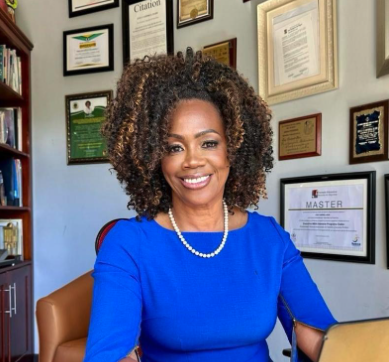
 H.E. Epsy Campbell Barr
Former Vice-President of Costa Rica | Costa Rica
Short Bio: Honorable Ms. Epsy Campbell Barr is the Former Vice President of Costa Rica, and she was the first Afro-descendant and the first woman to be appointed as Minister of Foreign Affairs and Worship. Ms. Barr is a global leader in inclusion, development, human rights, and sustainability. She was also twice elected as a congresswoman of the Republic of Costa Rica. Ms. Barr is an Independent Expert of the United Nations and a promoter of business and employment opportunities in new technologies and cybersecurity for people from historically marginalized sectors. From 2021 to 2024, she was the President of the United Nations Permanent Forum of Afrodescendants. As an international activist, she founded the Global Coalition Against Systemic Racism and for Reparations, a large international organization that develops actions in countries to combat racism through art, culture, and education.
Event: SDGs Conference 2025
Date: September 24, 2025
SPEECH: We gather at a time when humanity stands at a crossroads, as there are poverty and exclusion around us; scarcity in the lives of billions, as entire populations fear war and extermination. We witness the impression of power that denies people their voice, while the institution of multilateralism, built to ensure peace and cooperation, is strained and weakened. Racism continues to divide and dehumanize. Sexism and systemic exclusion of women prevent humanity from truly contributing to our share of the future. Resources are concentrated in a few, while millions remain trapped in a circle of poverty. The climate crisis is no longer a distant threat; it is here. The vast communities from the Caribbean, from the Pacific Islands to the Arab world, our democracies are fragile, often unrepresentative of the needs and aspirations of the people.
We are not merely living through a crisis. We are living in a change of era. The global crisis is not only economic; it is social, environmental, and cultural. It is a crisis of leadership and civilizational values. It is too often that the leadership today is built on individualism and ruthless competition. Patriarchal communities are accommodating wealth, resources, and empowered without concern of the common good. It is extractive, even predatory, consuming the earth’s resources without caring for the future generation. It is a leadership that embraces the doctrines to justify the means. A leadership that excludes diversity, rather thrives on violence and confrontation that denies the dignity of those who are different. This is the model of leadership that has brought us to the edge where survival itself is at stake.
Despite this challenge, humanity has a shared compass, which is the Sustainable Development Goals (SDGs) adopted by all nations. The SDGs represent more than a checklist. It is a common agenda to guarantee rights for all people, to build peace, equality, and sustainability. The goals remind us that development must mean eradicating poverty in all forms, ending hunger, and ensuring dignity through access to health and education. It ensures gender equality not as a favor for women, but as a necessity for humanity. They are protecting our planet, oceans, forests, biodiversity, because there is no plan B and no planet B. SDGs are ensuring that women and men share power and responsibility in equal measure at every level of decision making. The SDGs are about translating promises into lived realities. They are about ensuring that no one is left behind because, more than a slogan, it becomes the measure of our collective consensus.
Let us be clear: a promise, no matter how noble, is not enough. Commitments on paper do not feed hungry children, do not heal our wonder planet, and do not empower silenced voices. We must go beyond rhetoric and good intentions. Delivering on the SDGs means building political will, allocating resources, strengthening institutions, and holding ourselves accountable. It means aligning the energy of civil society, the innovation of the private sector, and the responsibility of governments. It requires courage, the interest to redistribute resources, and to stand firmly for human rights. Yes, this is a time of extraordinary challenge, but it must also be a time of collective and joint actions. We are called to be part of what I call the shining generation. A generation that refuses to surrender the despair and still transforms pain into labor of birth, as with childbirth, the deeper the pain, the closer we are to bringing it into life. Despite the intensity of today’s crisis, we are closer than ever to delivering a new era of peace, justice, and sustainability. That is why each of us, wherever we are, must promote change. Starting with the immediate impact we can make in our communities, in our institution, and in our own leadership. We cannot despair and fail to take hold. The SDGs call us to act now and known more than clearly that Goal 17 is to strengthen coordination and partnership across all the sectors, all the identities, and all the people. Only together in unity can we transform the promise into a reality to finish the task.
We must also change how we lead. The future will not be secure with the same leadership that created today’s crisis. We need a new leadership that is transformative and compassionate, that chooses cooperation over confrontation. Inspire through example, not fear. Listen deeply, especially to the voices that are long ignored. Operate with a clear framework of principles and values. Understand and live the principle of Ubuntu: I am because we are. This is the leadership that nourishes and protects, that heals and restores. It is a leadership that embodies the strength with empathy, care, and collaboration. It is a leadership that knows strength lies in lifting others up. And it is a leadership that brings self-leadership, the capacity to go beyond one’s own ego. They cultivate humility to align personal conduct with universal values. Without self-leadership, we cannot lead orders with integrity.
The task before us is urgent but not impossible. The sustainable development goals are promises we made to the poor, to excluded ones, to the planet, to the future generation. That promise must be kept, but promises are only fulfilled when people, leaders, the community, and each of us decide to act. The SDGs are not the responsibility of the governments alone. They are the responsibility of all humanity. So let us leave this conference with a renewed determination to act together across borders, culture, and generations. Let us embody a new leadership that is both bold and compassionate. Let us make the principle of Ubuntu real in our life. At the end of the day, our lives are intertwined. My humanity is bound up with yours. Your future is linked to mine, and only together only as a human family, can we finish the task. Let us deliver the promise of Sustainable Development Goals. Let us ensure justice, sustainability, and dignity for every person, everywhere.