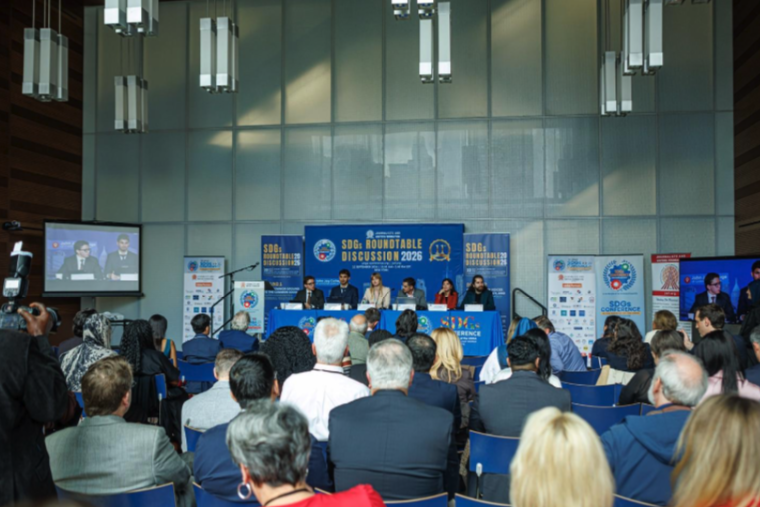
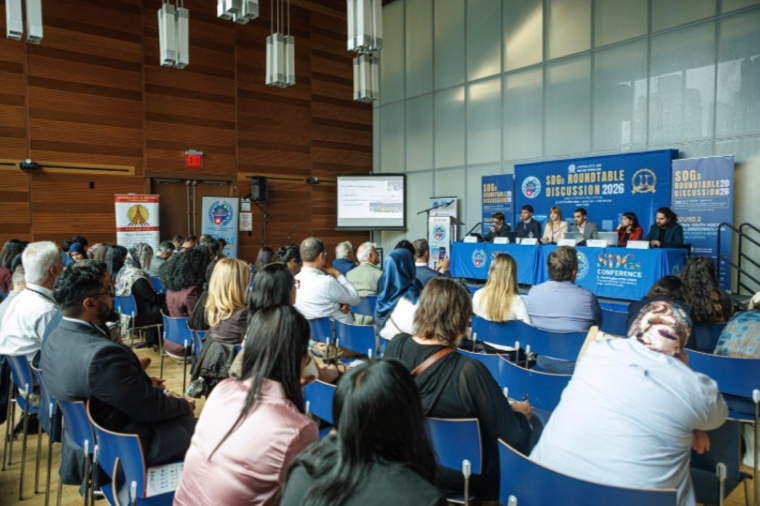
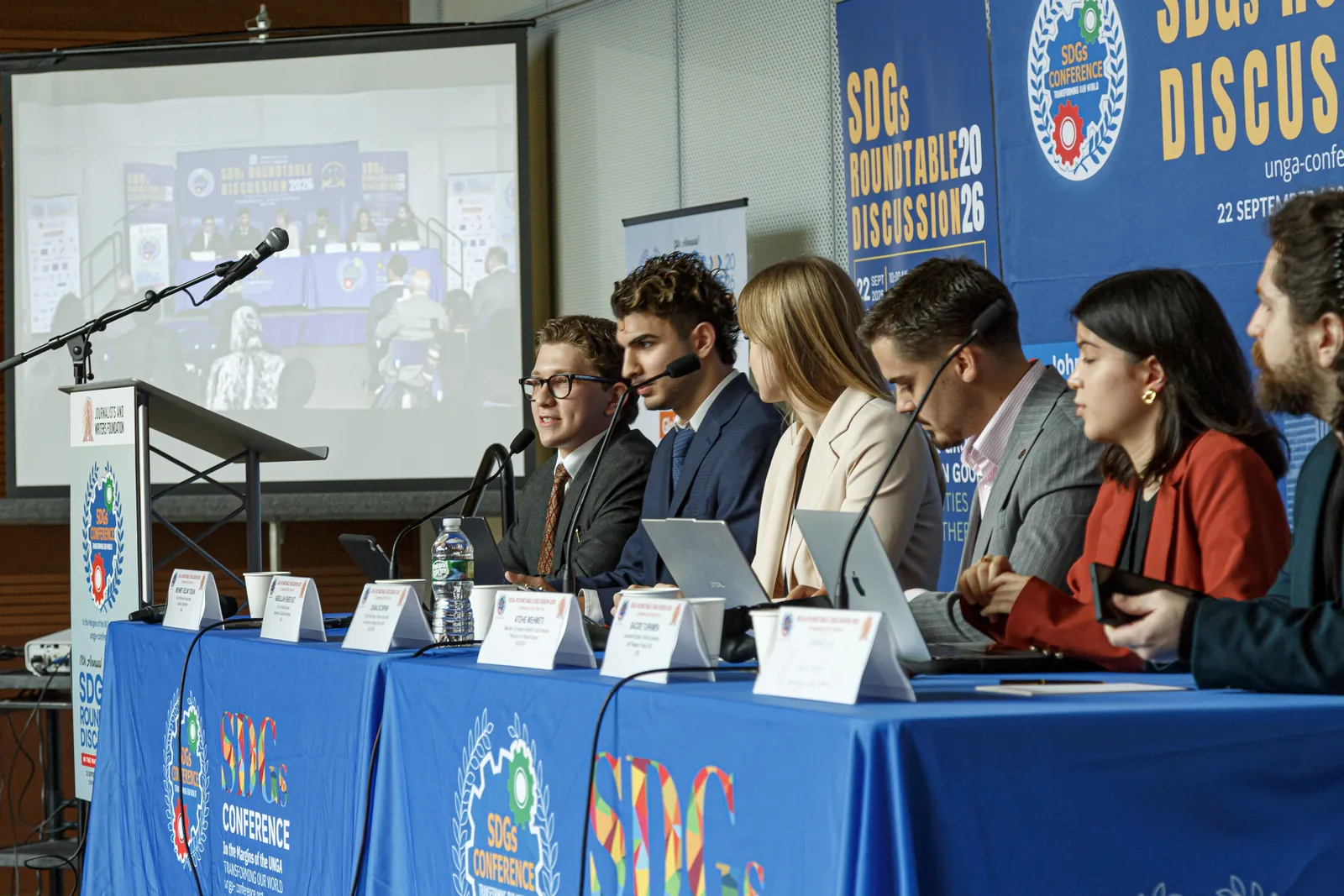
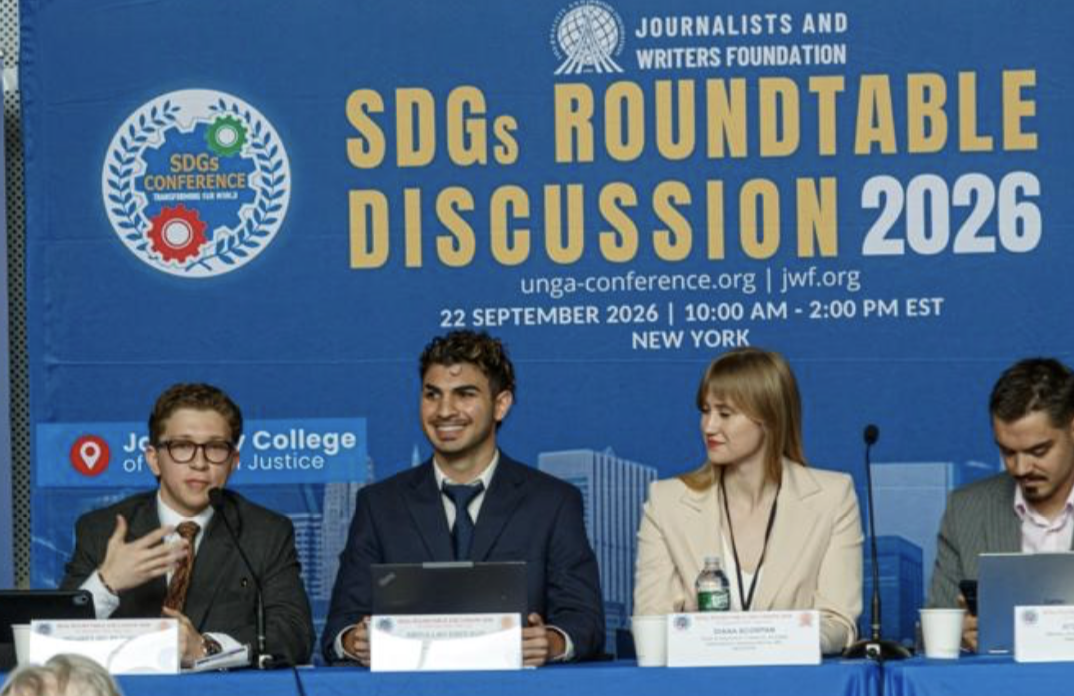
 Roundtable 2, “Global Youth Voices on AI, Democracy, and Human Rights Based Digitalization” was moderated by Mehmet Selim Tosun from the University of Memphis who explored youth perspectives on polarization, technology, and civic life. Mr. Tosun highlighted the creativity and diverse viewpoints young people bring to institutions, thanking JWF for creating space for youth voices. He also emphasized the importance of building trust, recalling a thought from an interview he had conducted the previous day: “Trust is a currency” that should be used wisely. He connected the panelists’ varied areas of work to a shared question: how can young people help build trust across communities?
Ana Ursachi, an international human rights attorney from Belgium, discussed youth participation in governance and human rights advocacy. Drawing on 26 years of defending people targeted for their speech and beliefs, she described how surveillance technologies—including facial recognition, scraped social media profiles, and shared databases—have made transnational repression faster and harder to detect.
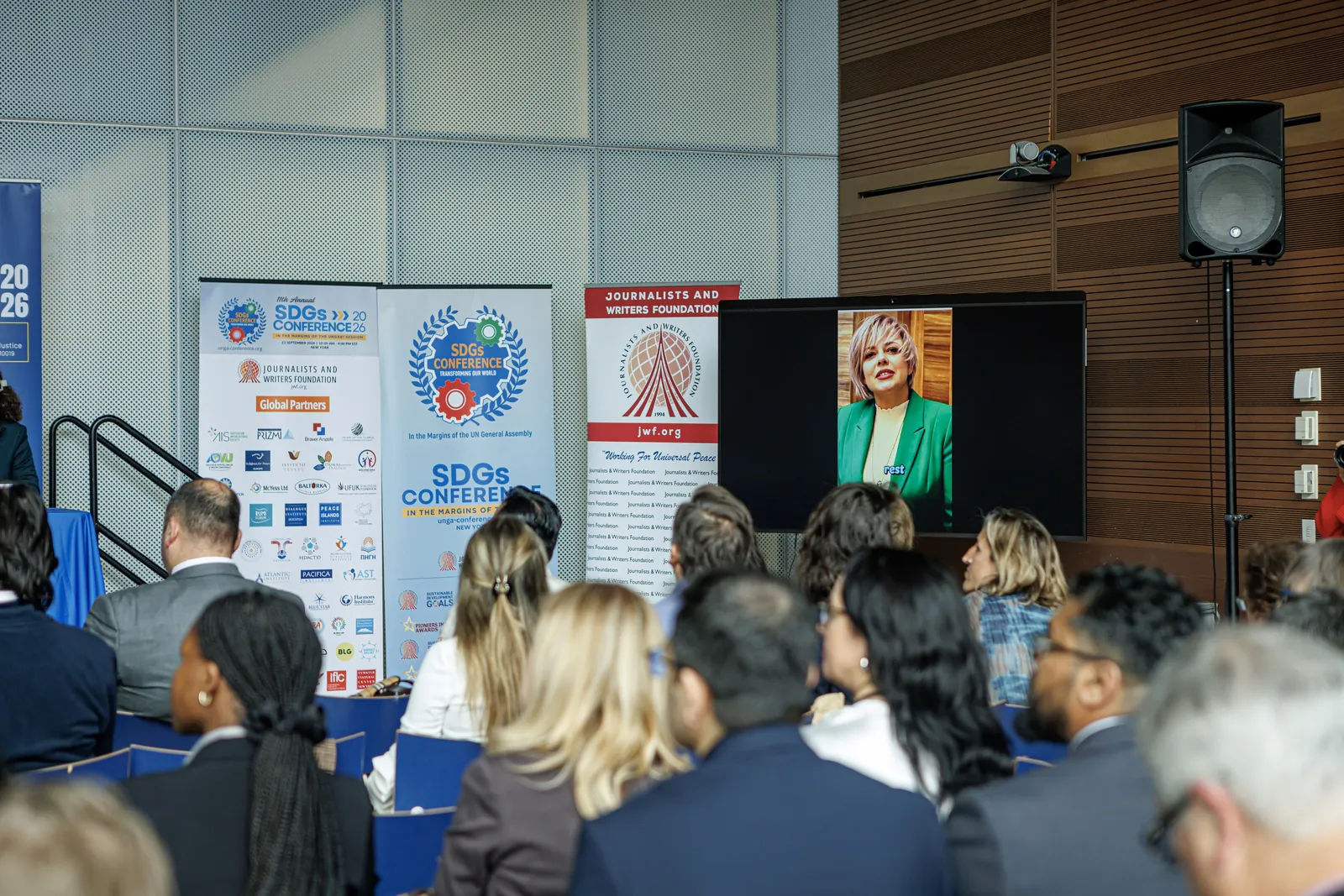 “Once persecution needed informants, paper files, and closed borders. Today, it needs data,” Ursachi said. She stressed that AI is not neutral: its impact depends on the values and accountability of those who develop and use it. While welcoming protections such as the European Union’s AI Act and the Council of Europe’s AI treaty, she emphasized that laws must be enforceable and accessible. “A law that no one knows, no one enforces, and no one can invoke in court is only paper,” she said. Ursachi urged young people to engage with lawmakers, join civil society, and help develop technology that protects rather than monitors people. “Your voice is not a future contribution. It is needed now.”
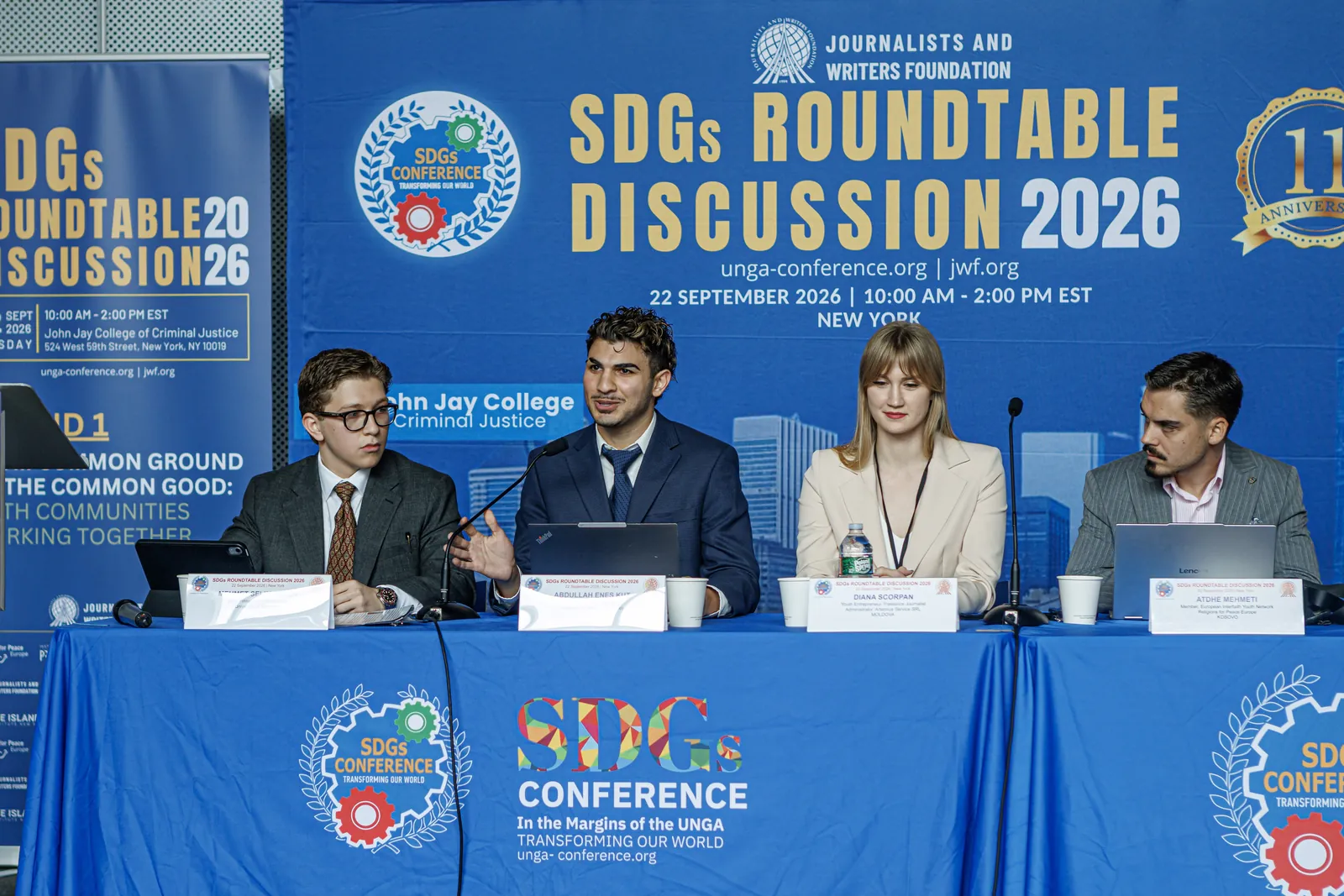 Abdullah Enes Kut, a political science student at the University of California, Berkeley, began by drawing on Maslow’s hierarchy of needs to highlight the common ground shared by people across political and ideological divides. Regardless of their beliefs, he suggested, people need food and shelter, safety and stability, a sense of belonging, respect, and purpose.
“You do not get past polarization by arguing people out of their side,” Kut said. Rather than trying to persuade people to give up their identities, he argued that meaningful connections can develop through practical, shared experiences that meet common needs. He offered three examples: constituent services that help people address urgent challenges regardless of party affiliation; regular potluck gatherings that build community while making room for disagreement; and humanitarian work that supports those receiving assistance while giving volunteers a sense of accomplishment and purpose. Kut concluded by encouraging participants to focus less on changing what someone believes and more on finding ways to connect beyond those beliefs. The goal, he said, is to connect with someone “in a way that has nothing to do with” the belief that divides you.
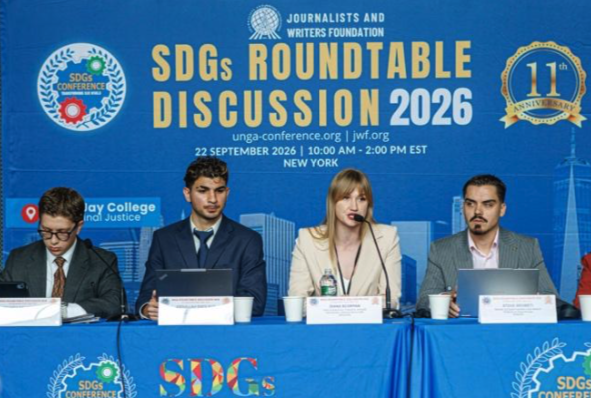 Diana Scorpan, a youth entrepreneur and journalist from Moldova, examined how artificial intelligence and social media are shaping democratic processes and civic engagement in her country. Drawing on her experience in debate education, journalism, entrepreneurship, and civil society, she emphasized that critical thinking is fundamental to democracy. Citizens, she said, need to question information, assess evidence, and disagree without treating one another as enemies. “Critical thinking must become democratic infrastructure,” Scorpan said.
She described how coordinated online accounts, algorithmic manipulation, and AI-generated content can spread persuasive messages and create a false impression of public consensus, particularly when political material is embedded in everyday social media feeds. Digital platforms may make politics more accessible to young people, she noted, but access alone does not ensure understanding. Algorithms can reward outrage and certainty at the expense of context and nuance. “Accessibility is not the same thing as understanding,” she cautioned.
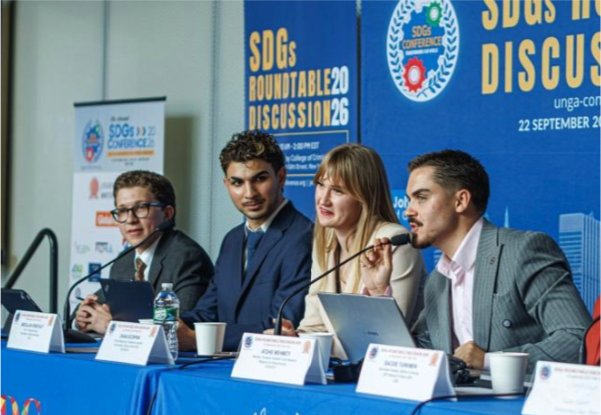 Atdhe Mehmeti, a member of the European Interfaith Youth Network from Kosovo, argued that artificial intelligence should be guided by human dignity, justice, inclusion, and care for the planet. “What is technically possible is not always morally acceptable,” he said. Mehmeti outlined AI’s potential to support climate resilience, health, accessibility, and public services, while warning that biased data, unequal access, misinformation, and environmental costs can intensify existing harms.
Mehmeti called for young people to help co-design AI initiatives and highlighted how interfaith communities can foster trust, ethical dialogue, and connections between communities and technical experts. He proposed creating “AI for Shared Flourishing Labs,” where young people and community partners could identify needs, co-design and pilot solutions, assess their fairness and safety, and share what they learn. His central message was that technical capability, ethical and spiritual wisdom, and young people’s imagination should work together to ensure AI strengthens shared humanity rather than deepening division. “AI should amplify our shared humanity, not automate our divisions,” he concluded.
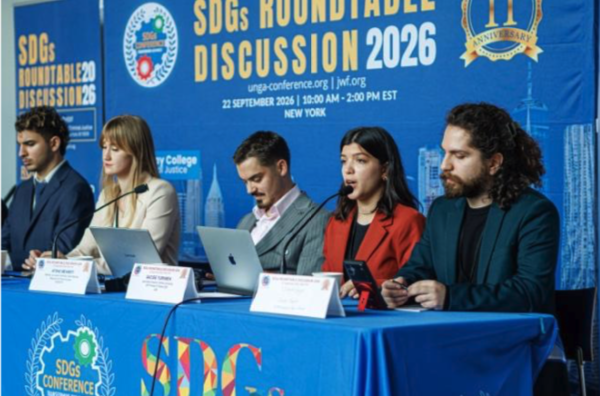 Sacide Turkmen, a journalism student at DePaul University, focused on misinformation and media literacy. She opened with a question for the audience: “When was the last time you checked the source of a news story you read or watched?” Turkmen explained that misleading information can be difficult to identify. It may appear as an edited image, a video removed from its original context, or even a fact presented without important details.
Because young people both encounter and create online content, Turkmen encouraged them to check who produced it, compare the evidence, and consider the context before sharing. “If everyone can publish, then everyone should know how to verify it,” she said. She proposed teaching media literacy in schools, using peer mentorship to pass those skills on to younger students, and supporting youth-led news projects with guidance from professional journalists. She encouraged people to “take the time to question” information before accepting or sharing it.
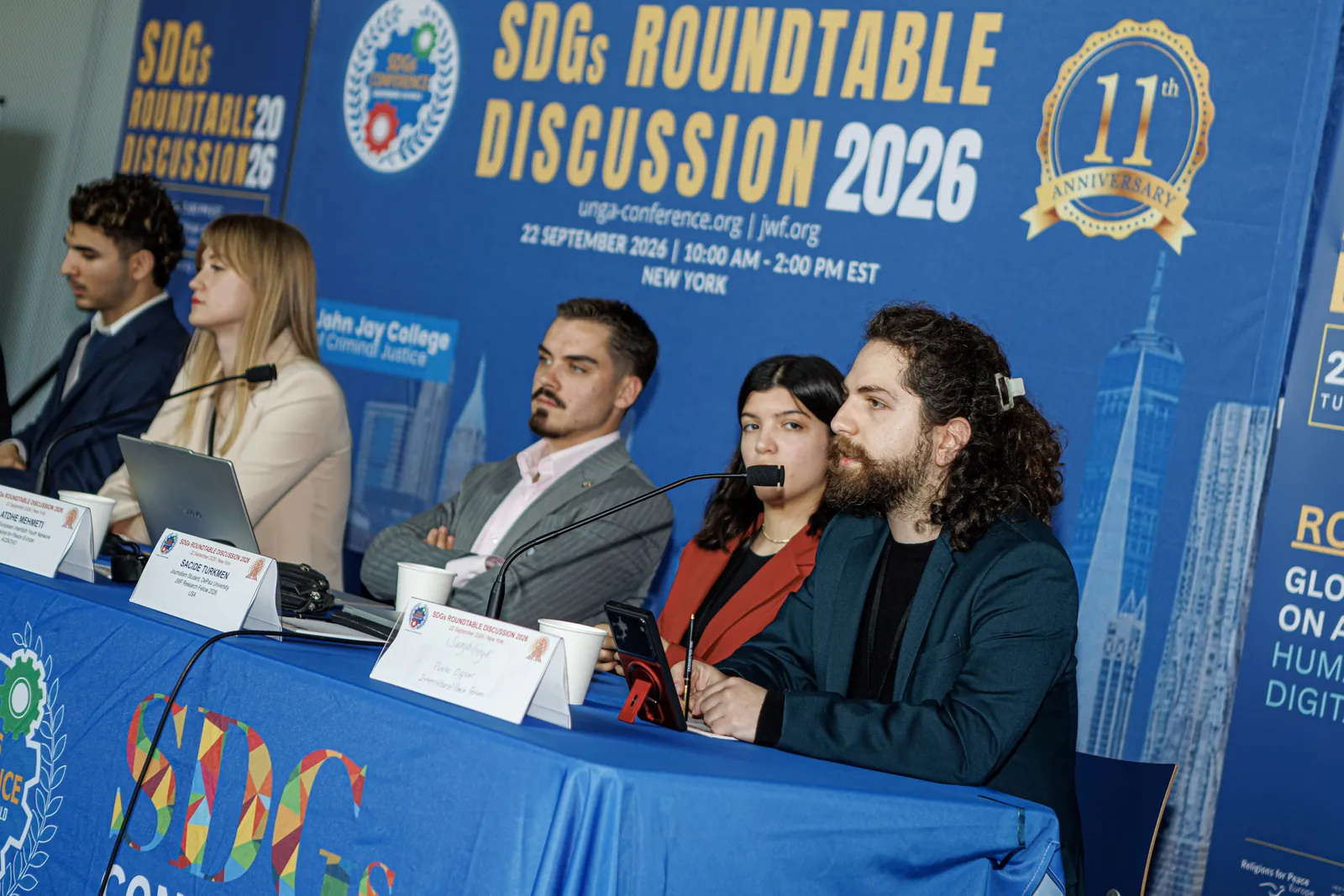 Suayb Geyik, Marketing, Social Media, and Public Relations Officer at Pinnacle College in Australia, reflected on how youth initiatives often begin when someone recognizes a real need and decides to act. Drawing on his experience supporting children’s access to education in Africa and meeting young people across different regions, he described how people can come together around shared goals such as learning, cultural heritage, sports, and community projects.
Such encounters can turn labels into personal relationships: strangers become teammates, and stereotypes give way to conversation. “A label becomes a name,” Geyik said. Rather than relying solely on campaigns against hatred, he encouraged participants to create meaningful, welcoming initiatives that give people from different backgrounds a reason to work together. His central message was that distance allows hatred to grow, while encounters build understanding. Each bridge formed through dignity, dialogue, and shared purpose leaves less room for division. As he put it, “Hatred grows in distance. Understanding grows through encounter.”
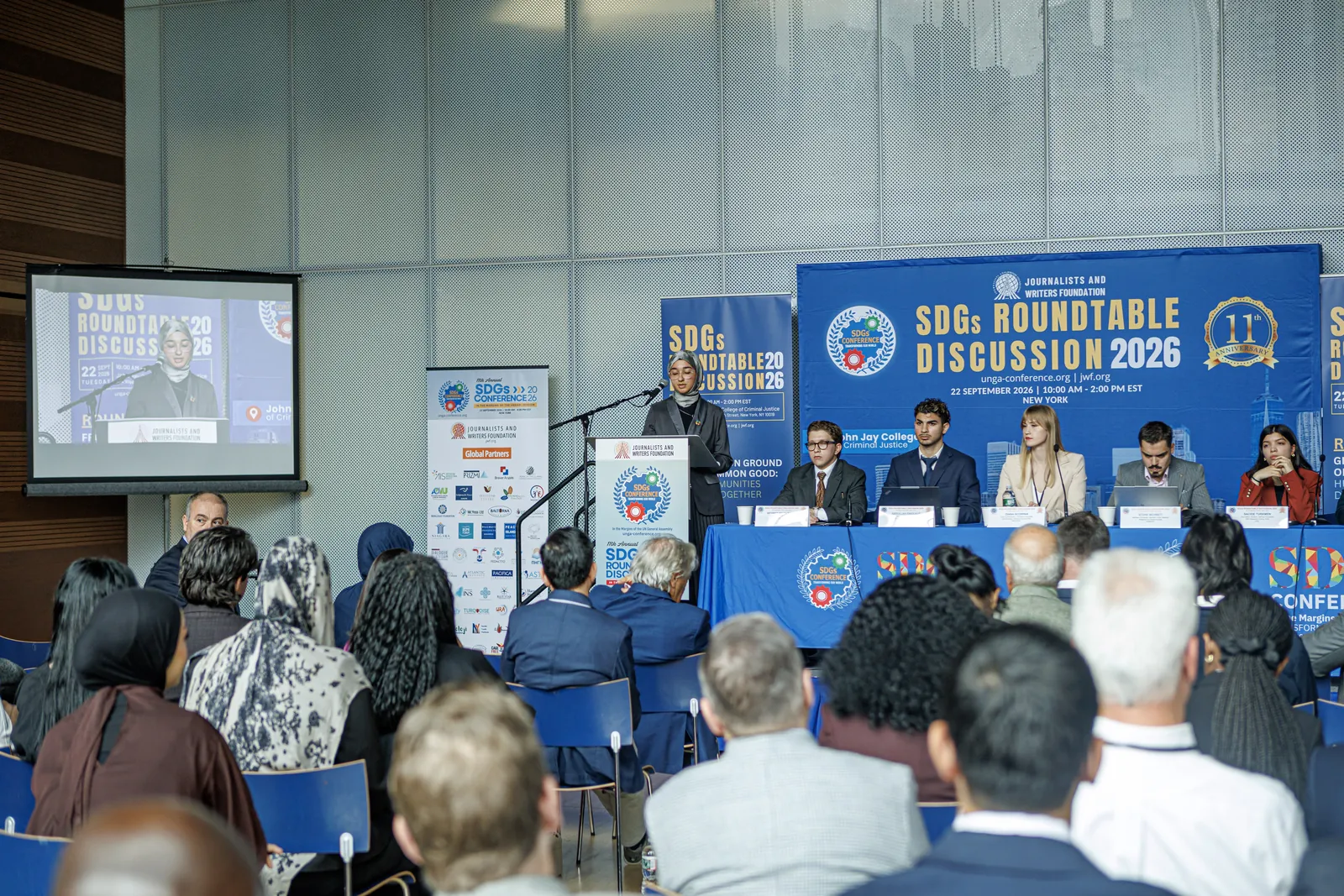
In her closing remarks, Zeynep Selma Guney, JWF Program Associate and UN Youth Representative, reflected on how institutions can meaningfully include young people in decisions that shape their lives. She observed that the speakers had shown young people are already researching, organizing, advocating, and contributing. “Young people are not waiting to be included someday,” she said.
Guney described young people as a bridge between the experience of previous generations and the possibilities of those still to come. She encouraged participants to continue their conversations and support one another’s work beyond the event. “A bridge is not meant simply to stand between two sides. It’s meant to connect them,” she said. Across both rounds, speakers offered practical ways to build trust—from welcoming families seeking refuge to involving young people in decisions about technology. The discussion concluded with a shared responsibility to put these ideas into action.
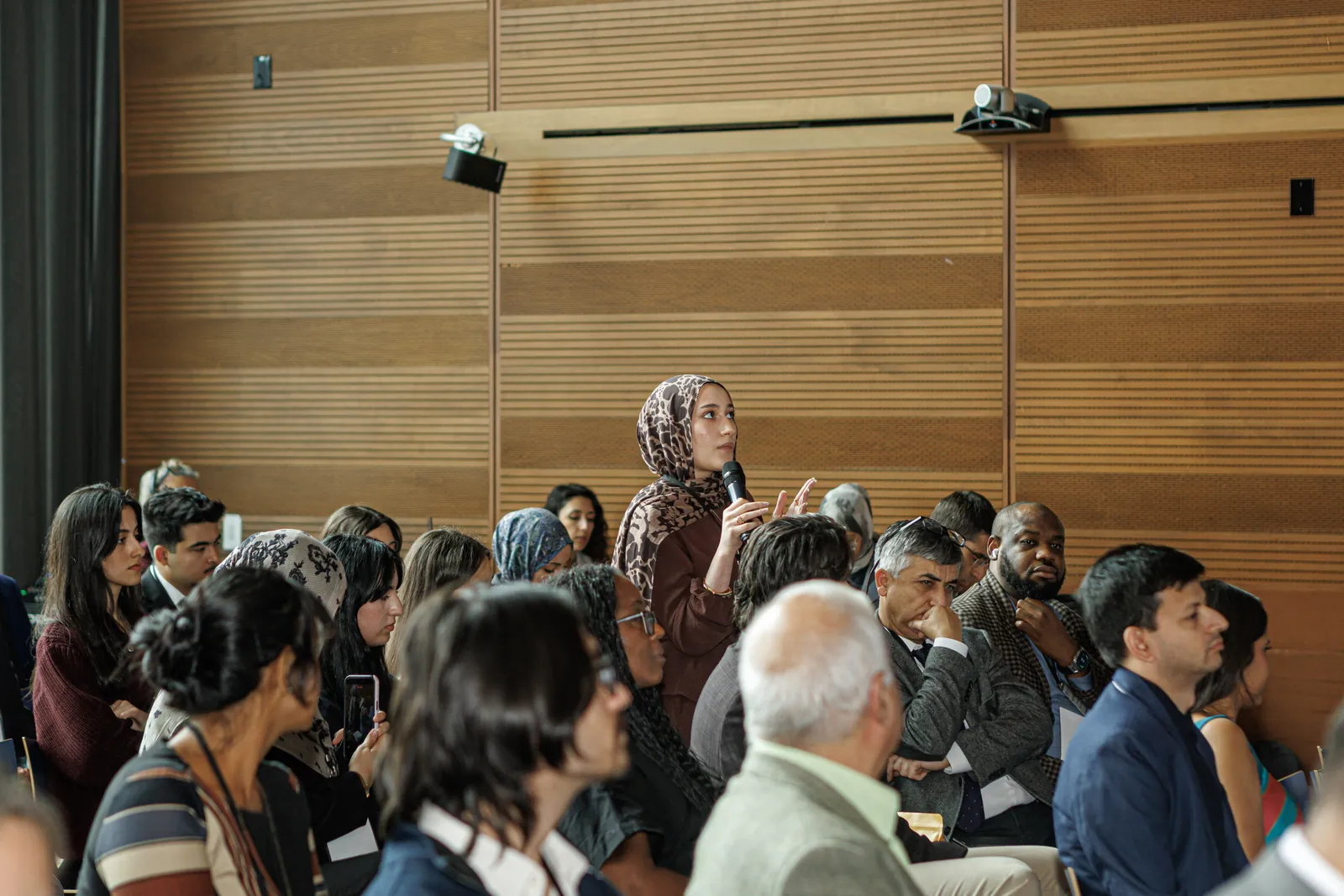
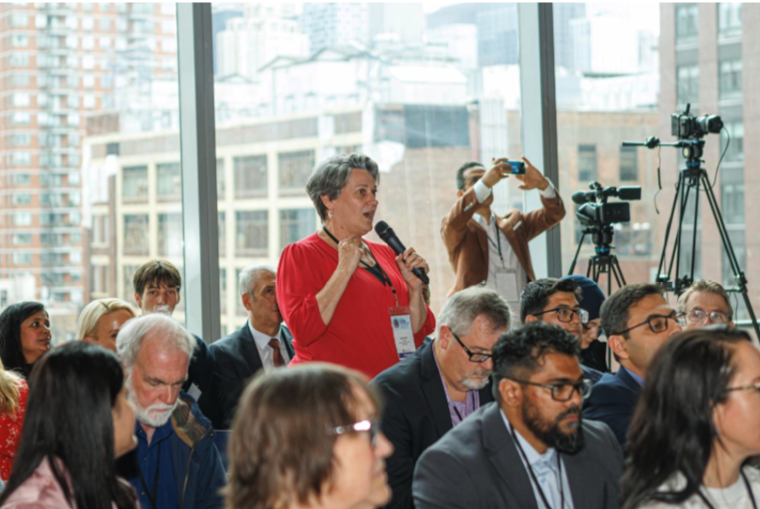
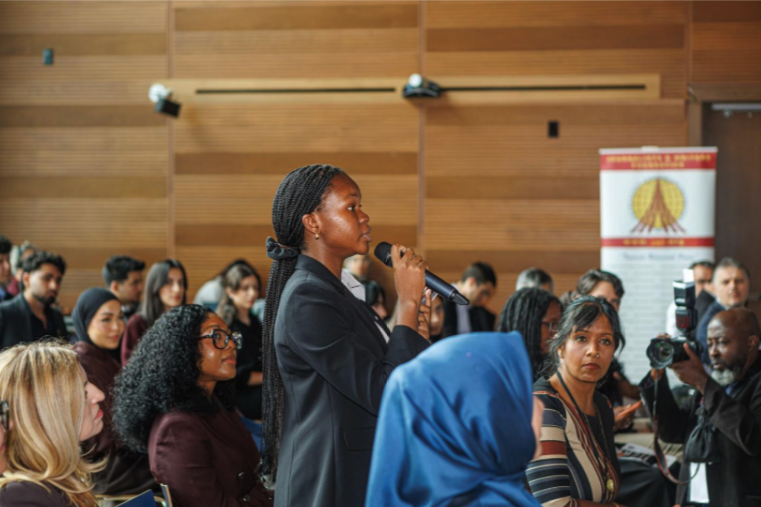
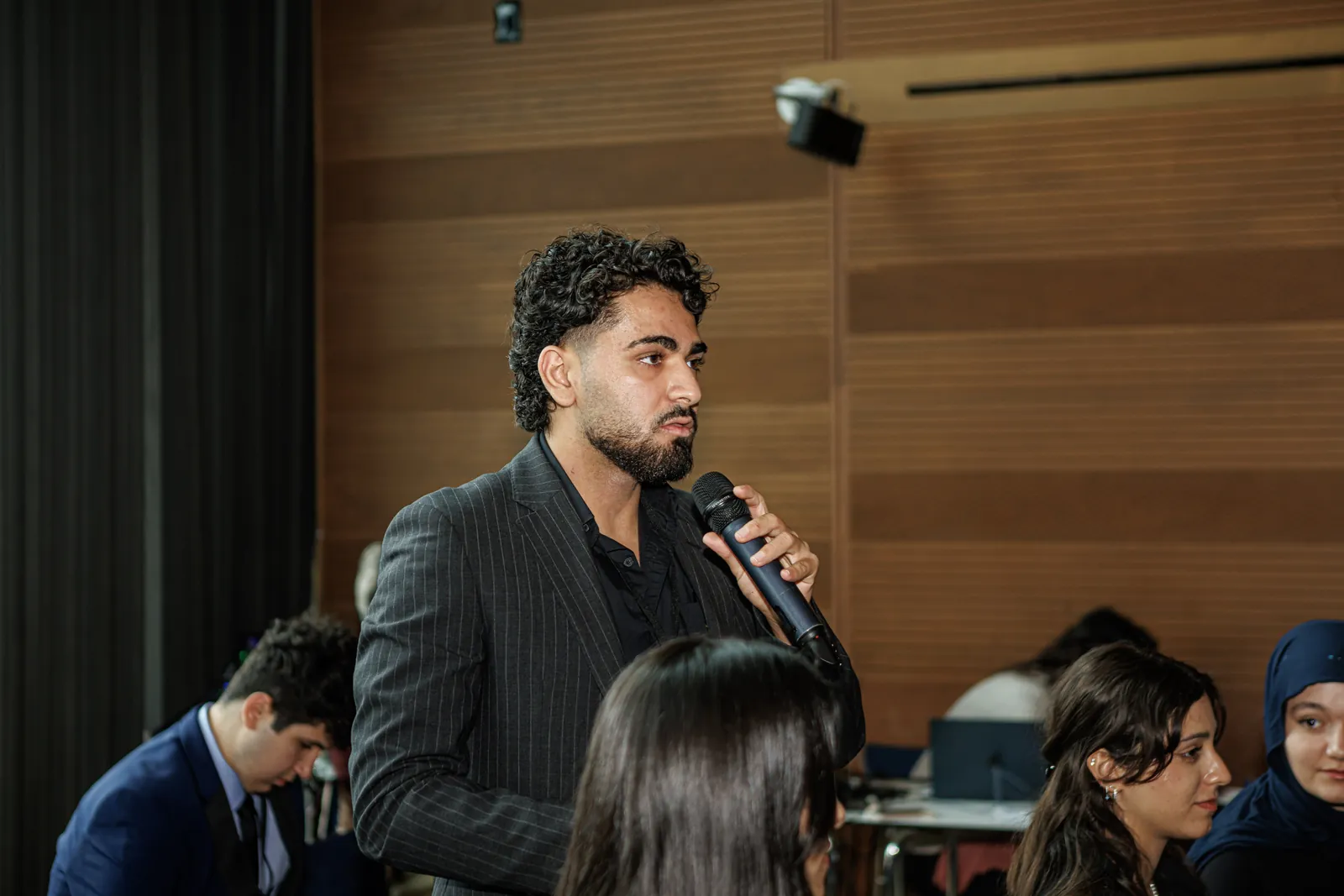 During the Q&A session, audience members asked what single change could most benefit their communities, how to address bias when people reject verified information, who should shape media and AI literacy education, and how to encourage civic dialogue across political divides. Speakers called for greater curiosity, stronger critical thinking, less misinformation, and fewer assumptions about people from different backgrounds.
In response to questions about bias and literacy, speakers emphasized the importance of education and the shared responsibility to examine who uses digital tools and for what purposes. Abdullah Enes Kut noted that echo chambers exist across the political spectrum. He suggested beginning conversations with an issue people already share—such as housing—before moving on to more divisive questions. The exchange brought the panel’s ideas back to practical choices participants can make in their own communities.