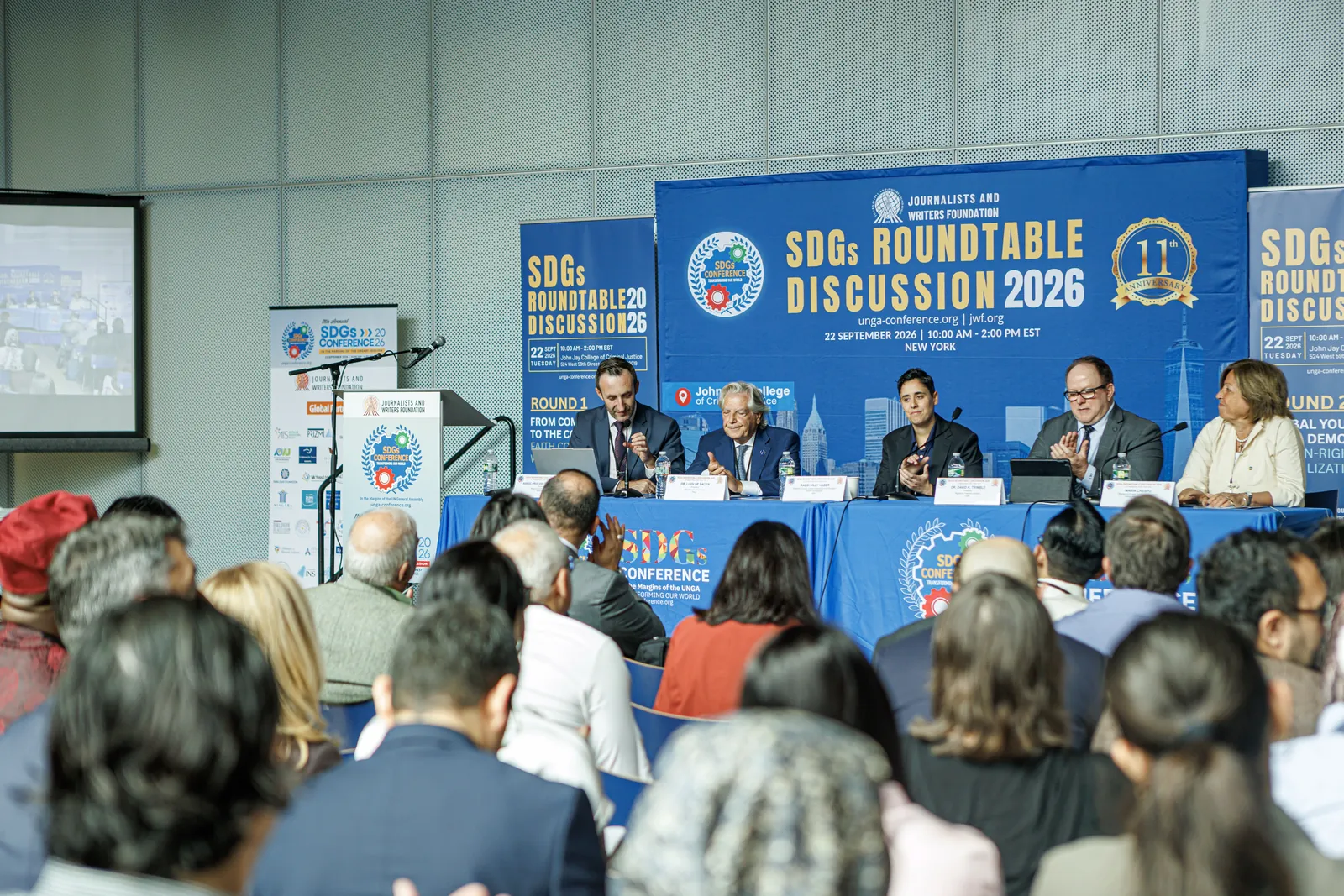
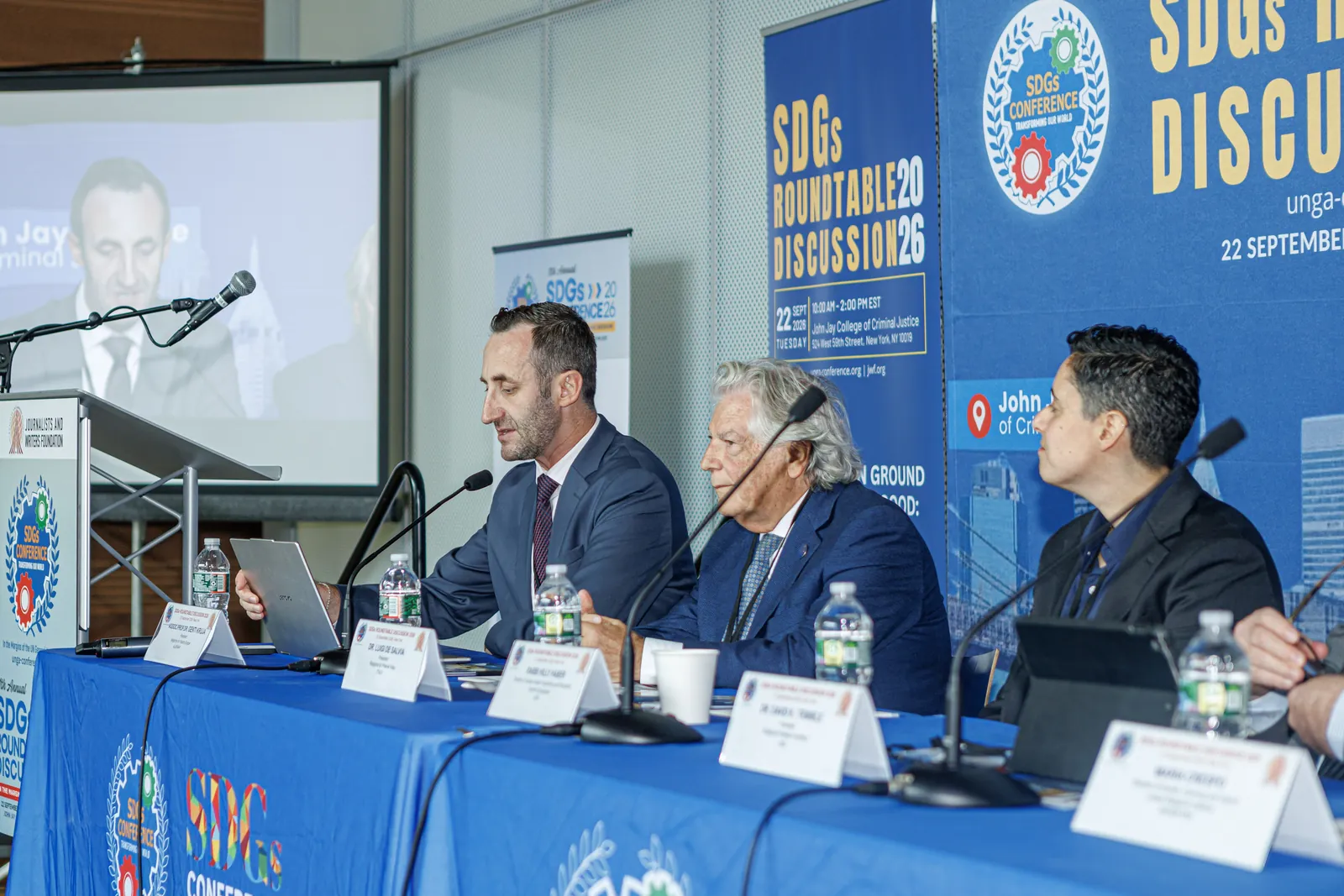
 The Roundtable 1, “From Common Ground to the Common Good: Faith Communities Working Together,” was moderated by Prof. Dr. Genti Kruja, President of Religions for Peace Europe, based in Albania. Prof. Kruja noted that differences in religion, culture, and experience need not prevent people from finding shared purpose. “Our differences don’t prevent us from identifying areas of common ground and, more importantly, from transforming that common ground into the common good,” he said.
Prof. Kruja presented interfaith cooperation as a way to strengthen social cohesion through relationships, shared responsibility, and practical responses to social, economic, and environmental challenges. Sustainable peace and development, he observed, require more than institutions: “They require communities. They require trust.” Prof. Kruja called for marginalized groups, women, and young leaders to have a meaningful role in these efforts and invited panelists to consider how cooperation could move from principle to practice.
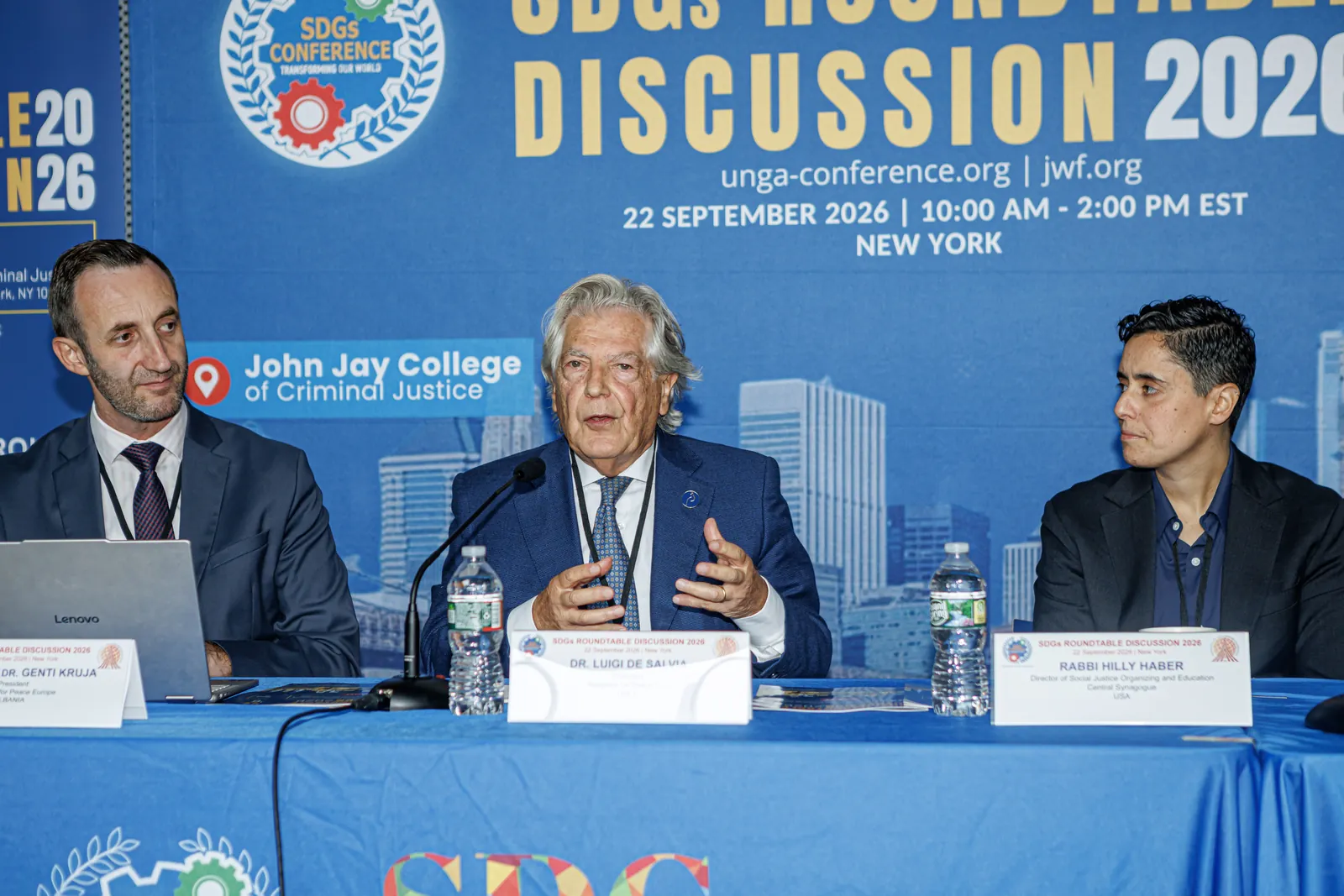 Dr. Luigi De Salvia, President of Religions for Peace Italy, reflected on the role faith communities can play when they remain open to others. Drawing on his experience in interreligious mediation, he described an inclusive religious identity as a foundation for working together for the common good. He framed the Sustainable Development Goals as a call to care for the world by turning suffering into healing, despair into hope, and conflict into reconciliation.
Dr. De Salvia cautioned against treating religious identity as closed to others or as a weapon. Instead, he connected cooperation to the Golden Rule and the recognition that concern for others’ well-being is inseparable from concern for one’s own. He also noted the progress made in interreligious relations over recent decades, citing the work of pioneers in dialogue, the Catholic Church’s engagement with other traditions, and the interfaith gathering in Assisi. These developments, he said, encourage people to respect religious differences while working together on the basis of human dignity.
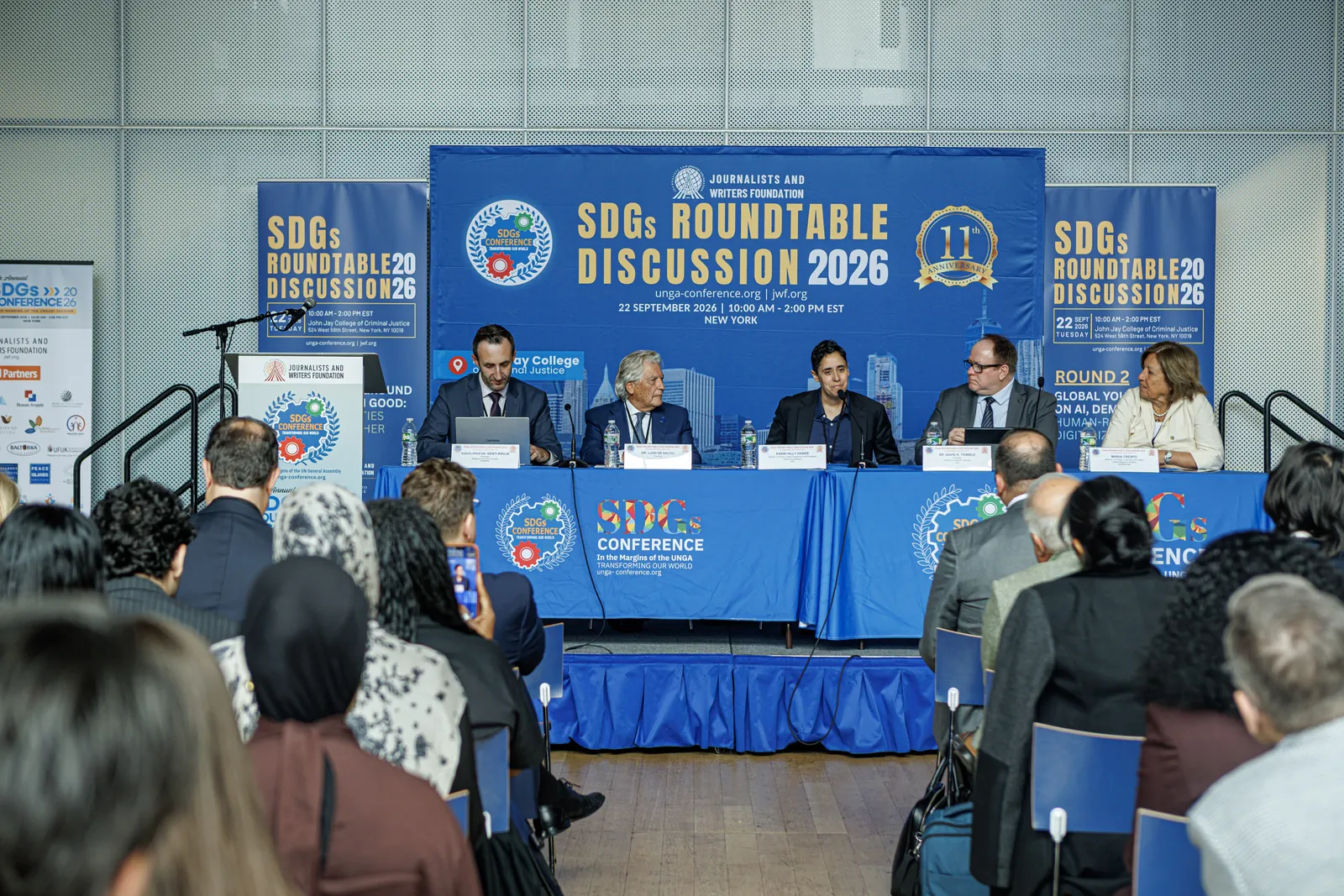
Rabbi Hilly Haber, Director of Social Justice Organizing and Education at Central Synagogue, connected a Jewish teaching about exile with the experiences of people seeking refuge today. Drawing on a midrash about God accompanying the Israelites through the wilderness, she described this example of divine love as a model for supporting displaced people.
Rabbi Haber shared how Muslim, Jewish, and Christian partners work together to support asylum seekers arriving in New York City. Their efforts include meeting essential needs in shelters, welcoming families into the synagogue’s nursery school community, and advocating with local and state governments for food, clothing, employment, and housing. Through these initiatives, she said, families from around the world are finding support and a sense of belonging. Her examples underscored that safety and welcome depend on sustained, practical care.
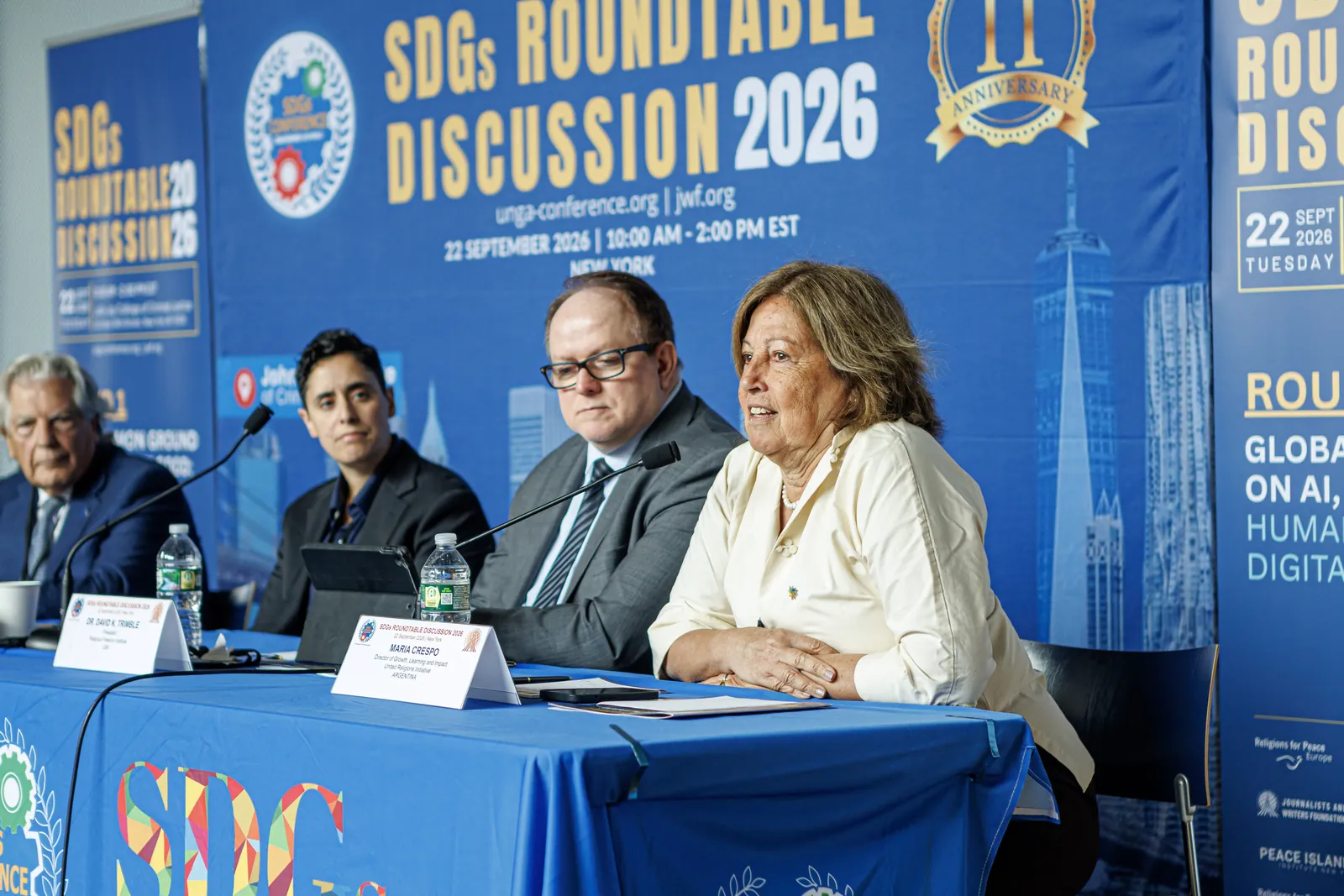 Maria Crespo, Director of Growth, Learning and Impact at the United Religions Initiative, urged participants to recognize young people as leaders in interfaith work today. “Youth is not the future. Youth is the present,” she said. Crespo argued that sustainable organizations must listen to young people, make room for their creativity, and be willing to adapt.
Drawing on the United Religions Initiative’s experience, she described young people leading learning initiatives, violence-interruption efforts, and environmental restoration, as well as contributing to the organization’s Global Council. She encouraged established leaders to support youth leadership and make peacebuilding more visible. “Can we change? Can we adapt?” she asked, emphasizing that peacebuilding must do more than bring people together—it must also address violence and support young people’s capacity to lead.
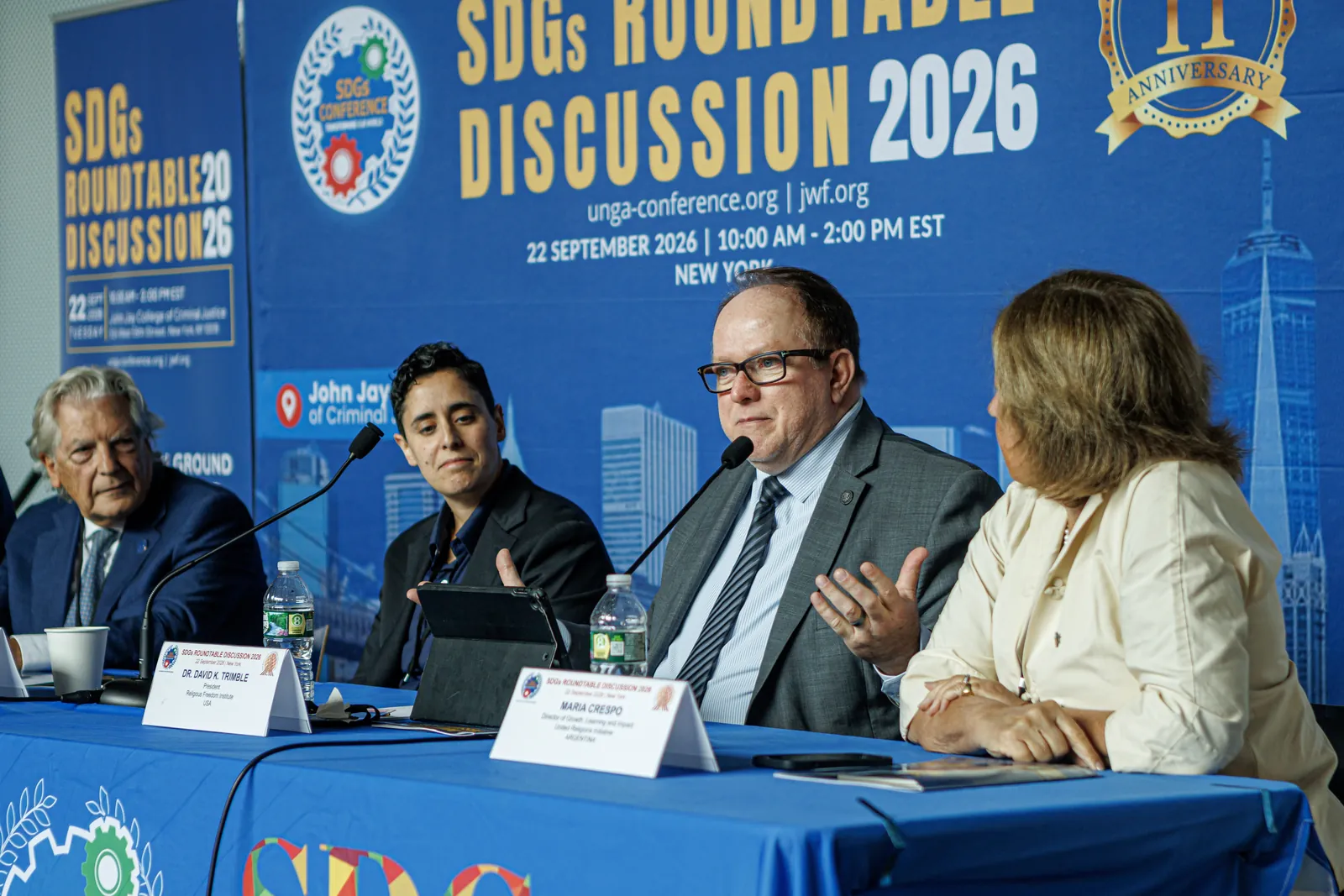 Dr. David K. Trimble, President of the Religious Freedom Institute, discussed the relationship between religious freedom and the Sustainable Development Goals. Although religion and religious freedom are not explicitly named in the SDG framework, he argued that protecting religious freedom is important to development because faith is central to many people’s lives. “Religious freedom is important because religion is important,” he said.
Dr. Trimble described religious freedom as the right to seek ultimate meaning and live according to one’s beliefs. He also noted that its protection supports other fundamental freedoms, including expression, peaceful assembly, and a free press. Drawing on his experience in northern Iraq after ISIS’s attacks, he described how the destruction of livelihoods, schools, and family life harmed religious communities and weakened social stability. Recovery, he said, requires rebuilding livelihoods and addressing poverty, food insecurity, and inequality. “When we allow religious freedom to flourish, we unleash the power of religion in society for good,” he said, calling for religious freedom to be more fully considered in development efforts.