Dr. Marina Sorokina

The Alexander Solzhenitsyn Center for the Study of the Russian Diaspora, Head of the Department of History | Russia

Dr. Marina Sorokina was a Senior Research Fellow at the Institute for the Advanced Studies in Humanities at the Russian State University for the Humanities. She has also served at the Russian Academy of Sciences Archive in Moscow. Russian Academy of Natural Sciences awarded her with a Vernadsky Silver Medal for her academic studies. She is a member at The Russian Presidential Academy of National Economy and Public Administration, Association for the Study of the Asian and Pacific Ocean Region and Russian Society for the History of Medicine.

Women scholars in exile, women and immigration in the contemporary world. In contrast to many other countries, Russia survived three major waves of mass migration in the 20th century. These are the refugees of the Bolshevik Revolution and civil war, refugees of World War II, and migration after Gorbachev`s perestroika. Many thousands of Russians left their homeland and traditional environment under the pressure of political persecution and settled down in many countries in the world, in Latin America, especially in Brazil.

A number of schools and scientists work within these emigrants. Issues concerning scholars in exile have attracted attention, especially in relation to the larger immigration wave that hit Europe facing the Nazi regime. This has been already well documented by the academic works, in contrast, there has been no scholarly treatment of the Russian academic migration in the 20th century that has grappled systematically with the topic on the basis of archival research.

For many years, refugees, invalids and dissidents were hidden groups ignored by the Soviet authorities, civil society and public memory. Only today, historians shifted their focus to study those groups. We shall now look at the life story of one of the very interesting women scholars in exile, Helen Antipov. Russian born Brazilian psychologist and educator, founder of the System of Support to Disabled Children.

Her life is very important in our perspective. Why Helen Antipov? As many other women refugee scholars were searching for professional employment in the changing European environment. Brazil opened the window of opportunities for her and many other scholars and scientists. Russia, Switzerland, Brazil marked not only the geographical shift of the immigrant scholar positions, but reflected new communications.

The ways how the European scholarly approaches and techniques were applied to the new institutions before World War II. The role of the immigrant scholars and especially women immigrant scholars were pioneering in this process. As such, Antipov`s story contributes to gender and immigration history, to the social history of psychology and human rights. But it also demonstrates the ways in which the formation of a very strong and persistent transnational or international network of scholars whose professional biographies on the level of concepts and ideas grew up from multicultural, intellectual components and traditions.

Antipov`s work and the work of many Russian refugee women were marked by a strong commitment with the achievement of human ideals of social justice and happiness. As a scientist, director of one of the first laboratories of psychology established in Brazil, she did the kid herself to know Brazilian children so that their education would be better oriented. Following the guidelines of the Geneva Declaration of Children`s Rights issued by the League of Nations in 1924, she focused education as a right in itself. And her views, schools were not supposed to provide the limited citizenship consciousness. On the contrary, citizenship was seen as a consequence of a steady support for the development of the children`s capacities.

With her experience with war and revolution in Europe, Helen Antipov strove for harmony, not for struggle. In her view, social harmony would be attained if each individual were given the opportunity to develop his own calling. In this development, education had a central role. Thank you very much for your attention and giving you this example in order to show the great role of the women`s corps in the contemporary world. We are looking at history, but we are living today. I hope that our network will work for many years.

Diya K. Wynn

Amazon Web Services, AI/ML Ethicist Emerging Technologies & Intelligent Platforms GSP | USA
Diya K. Wynn has worked in technology for 25 years building, operating, delivering and leading in early and growth-stage companies. Diya is an Ambassador for Inclusion & Diversity and a pioneer in the company leading the Women in Professional Services, an affinity group focused on gender diversity. She was awarded an Inclusion Ambassador Award in February 2020 from her company and is a 2020 finalist for the Women in IT Awards Advocate of the Year. Diya is a leader in her local church and as a mayoral appointee in Environmental Affairs in the city of Laurel for 6 consecutive years. She currently serves as a Class Agent for Suffield Academy (HS), is a lifetime member of National Alumnae Association of Spelman College and is the President of the National Alumnae Association of Spelman College Southern MD chapter. Diya K. Wynn talked about the transformative role of technology in women`s empowerment. She addressed the systemic and institutional barriers that marginalize women. Wynn underlined that gender equality can be achieved only through the collaboration of all stakeholders in the society.

I would like to share with you a story of a little girl, who was born in Harlem and grew up in a single parent, poverty-stricken home in the South Bronx, NY. She spent her early education in the public-school system. This girl was taught to value and take seriously her education, and in the 3rd grade, her diligence in her studies was rewarded. She received a computer for having high academic achievement in her school. She was fascinated by this technology and it opened up a world for her unlike any she had been exposed to or frankly was aware of. None of the fairy tales she watched had women with jobs.

• None of her books she read told stories of women working in computers or science.

• It was not reflected in any of her school studies either.

• The prevailing thought and pictures from media portrayed certain roles for women as homemakers, teachers or maybe a nurse.

And it was not something she saw in the women around her. 

You can imagine, even though she was in new, exciting and intriguing territory, it was foreign and a frightening prospect. Perhaps she was too young to know this, so with all the intellect she had she decided at 8 that set her on a course to study and pursue a career in computers.

That girl is me!

I shared that story because it speaks to the very heart and intent of the Beijing Declaration, our goal for gender equality and women empowered; it is not about me. My story is not uncommon. One only rises to the level that she/he is exposed. I come from meager beginnings, but it was the exposure to technology at an early age and education that changed the trajectory of my life.

I consider exposure or access to education and technology critical in seeing gender equality; however, I would be presenting an incomplete picture if I failed to mention how our dream and work toward gender equality is undermined because of systems, policies, socio-cultural norms and patriarchal structures that have supported mindsets of gender inequality for decades, or dare I say hundreds of years.

My journey has been one met with opposition and struggle, not just because of being a woman, rather coupled with the scourge of being black, an African American woman in America In order to see the promise of the Beijing Declaration and UN sustainable development goals, we must be determined to address systemic and institutional barriers that perpetuate discrimination against and keep us all from being equal. This cannot be done by women or people from marginalized communities alone. It requires the active work and partnership of men and the majority.

When I reflect on the Beijing Declaration and Platform for Action (PFA) from 1995, which refers 189 countries signifying their commitment to achieving equality, development and peace for women and girls worldwide, I was nearing the end of my undergraduate studies in computer science at Spelman College and the parent company where I now work was just a year old.

  • The unmanned Galileo spacecraft arrived at planet Jupiter
  • Ebola was ravaging the Congo and Central Africa
  • The NATO bombing led to the Peace Agreement, after thousands of Muslims were killed and women raped.
  • The Dayton accord was signed by leaders of Bosnia,
  • The US troops pull out of Somalia where women were disproportionately affected by war, raped and mutilation.
  • At least 60 million girls worldwide were without access to primary school educations, and more than two thirds of the world’s (960 million) illiterate adults were women. 58% of the world population was women but only 46% over 16 had jobs.

This was 1995. These among other events and statistics all reflect severe impediments to the advancement of women and to development. That is what made the Declaration so monumental. Since then, the international community has seen slow progress in areas of women`s equality globally, but there have been rapid advances in technology that can benefit the cause, including:
• Broadband makes higher speed internet access available in homes [1995]
• Flash was introduced for rich content delivery on the web [1996]
• Google was founded transforming [1998] how we attain data
• Ontologies give way to the semantic web [2004]
• Social networking gives rise to a new paradigm for connecting, interacting and influencing [2007]
• Cloud computing provided internet-based access to democratized IT resources [2006]
• Artificial intelligence (more specifically machine learning) and big data emerge driving change in how
we live and work, and
• Quantum computing promises unparalleled processing power to solve previously unapproachable problems

If we think about technology in its simplest form, society as a whole has benefitted from methods, systems, and devices improved or invented that use knowledge to solve some problems. These specific technological advancements provide jobs, upward mobility, create income, stability and opportunities to build up, inherit, and share in wealth. Technology is providing us with tools to tackle gender inequality and empower women such as:
• Digital platforms, social media, medical and emerging technologies, have opened up avenues for
• Engagement in cultures where women’s physical mobility is restricted and their voices silenced
• Online activism, communitybuilding which increases awareness and engagement around women’s health and rights issues,
• Career opportunities and learning made is available online and in apps on mobile devices
• Women to set up businesses and earn income connecting to wider/global sources for financing, marketing and funding
• Femtech introduces technical solutions that address female health needs exclusively, including diagnostic tools, software, mobile apps and wearables
• Women participate in political campaigns and can have greater access to knowledge and general information.

This is technology used for the good and the result is seen in women empowered in areas like:
• Afghanistan, where women used Twitter to engage with a US Congressional hearing on women’s inclusion in peace and security in 2019
• East Africa and Philippines SPENN by Blockbonds is a Block chain app that is allowing secure money transfer and financial access for women in rural areas
• An Israeli company Mobile ODT offers cervical cancer screening leveraging and AI- based smartphone app
• In India, Egypt, Lebanon and in other countries Harrassmap is mobile/online platform using reporting and mapping to tackle sexual harassment.

Even with these advancements there is so much yet to be done. The World Economic Forum Global Gender Gap Report benchmarks 153 countries on their progress towards gender parity across four dimensions: Economic Participation and Opportunity, Educational Attainment, Health and Survival, Political Empowerment. In 2020, it is indicated that it will take approximately 100 years for us to see gender equality globally.20 This is because:
• Outside of the US, women on average are 26 percent less likely than men to have a smart phone (In Africa, the proportion stands at 34 percent and in South Asia, it doubles to 70 percent.)
• Men hold 75% of parliamentary seats worldwide and 73% of managerial positions.
• Women are paid 16% less than men on average, rising to 35% less in some countries.
• 50 to 78% of women experienced gender discrimination at work.
• Nearly one in five women has faced domestic violence in the last year.

At least 60% of countries still discriminate against rights to inherit land and other assets. Raya Bidshari said, “When half of the human population is denied their full potential, the world as a whole is at an enormous disadvantage”. This is where the work remains. True women’s empowerment is for women to be full players in every area of society, with freedom to create, earn, own and build. That means being able to take full advantage of the benefits of technology and having a seat at the table. In the words of the late Justice Ruth Bader Ginsberg, “Women belong in all places decisions are being made.”
• Women have to be in the board rooms and in government.
• Women have to be employed and be entrepreneurs.
• Women have to have access to healthcare and own the decisions for their bodies.
• Women have to be educated and be able to pave the way for those that follow.
• Women have to be included in history and make history.
• Women have to see themselves in positions in society and be seen by society

To see more women empowered, women need exposure, education and a real commitment to change that means
our collective willingness and courage to put down policies and systems of oppression and create opportunity. The words of the CEO of AWS, Andy Jassy says “we need missionaries not mercenaries.” People willing to do the work to make women equal and empowered.

Prof. Diane Elson

University of Essex, Department of Sociology, Emeritus Professor | UK 

Prof. Diane Elson is an Emeritus Professor at the Department of Sociology in Essex University, a Visiting Professor at the WiSE Research Centre, Glasgow Caledonian University and a Research Associate at the Center for Women’s Global Leadership, Rutgers University. She is a member of the UN Committee for Development Policy and is a consultant to UN Women. In 2016, Dr. Elson was awarded the Leontief Prize for Advancing the Frontiers of Economic Thought. She has served as chair of the UK Women’s Budget Group and as Vice-President of the International Association for Feminist Economics. Diane Elson elaborated on the inclusive economies for women’s empowerment as a feminist economist. Dr. Elson discussed the positive and negative factors that inclusion have on women`s participation in the economy. She elaborated on the interaction between participation in the economy and the unpaid work. In her remarks, Dr. Elson also underlined how women are disproportionately affected by the COVID-19 Pandemic.

Economic inclusion and women’s empowerment are both themes of the sustainable development agenda; although there is no goal or target that specifically brings them together. The goals that focuses on sustainable, inclusive and sustained economic growth do not reflect on women’s empowerment specifically. Sustainable Development Goal #5, which requires governments to achieve gender equality and empower all women and girls, does not mention economic inclusion.

Although it set targets on governments to undertake reforms to increase women`s equal rights to economic resources, I think we need to focus more on the issue of rights, not just participation, to ensure that economic inclusion really does empower women.

Inclusion is a positive dimension. However, in reality, there are many forms of inclusion in economies that can be harmful: forcible inclusion, forced labor and modern slavery, injurious inclusion, unsafe working conditions, long and exhausting hours of work. Impoverished inclusion where earnings are not above the poverty level, precarious inclusion where employment is insecure, segregated inclusion, inclusion in low paying occupations at the bottom of the job’s hierarchy. Those are not the factors that people have in mind when they talk about how inclusion in the economy will empower women.

Those are indeed many of the realities that many women face. Therefore, we have to be very careful what kind of inclusion we want to achieve. Some of the inclusion in financial markets sounds very positive. Every woman should have a bank account, but when a person starts to engage with financial markets, there may be consequences; predators who mis-sell financial products, who make defraud to increase the level of indebtedness, lead to loss of assets and to vulnerability of harassment by debt collectors.

Financial inclusion needs unpacking the reforms of financial inclusion that are beneficial. As underlined, there are also harmful forms. One of the problems that many women face is that they are simultaneously included and excluded.

This is a framework that the Trade and Development Report 2017 put forward. Women are included in the sense that they are participating in the labor market and in financial markets; however, they are often excluded from the prosperity that is supposed to come from this inclusion. The global data sets of the International Labour Organization (ILO) shows that women predominate among workers in vulnerable employment, defined as own-account workers and contributing family workers. ILO data on a broader range of so-called non-standard forms of employment refer to temporary employment, seasonal work, casual work, part-time on-call employment agency work. Women, young people and migrants are more likely to be found in non-standard arrangements compared to men.

How can inclusion be made empowering despite of its challenges? It is not enough to celebrate that many women are participating in the labor market. It is not enough to celebrate that more women are participating in financial markets. We have to focus on the issue of how this inclusion can be made empowering or the ILO put forward some ideas and it is the 1999 decent work agenda paying attention to four issues. The first is the creation of fair and productive employment that can provide a decent livelihood. The second is rights at work and the third is social protection, including cash benefits and access to basic services. The last factor is the promotion of social dialogue between government, employers, subcontractors and workers organizations. Gender equality is a cross cutting objective of the decent work agenda. It is important that this agenda recognizes that empowerment does not come from employment alone, but also needs access to social protection, to cash benefits and access to basic services.

This becomes very apparent when we look at the impact of COVID-19. There is an important interaction between participation in the economy and the unpaid work that most women around the world have to do and some women are really burdened with. Inclusion in paid work will not be empowering if it is to pay paid work to already long hours unpaid work. Many low-income women are overworked that they’re already participating in work that generates some income, although not enough, but also burdened with the need to collect fuel, water, prepare meals, take care of children, frail elderly people, people living with long term illness. The long hours of exhausting work, both paid and unpaid, deplete their own health and strength.

Work load is far from empowering. For these women, empowerment must include a reduction of the overall burden and more time for rest and for participation in the life of the community through the political processes. Empowerment isn’t just a matter of having an income. It’s also having some free time to participate in personal development. Investment is needed to provide affordable access to clean energy, water, sanitation and care. When we talk about women’s economic empowerment, we only talk about the labour market and the financial market. We forget the need for this complementary investment in energy, water, sanitation and care services.

Women play a disproportionate role in responding to the COVID-19 as they are the majority of frontline health care workers despite the fact that they also undertake the majority of care in the home. Women’s unpaid care work has increased significantly as a result of school closures and the increased needs of older people. Women have also been hard hit by the economic impact of measures to halt the spread of COVID-19, especially women who work in the informal economy. Globally, nearly 60 percent of women work in the informal economy, both as selfemployed workers and as wage workers, and this goes up to 90 percent in developing countries.

The empowerment of women through inclusion in the economy has to focus on the informal economy. Governments aiming to combat the Corona virus have implemented measures ranging from border closures to full lockdown. Many of these measures of forced informal workers to give up their livelihoods, alter their ways of working, causing their incomes to be reduced. Sometimes it is impossible for informal workers to earn their livelihood in other ways, which threatens the survival of these workers and their families. The government should issue clear directives to lock down enforcement agents to refrain from harassment, violence, bribery, forced evictions and demolition of informal workers assets, including their homes and workplaces. The misuse of public health measures to contain COVID-19 causes destruction of inclusion and empowerment of the large numbers of women in the informal economy.

However, many governments are expanding and adapting social protection measures in an attempt to provide at least a basic level of food and income security to the many households that rely on earnings from informal work. In April 2020, the World Bank identified 133 countries which have implemented such measures,18 which are mostly shortterm emergency measures. There’s new research from a wonderful organization “Women in Informal Employment Globalizing and Organizing – WEGO”, which suggests that the impact of COVID-19 on informal incomes is unlikely to be short term.

While the safety nets are vital in the time of immediate crisis when they come to an end, former workers need access to recovery packages, including low interest loans, access to start-up capital, access to public procurement processes. These opportunities will allow informal workers participation and reskilling and training programs. Women’s empowerment requires much more than participation in the labour market and the financial market. It requires participation that is accompanied by measures to realize women, economic and social rights.

Mohna Ansari

Mohna Ansari, National Human Rights Commission, Member Commissioner | Nepal
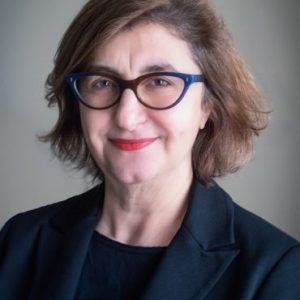
Mohna Ansari started her career as a journalist and subsequently graduated as a lawyer, becoming the first and only Nepal’s female attorney from the Muslim community. She worked with Amnesty International Nepal, Action Aid Nepal, UNDP, IDEA International and other national organizations. In 2010, Ansari was appointed as member of the National Women Commission (NWC) of Nepal. She also served as spokesperson of the NWC and the NHRC. Ansari also took up advocacy work through media and public forums, by writing in national dailies and appearing in TV debates. Mohna Ansari overviewed the women`s leadership in the policy and decision-making mechanisms in Nepal. Ansari underlined that there is still a progress needed to increase the women`s participation in public administration. She also discusses the challenges that women have to combat to establish a future with gender equality for all.

The Beijing Summit took place in 1995, when I was a young girl. Today, after 25 years, Nepal has made notable progress in women’s rights, gender equality and social inclusion. However, the deep-rooted patriarchal norms and practice continue to undermine women’s rights of equality, self-respect and independence.

Nepal has gone through major challenges in the last two decades following a decade long conflict, a peace process which started in 2006 that transformed the country into a secular, republican, secular state. Women had a significant role in this transformation. The first elected constituent assembly in 2008, it had 197 women members out of 601 members. The second one had 176 of women. A new constitution was adopted in 2015. Nepal’s Constitution has ensured women’s representation in federal and provincial parliaments, as well as local government bodies 32 percent and 40 percent, respectively. Currently, 90 of the 275 MPs are women in the Lower House. The Upper House has 22 women members of the 59 members. Six of the 10 parliamentary committees are headed by women lawmakers.

Election Act has ensured 50 percent women candidates in leadership positions of the local boards. In 2016 local elections were elected as a deputy chair or mayor of a seven hundred local bodies of the 753, also 18 women were elected as a mayor or Chair. Based on the act, over 6500 women were elected in a local body, these are Dalit women, and we all know in South Asia that Dalits are highly oppressive caste group.

According to a 2019 survey that looked over women’s representation in the parliament, Nepal ranked second in the entire Asia. This is a significant achievement compared to 1999’s parliament, which only had 5.8 percent women in parliament. Reservation policy and electoral reform had been instrumental in promoting women’s participation in policymaking roles. In the Civil Service Act, women have 33 percent reservation of the total 45 percent inclusive quota.

The Army and Police Act has also made a reservation for women.14 However, the inclusion of the women from the socially excluded group is still a major challenge for us. Despite these positive indicators, women still face multiple challenges. None of the major political parties have a woman in decision making positions.

Therefore, selection or election of women in any higher position to remain under control of the male decision maker in their political party. The legislation ratio of women does not reflect in the mainstream appointments. When it comes about the women’s inclusion in ministerial positions, Nepal ranks at 123rd position. The constitutional principle of the inclusive appointment in the government is also frequently overlooked within the given opportunity.

In the Global Gender Gap Report of 2018, which looked at women’s participation in the economy, Nepal ranked 110th among the other 149 participating countries.16 This was that Nepalese women are discouraged from economic participation factors like their poor social status, access to information, discriminatory dangerous practices, global violence, and free access to economic opportunity. For example, the Foreign Employment Act prohibited women from seeking foreign employment and foreign domestic work without the permission of their guardian or spouse. The government introduced this recently.

Another challenge that Nepali government yet has to tackle is a protection from the violence against women. And I think it is not only Asia, it is a worldwide problem. The violence against women take place in forms of trafficking, rape, domestic violence, child marriage, and in Nepal, dowry related violence of witchcraft and harmful traditional practices such as child poverty or mistral isolation. Every year, women are dying due to the mistral isolation. The Parliament in 2017 enacted and amended various laws to end violence against women and girls and protect the survivors, such as the Domestic Violence Act, Anti Trafficking Act, the Sexual Harassment Act at Workplace.

In 2016, national strategy was adopted to end child marriage. This is a global commitment that Nepal has introduced this policy. Recently, the government has decided to increase punishment in the crime of acid attack to ensure protection of the survivor. The National Women’s Commission has established a 24-hour helpline to tackle this issue and to reconcile or provide the legal assistance through the victims. 240 Women and Children Senior Citizens Center have been expanded throughout the country. In last 10 year, I myself have work with the legislative committees, policy makers and stakeholders to amend and enact several laws related to the violence against women. However, weak implementation of the laws remains a critical challenge. Impunity prevails due to failure of proper investigation and prosecution in a serious case of the violence against women. Lack of shelter and rehabilitation, support for the victim is the major challenge.

According to our police data, filing the case against violence against women is basically coming the domestic violence and rape and attempted rape and witchcraft allegation. It is rising during the last five years. Being a state party to the CEDAW, along with the other major human rights instrument, Nepal is committed to guarantee and promote gender equality. The principle of non-discrimination and gender equality have been enshrined in the Constitution of Nepal. However, the unequal citizenship provision for women remains in violation of Article 9 of CEDAW. Let me conclude by saying that this event is taking place at a time when COVID-19 pandemic has brought an extraordinary challenge.

In conclusion, Nepal is careful not to allow the pandemic and lockdown to be an excuse for ongoing violation of women and children, women’s and girls’ rights. On the other hand, we must appreciate the luxury that this gives us to step back and think and organize, to look at our effort so far and learn from them. So, we bounce back stronger than ever when this nightmare is over. We still have the opportunity to meet 2030 SDG Goals.

Houry Geudelekian


NGO CSW, Chair | USA

Houry Geudelekian was the previous Gender Program Coordinator at NGO Committee on the Status of Women, NY and the UN Coordinator of Unchained at Last working to end child marriage in US. She recently ended her term as Co-Chair of the Working Group on Girls and Co-Chair of NYC4 CEDAW. In her capacity as UN Coordinator for Armenian Relief Society (2011-2016), Geudelekian served as the Executive Committee member of NGO CSW NY, CoChaired NGO CSW Forum Planning Committee, MC’d two Consultation Days and chaired the Women of Distinction Award for CSW57/58. Houry Geudelekian acknowledged the advancements that have taken place since the Beijing 1995. Geudelekain talked about the programs of the NGO CSW. She underlined the importance of the collaboration that is needed to establish gender equality globally.

I am the girl who needed so much to have a voice because I was married off at an early age, which deprived me from my education. I am not sharing my expertise here as an advocate of women`s empowerment, but the embodiment of who we should be fighting for.

I would like to discuss the NGO CSW and what we have been doing with generation equality in 20202. We all live the reality that COVID-19 changed our lives. The work of NGO CSW was also affected by the COVID-19 pandemic. We were organizing our largest gathering in New York, last March 2020, as part of our mandate for the Commission on the Status of Women (CSW). Under normal circumstances, NGO CSW would bring voices of women and girls globally to the headquarters at the United Nations.

For the March 2020 event, over twenty thousand women had signed up to be present in New York. The organizers dimmed it as the Second Coming of Beijing Platform for Action, to mark the Beijing +25. The NGO CSW had planned five hundred and fifty panel discussions during the CSW. The organizers had come up with an elaborate good plan to have a grand silver jubilee celebration, were it not for that silent enemy called COVID-19. Was this COVID-19 pandemic a surprise to humanity? There were signs in the world to show that the human person was acting irresponsibly and it would not take long before a tragedy took place. The irresponsible actions are interconnected with the current pandemic taking place. If humanity does not respond to climate change, well, there might be similar tragedies in the upcoming years.

People are now blindly buying into the patriarchy, new type of colonialism, and global capitalism. The world needs everyone`s dedication, the experts to advise and the rest to forge a unified collaboration. Women, girls and our allies, our men and boys, who are on board in this fight for better gender relations. All must keep going by doing what all know to be the best, by giving voices to women and girls. CSW was planning to organize what they call the Generation Equality Forum, spearheaded by UN women in partnerships with France and Mexico.

We are open, striving for ideas and collaborations on how we can move the needle. We have been fighting for centuries, and at least for the last twentyfive years to specifically implement Beijing Platform for Action. I think that document is the strongest document that we have had for gender equality. The problem is that we never knew how to hold our governments accountable for the implementation. There are so many landmark documents at the UN right now. And if we really adhere to their agreements, we would not be in this situation. Imagine if we had global health coverage.

Imagine if we had truly the direct connection to what climate change is and how it has really affected us all. We would all be in a better position. We truly have to see how we can make a difference. We need to work on modeling a shared leadership for humanity. This is what we want to do as women and girls and how we are leading our platform going forward. Our next CSW65 is upcoming in March 2021.

CSW65 has its online engagement at its official website www.ngocsw.org. During the pandemic, it is not practical to bring twenty thousand people to New York. However, if all the twenty thousand can join the discussions online, the better it will be for CSW, despite the well-known challenges of everyone not having an access to an advance technology. We are working with grass root organizations where they can bring local women and girls around a table under a tent if they have to and share their laptops so that they would have an access to the same information of what it is that we are doing globally to speak up.

As a girl of 14 years old, married off at that tender age, one can only say that coming to New York helped nurture myself. However, this situation should be combatted as child marriages do not transform societies. When a girl cannot access good quality education, her voice is taken away, as well as the community’s force and strength. Do not give up on humanity by giving up on women and girls. The inspirational late Supreme Court Judge Ruth Bader Ginsburg said, “fight for the things that you care about, but do it in a way that will lead others to join you.”12 All present and those across the globe who fight for women’s rights must model the leadership and achieve gender equality together.