
| PANEL 3: Perspectives from the UN Member States | ||
 |
H.E. Dr. Arben Malaj | |
| President – Institute for Public Policy and Good Governance Fr. Minister of Economy & Finance – (Albania) | ||
|
Arben Malaj, Ph.D., former Minister of Finance and Economy, is a full professor of economic sciences at the College of Economics, University of Tirana. He is the Founding President of the Institute for Public Policy and Good Governance. In 1986, Mr. Malaj received a Doctorate Degree in Finance from the University of Tirana. He was a Senior Fellow and carried out an extensive research at Harvard University, John F. Kennedy School of Government Center for Business and Government (September, 2005-June, 2006). In April 2007, he attended the Senior Executive Program, a postgraduate study program focused on the expansion of NATO and the European Union in the George C. Marshall European Center for Security Studies in Germany. In 2002, Mr. Malaj was elected as a member of the Senate in the College od Economic Sciences at the University of Tirana, a responsibility that lasted until 2007. |
||
|
H.E. DR. ARBEN MALAJ, President of the Institute for Public Policy, Good Governance and Former Minister of Finance and Economy in Albania, delivered his remarks on incentivizing better education. H.E. Malaj began by acknowledging the paramount importance that the panel’s discussion holds as it is necessary “to act together globally and find ways to improve and enhance public and private partnership as a key element of the success of this noble mission.” He went on to discuss the detrimental effects that the recent world crises have had on the development of maladministered countries. H.E. Malaj emphasized that the best strategy to deal with such challenges is prevention, and the best cure to economic, social and political costs is sustainable development. H.E. Malaj said the Millennium Development Goals (MDGs), along with the international and national agencies that monitor the implementation of MDG-related strategies, reforms and policies should be improved. Governments, he said, have a responsibility to support this improvement process. Moreover, H.E. Malaj tackled the obstacles that educated and talented individuals face. Some of these difficulties were unemployment, nepotism, corruption, and weak institutions. He highlighted the importance of improving education and supporting all talents by providing equal opportunities, eliminating the division between non-EU and EU countries, and eliminating ethnic or religious segregation. H.E. Malaj said that putting more barriers on labor mobility and penalizing individuals who seek better opportunities only produces insecurity, crises, conflicts, poverty and more inequality. In regards to the current immigration crisis, H.E. Malaj said that is possible to stop this dilemma with more comprehensive, clearer, and greater incentives for the people of the developing countries; starting by offering equal opportunities, especially education. H.E. Malaj concluded his speech by calling for the support of well-educated and talented generations in developing countries as this issue “needs to be a key priority for Sustainable Development Goals Agenda.” |
||
H.E. Dr. Arben Malaj
Lambert Koty
| PANEL 2: Contributions of the Private Sector | ||
 |
Mr. Lambert Koty | |
| President and CEO, AGETUR, Benin | ||
|
Mr. Koty served as a Minister of Public Works and Transport in the Government of Benin between 2011 and 2013. He has been illustrated as a builder, very involved in Benin’s development issues and in the West African sub region. In May 2002, when AGETUR Association became a limited company, two Prelates successively assumed the presidency of the Board of Directors, as Mr. Koty remained Managing Director. After, Mr. Koty was unanimously appointed as the new president of the Board of the Company. Starting from 1990 when the Executing Agency of Urban Works (AGETUR) was created Mr. Koty has contributed to the improvement of the urban landscape of Benin. Given his skills and experiences, he was repeatedly invited as resource person and expert for the restructuring of several Urban works Agencies in Africa. That led him to gain the presidency of the African Association of Public Works Agencies (AFRICATIP) from 2013 till today. |
||
|
H.E LAMBERT KOTY, President and CEO of Agetur and Former Minister of Public Works and Transport in Benin, discussed the contribution of the private sector in developing the infrastructure in Africa. He talked about the aftermath of the economic crisis of the 80s in Africa where a number of innovative development tools have emerged. The first Executing Agencies of Public Interest Works (AGETIPs) were established with the support of the States and financial partners, including the World Bank. The main goal of the agencies, said H.E. Koty, “was to achieve development projects in ways favoring the intensive use of labor and to generate more economic and social value.” He drew his speech to a close by listing the objectives of these agencies. These objectives were to promote the ethical principles of delegated project as outlined in the agencies procedure manual, to promote a synergy of different experiences of public works agencies; particularly in terms of “best practices”, to enable emulation among members, to allow meetings between executives of different members of the Association, to encourage a better exchange of experience in various forms between members in all fields, and lastly, to expand the network of implementing agencies in the continent. |
||
Manoj Gursahani
| PANEL 2: Contributions of the Private Sector | ||
 |
Manoj Gursahani | |
| President US India Investment Forum (India) | ||
|
Mr. Gursahani is a Co-Chairman of India Business Group and past president Travel Agents Federation of India / Rotary Club of Mumbai Queens Necklace. He is the founder of Travelmartindia, India’s first e-commerce portal. Mr. Gursahani is also recognized and honored for his role in the contribution of Indo-USA relationship by US Embassy-India, Governor of Nevada, Governor of Maryland and Mumbai Police for work in Cyber Crime. |
||
|
MANOJ GURSAHANI, Co-Chairman of India Business Group and Former President Travel Agents Federation of India/Rotary Club of Mumbai Queens Necklace, delivered a speech that addressed the importance of developing all elements of welfare (i.e. sustainable infrastructure, good education, healthcare) for Indian citizens. Gursahani first referred to the India-US Ministerial Energy Dialogue, which was held on September 21, 2015 at the US Department of Energy in Washington. He said that the objective of the Indian government to provide a 24/7 power across India by 2019 was a major point in this dialogue. Such goal, he said, is achieved “by creating cost effective infrastructure that is sustainable and inclusive of clean energy solutions.” In his remarks, Gursahani discussed the role of Indian private sector in promoting sustainable development through emphasizing the adaptation of green technologies for inclusive growth. He stated that by 2050, 70% of the Indian population would be living in cities. Gursahani suggested that as Indian citizens move to urban areas, the city’s infrastructure will be in a greater demand as it carries key services like transportation, healthcare, education and public safety. Furthermore, Gursahani pointed out the expected increase in the public demand for a better education, accessible government, and affordable housing. Gursahani also mentioned the Indian Government’s efforts in promoting Smart City projects for which Dholera is an example. It’s a city based in the State of Gujarat and is being managed by Aecom, a US based Project Management Consultancy firm. In addition to Dholera, Gursahani said that the Indian Government is planning hundred more smart cities. By benchmarking the Smart City project in India, he concluded that there is an improved public transport system, a 24/7 water and electricity supply, a more efficient waste collection mechanism, telemedicine facilities available for all residents, and a 30-minute response time in cases of emergency. Lastly, Gursahani listed the Indian government’s initiatives for sustainable growth. Some of these initiatives were the plan to save $2 billion in four years by cutting down on energy usage during peak hours, and boosting rooftop solar power production. |
||
David Hong
| PANEL 2: Contributions of the Private Sector | ||
 |
David Hong | |
| One Acre Fund (East Africa Region) | ||
|
David Hong leads global policy engagement at One Acre Fund, a nonprofit social enterprise that supplies smallholder farmers with the tools and financing they need to grow their way out of hunger and poverty. |
||
|
DAVID HONG, Global Senior Policy Analyst at One Acre Fund in East Africa Region, talked about One Acre Fund`s role in generating solutions that enables smallholders increase their farm income and escape the trap of hunger and poverty. Mr. Hong addressed the issues that the smallholder farmers, who compose more than 75% of the world’s poor population, face due to living in remote areas and lacking the access to basic agricultural tools and trainings. After his analysis with them, Hong concluded that these farmers struggle to grow enough crops to feed their families and face an annual “hunger season” of meal skipping. Mr. Hong argued that the substitution could help these families by providing them with a complete service bundle that addresses the full value chain. Such service includes the supply of improved seeds and fertilizers, farming financing inputs, agricultural trainings, as well as an education on profit maximization mechanisms. Hong ended his speech by saying that in One Acre Fund, they measure success in their ability to make more farmers more prosperous as the One Acre Fund always put Farmers First. |
||
Mohamed Ali Ansar
| PANEL 2: Contributions of the Private Sector | ||
 |
Mohamed Ali Ansar | |
| Co-Director, Timbuktu Renaissance Association (Mali) | ||
|
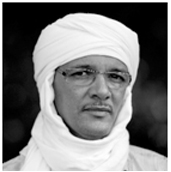
MOHAMED ALI ANSAR, the Co-Director of Timbuktu Renaissance Association, started his presentation by showing a short film of 6 minutes that gave more information about the situation of where he is from. Ansar indicated that it is hot but he told that they still have hope and all these goals are very fitting to what they need. However, he indicated that he is surprised to not see a goal about culture. |
||
|
MOHAMED ALI ANSAR, the Co-Director of Timbuktu Renaissance Association, started his presentation by showing a short film of 6 minutes that gave more information about the situation of where he is from. Ansar indicated that it is hot but he told that they still have hope and all these goals are very fitting to what they need. However, he indicated that he is surprised to not see a goal about culture. Ansar stressed that the culture generates income to people, and it is a way to maintain peace. He told about the one part of the Mali society who is called the Giyru, and said that they have a very important social role in peacekeeping. When there is a problem between two tribes in the desert or two villages or between two groups, Ansar indicated that they come and fix the relationship between the two and make peace. According to him, this is only the social way of the culture. He underlined that, with culture we can maintain peace, and without peace there is no development. It is for this reason said Ansar, that it is important for us to include culture. Ansar also mentioned that it is a priority for Mali to develop their tourism sector. However, he also stressed that today this mission is very hard as it is not easy to attract tourists to Mali because of security reasons. But with the international support and help, Ansar indicated that they hope to overcome this, to have peace back in Mali. He underlined that these are the same kind of problems that most of the African countries are going through. Ansar said that the development is Mali`s dream, but before having development, he underlined that Mali should have security. He said “We should be able to stay where we are and to be able to do our farming, to do our music, to do our handcrafts. The first priority is peace. Because if you speak about these goals to someone in Timbuktu today, he will say “I want my wife to be able to go to the market and come back home safe.” |
||