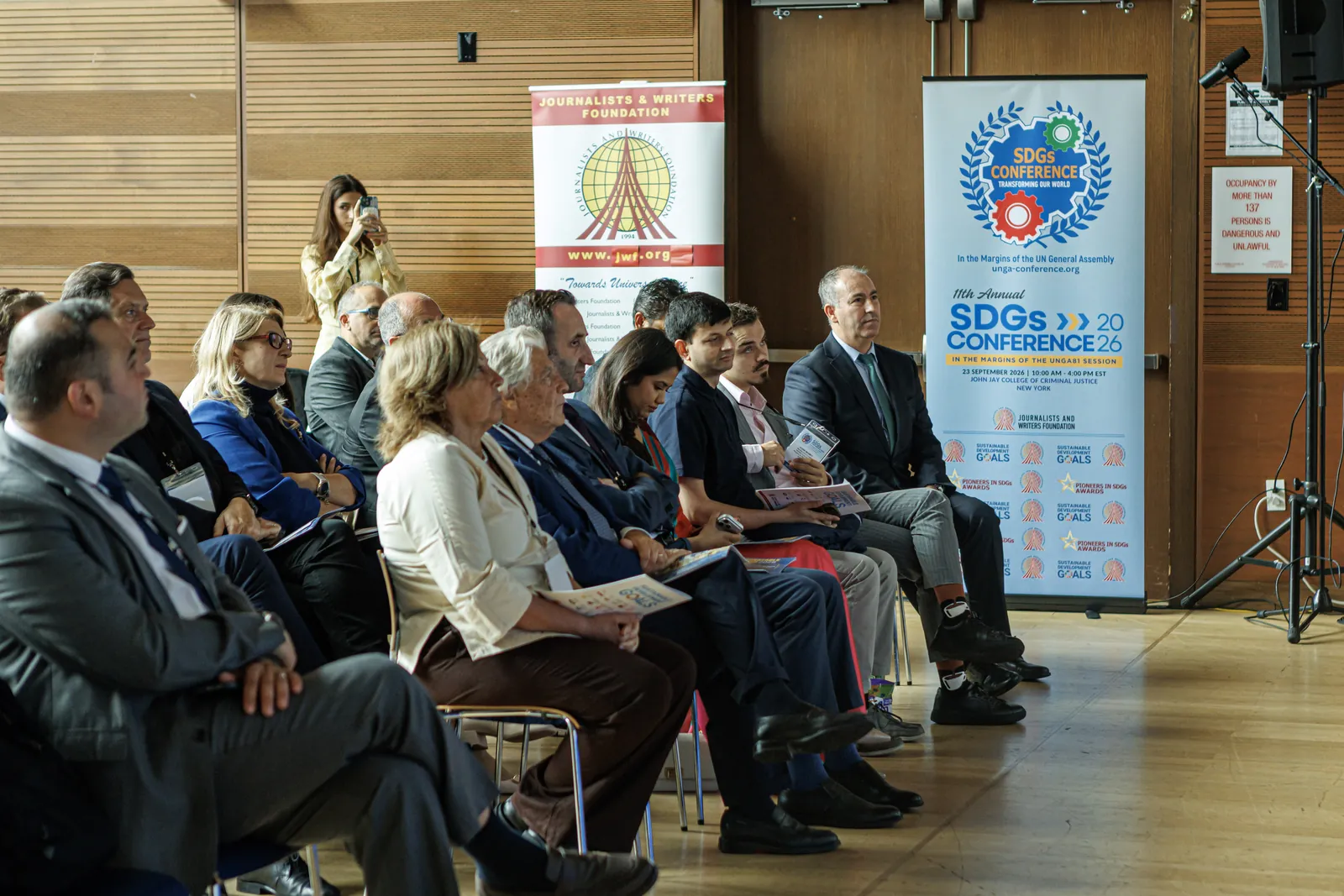
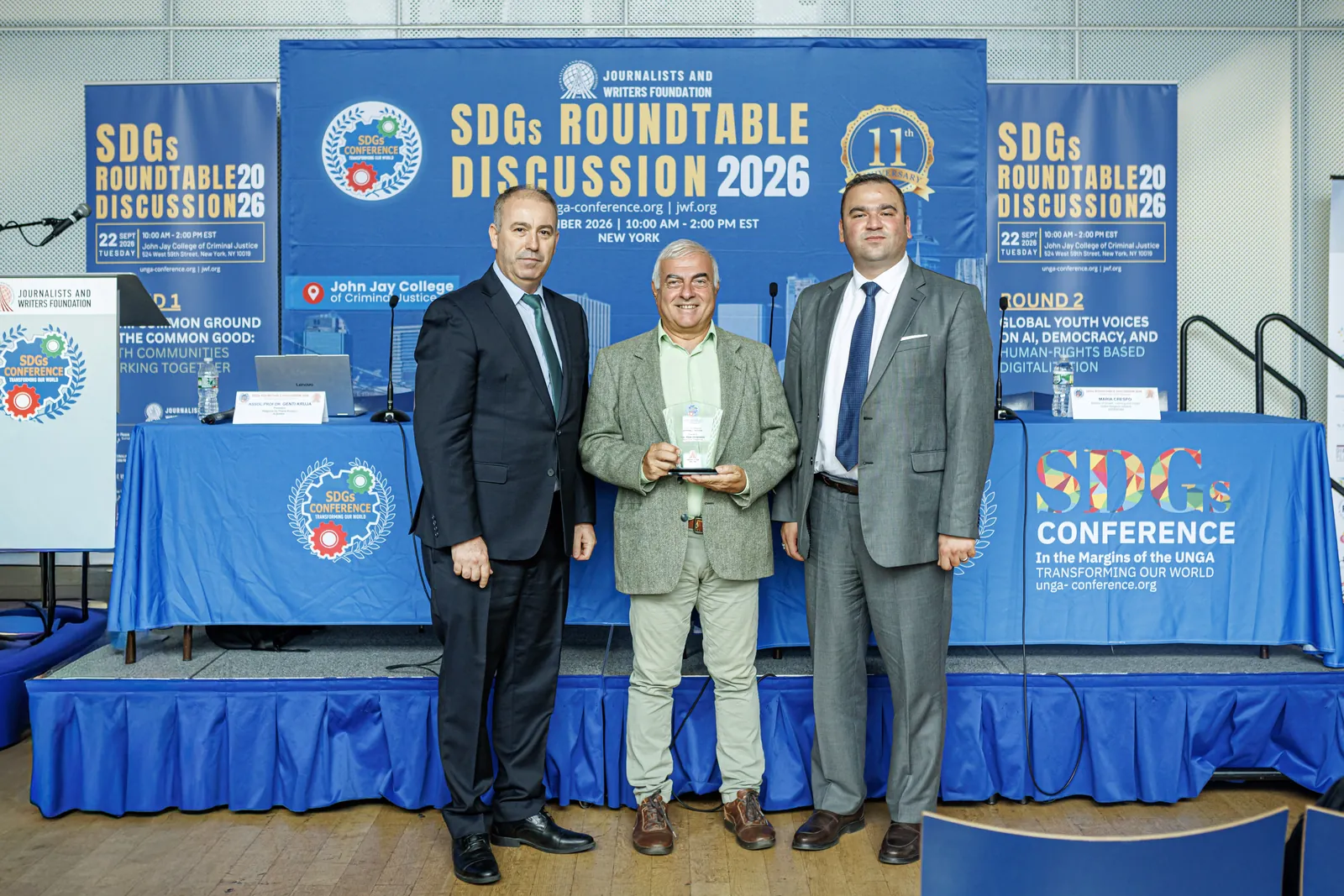
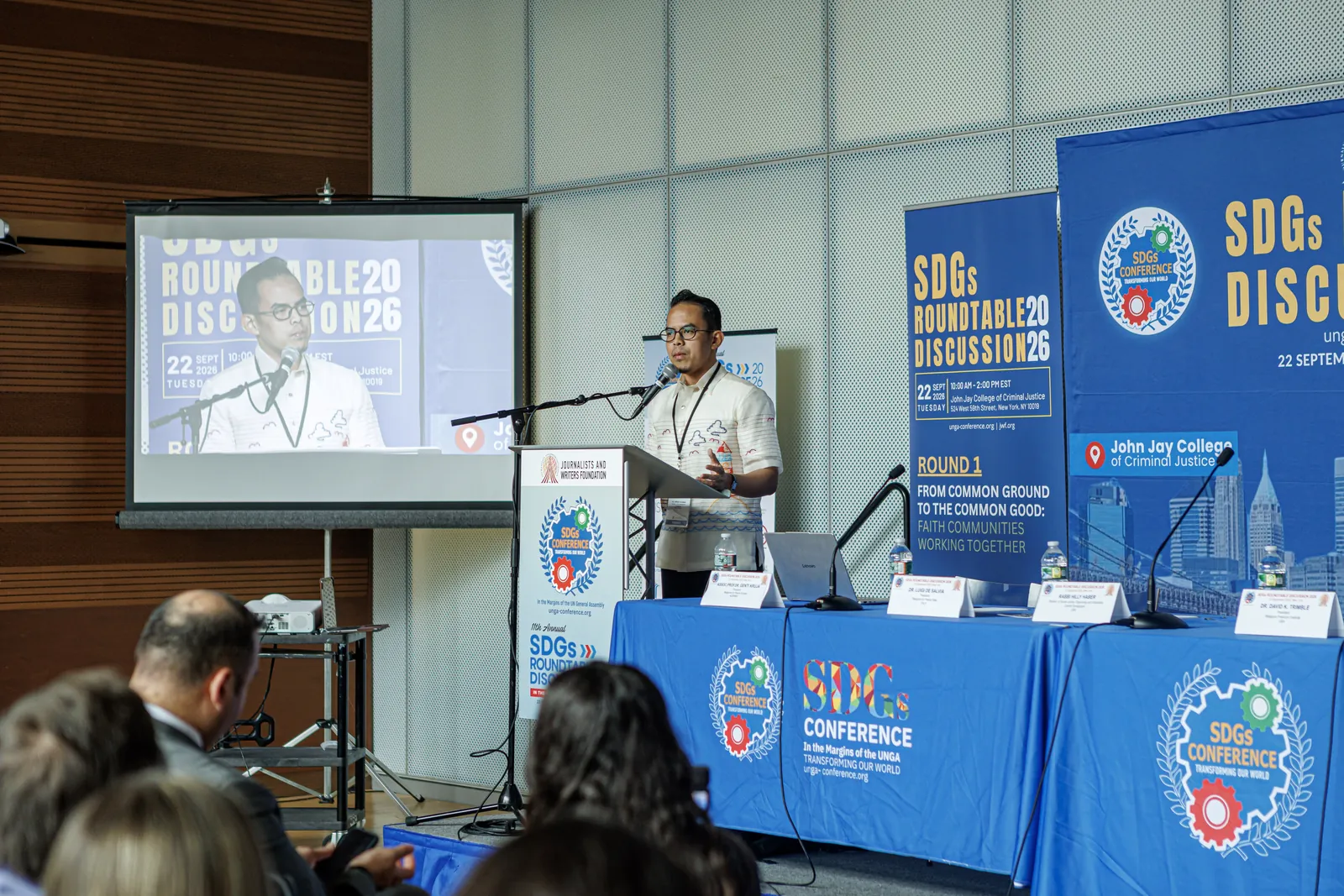
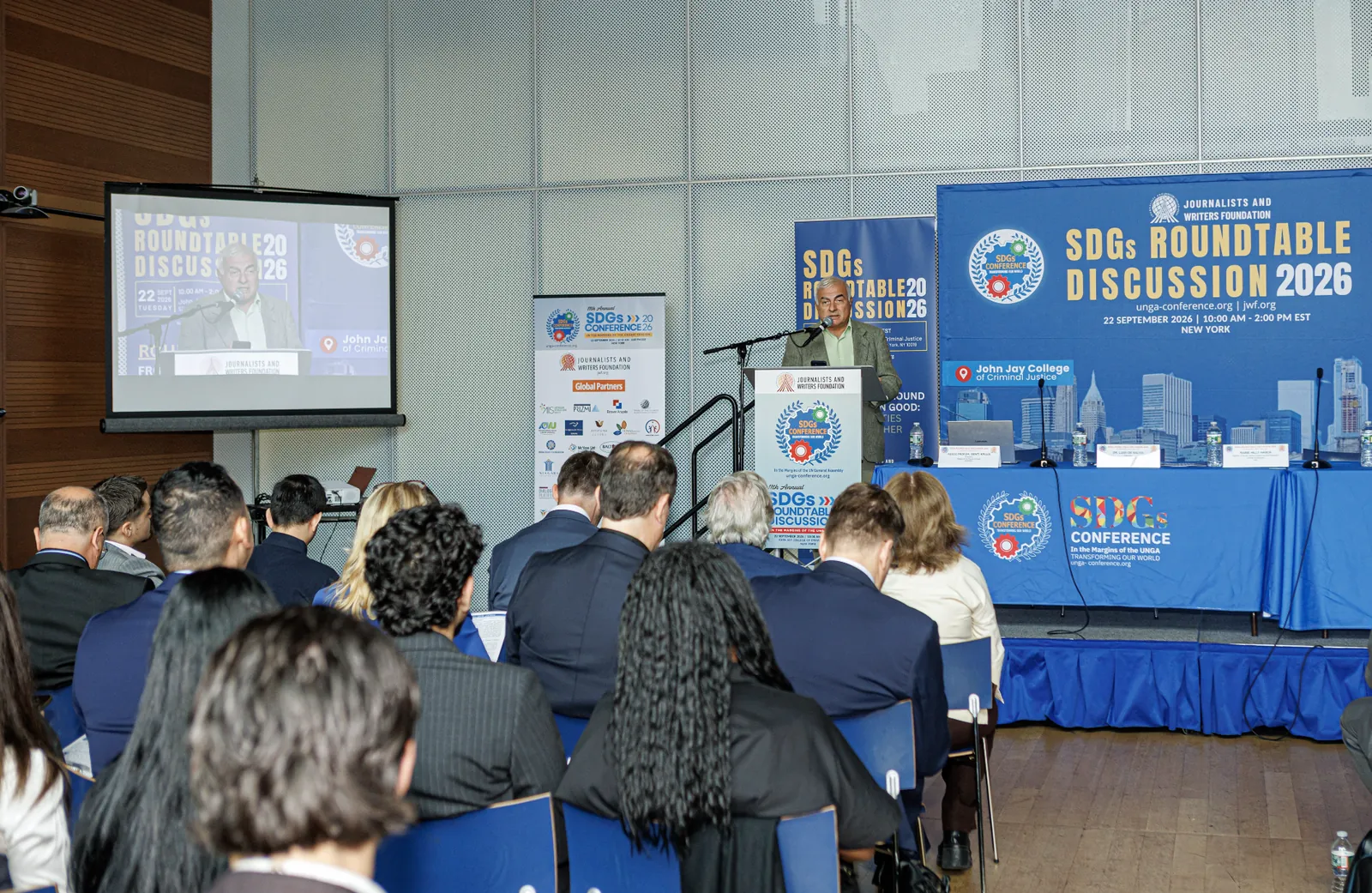
The Journalists and Writers Foundation (JWF) convened its SDGs Roundtable Discussion 2026 on September 22 at John Jay College of Criminal Justice in New York City. The event brought together 16 speakers from nine countries, representing fields including public service, interfaith dialogue, human rights, journalism, and youth advocacy. Following the opening keynotes, participants explored two themes: “From Common Ground to the Common Good: Faith Communities Working Together” and “Global Youth Voices on AI, Democracy, and Human Rights-Based Digitalization.”
Distinguished speakers shared reflections on peacebuilding, welcoming refugees, youth participation, polarization, artificial intelligence, and media literacy. Their contributions connected these issues to work taking place in their own communities and fields. The SDGs Roundtable Discussion also welcomed over 50 young professionals and students from different states across the United States to volunteer for JWF’s Three Days of Action events during the UNGA81 Session. Their participation brought added purpose to the discussions, connecting the issues raised on stage with the concerns and community engagement of young people.
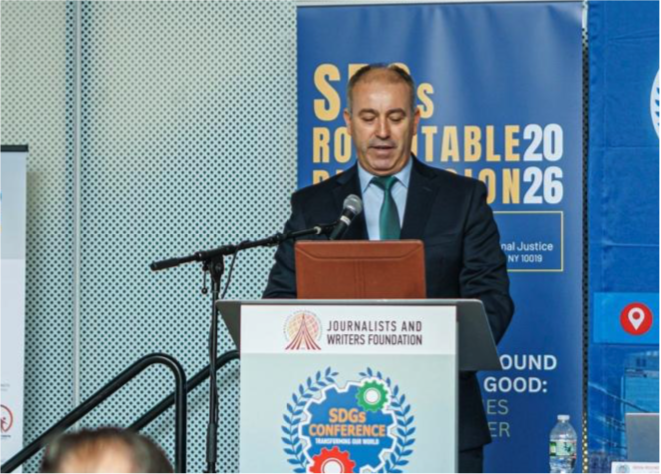 Dr. Mehmet Kilic, President of the JWF, welcomed participants to the SDGs Roundtable Discussion 2026 at John Jay College of Criminal Justice in New York City. He noted that the event was organized by the Journalists and Writers Foundation (JWF), in partnership with 56 global partners from 36 countries, alongside the 81st Session of the United Nations General Assembly. Dr. Kilic highlighted the participation of 16 panelists from Albania, Argentina, Belgium, Italy, Kenya, Kosovo, Moldova, the Philippines, and the United States. The roundtable aimed to bring together experts, practitioners, civil society representatives, and youth leaders to raise awareness of social challenges and exchange ideas for addressing social, economic, and environmental issues.
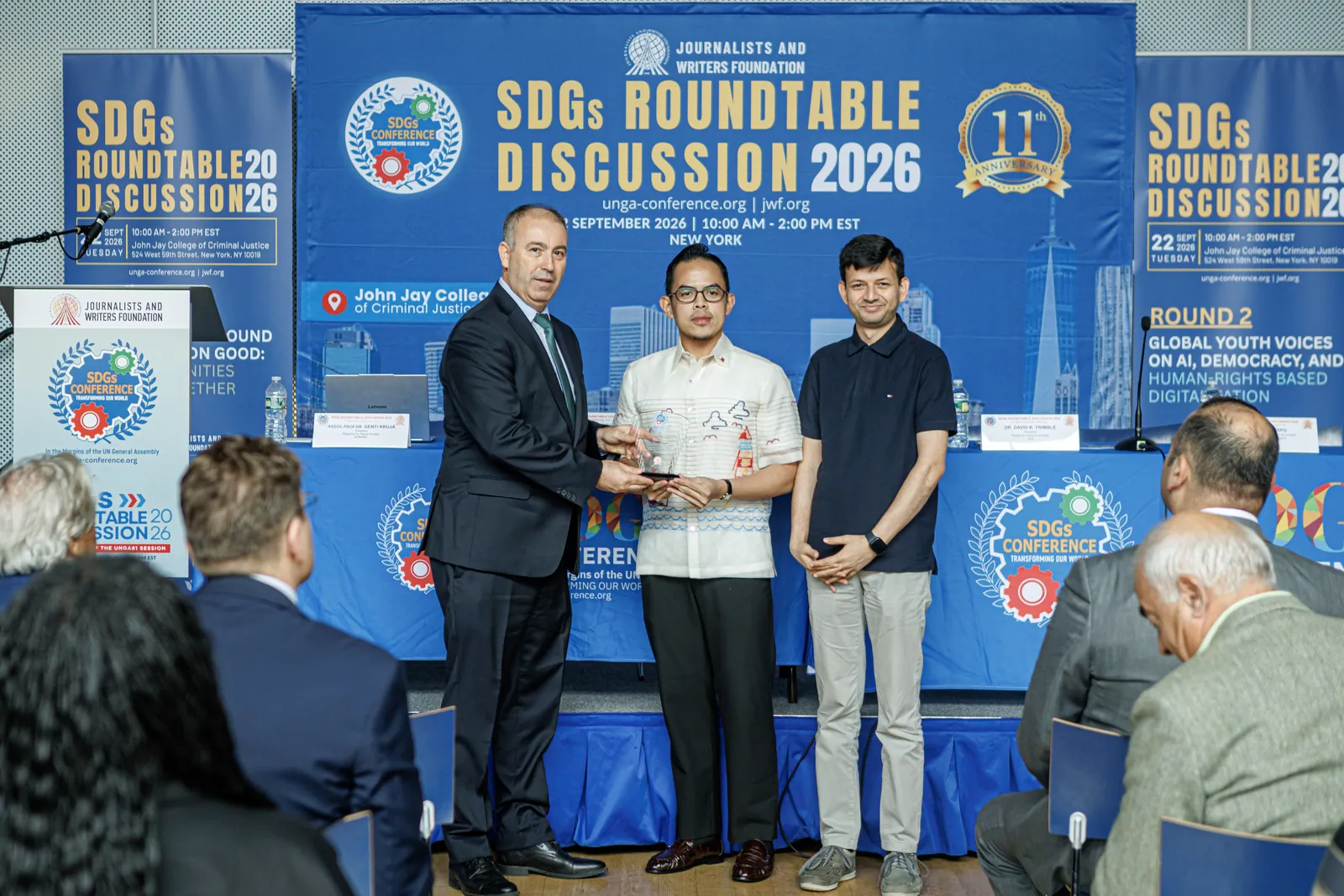
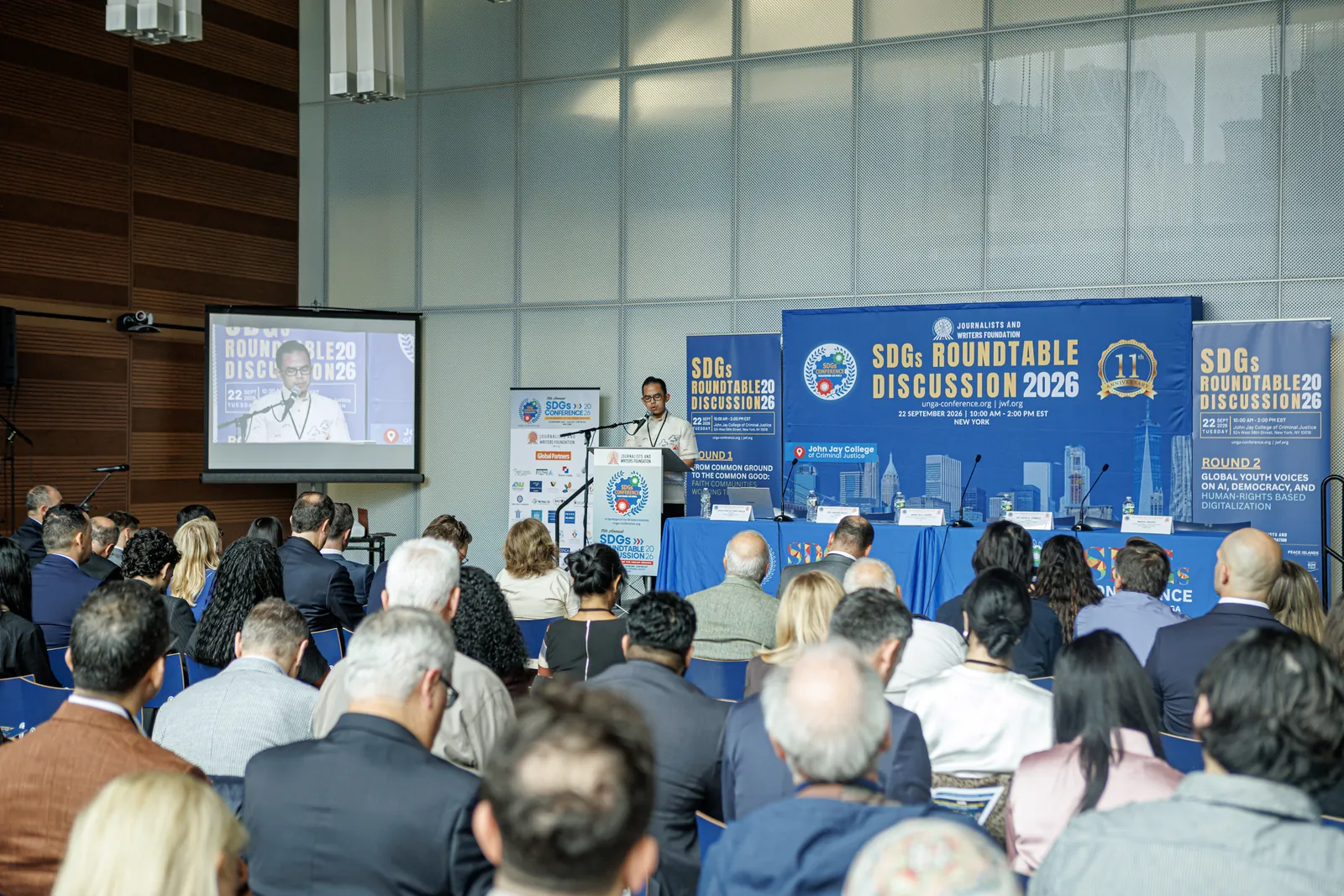
I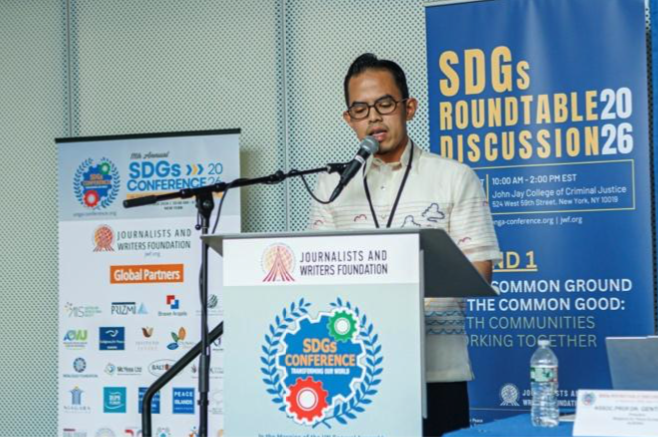 n his keynote address, Hon. Abrar J. Hataman, the youngest Member of Parliament in the Bangsamoro Transition Authority in the Philippines, spoke about participatory governance and public service. Reflecting on the region’s transition from armed conflict to negotiations and self-governance, he stressed that peace agreements must be followed by institutions that earn public trust.
“Lasting peace requires more than legislation,” Mr. Hataman said. “It requires the government to demonstrate every single day that peace improves people’s lives.” Drawing on his experience in Basilan, he cited the Bangsamoro Magna Carta for Persons with Disabilities and the Gender and Development Code as examples of policies designed to include people often left out of decision-making. He linked lasting peace to the everyday work of making institutions responsive to people’s needs.
Mr. Hataman urged young people to understand institutions, hold governments accountable, defend marginalized communities, and disagree without dehumanizing others. He also highlighted the need for sound judgment in navigating misinformation and manipulated content. “We should give young people more than a seat at the table,” he said, calling for the knowledge, confidence, institutional space, and ethical foundation needed for meaningful participation.
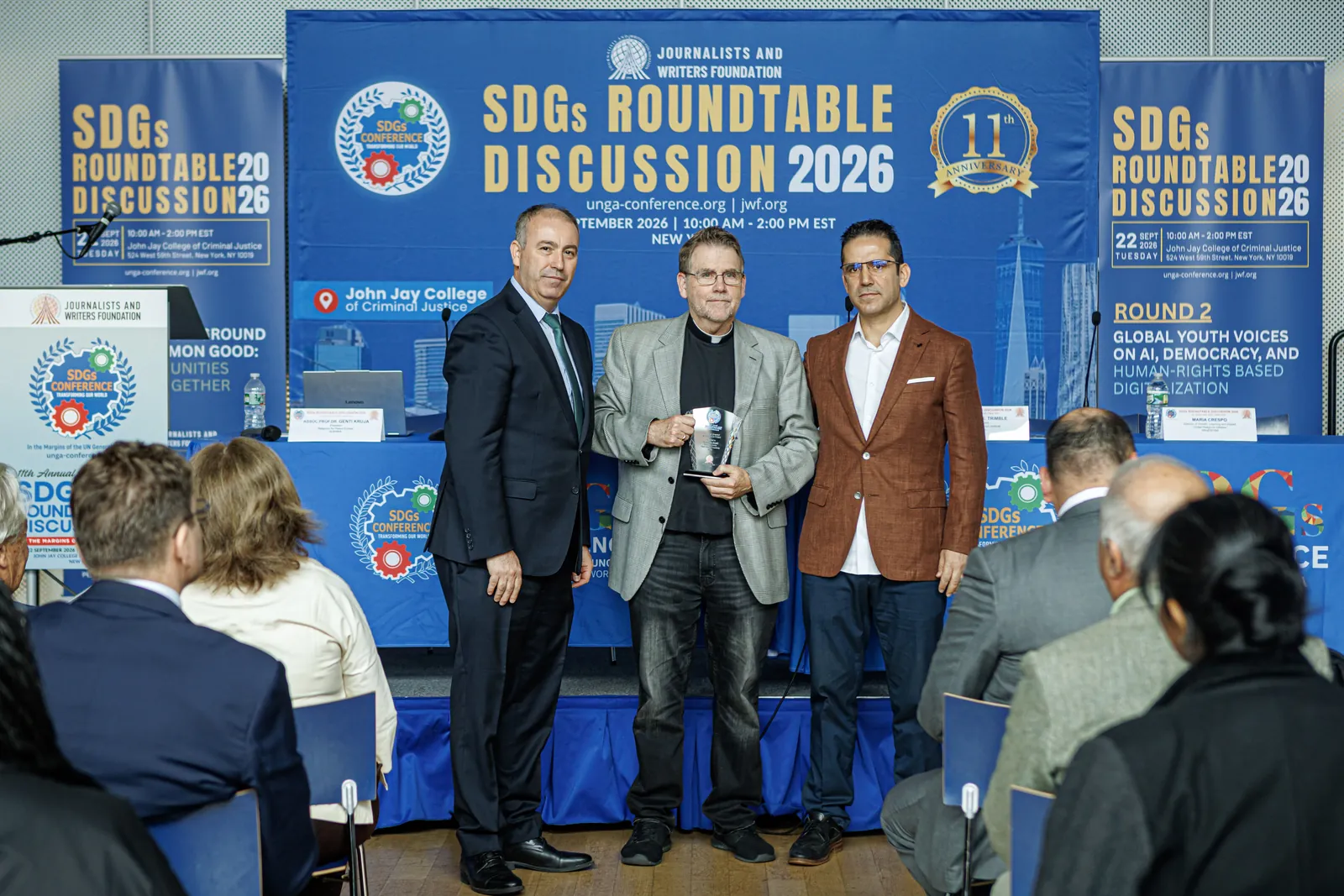
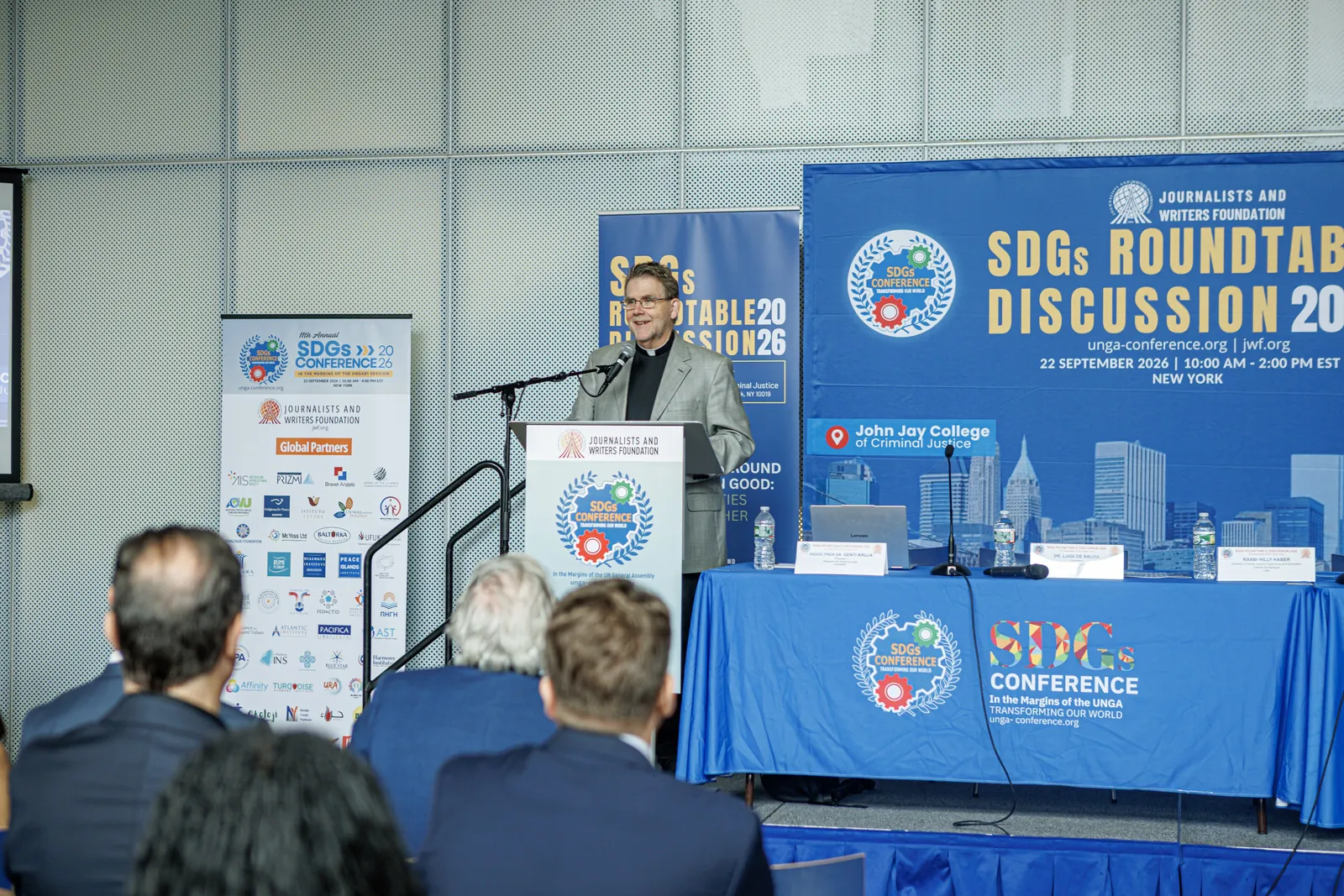 Fr. Corey Brost, Executive Director of Viator House of Hospitality and Co-Founder of the Children of Abraham Coalition, emphasized the role of personal relationships in building peace across faiths. Reflecting on what he has learned from Islam, Judaism, and other traditions, he encouraged participants to counter hate and despair through service and connection.
Fr. Brost recalled that a conversation with a Muslim banker helped inspire the Children of Abraham Coalition. He also described the coalition’s interfaith peace camps, where young people visit places of worship, learn about different traditions, and challenge prejudice. “These young people have been my stories of hope,” he said. “I have seen them grow into interfaith leaders.” At Viator House, faith communities work together to welcome young men seeking asylum and support their freedom to practice their faith. Brost noted that the organization provides prayer materials and transportation to religious services, and that 26 mosques, churches, and synagogues partner with the home. He concluded with an invitation to continue building hope together: “Let’s join together with our stories of hope.”
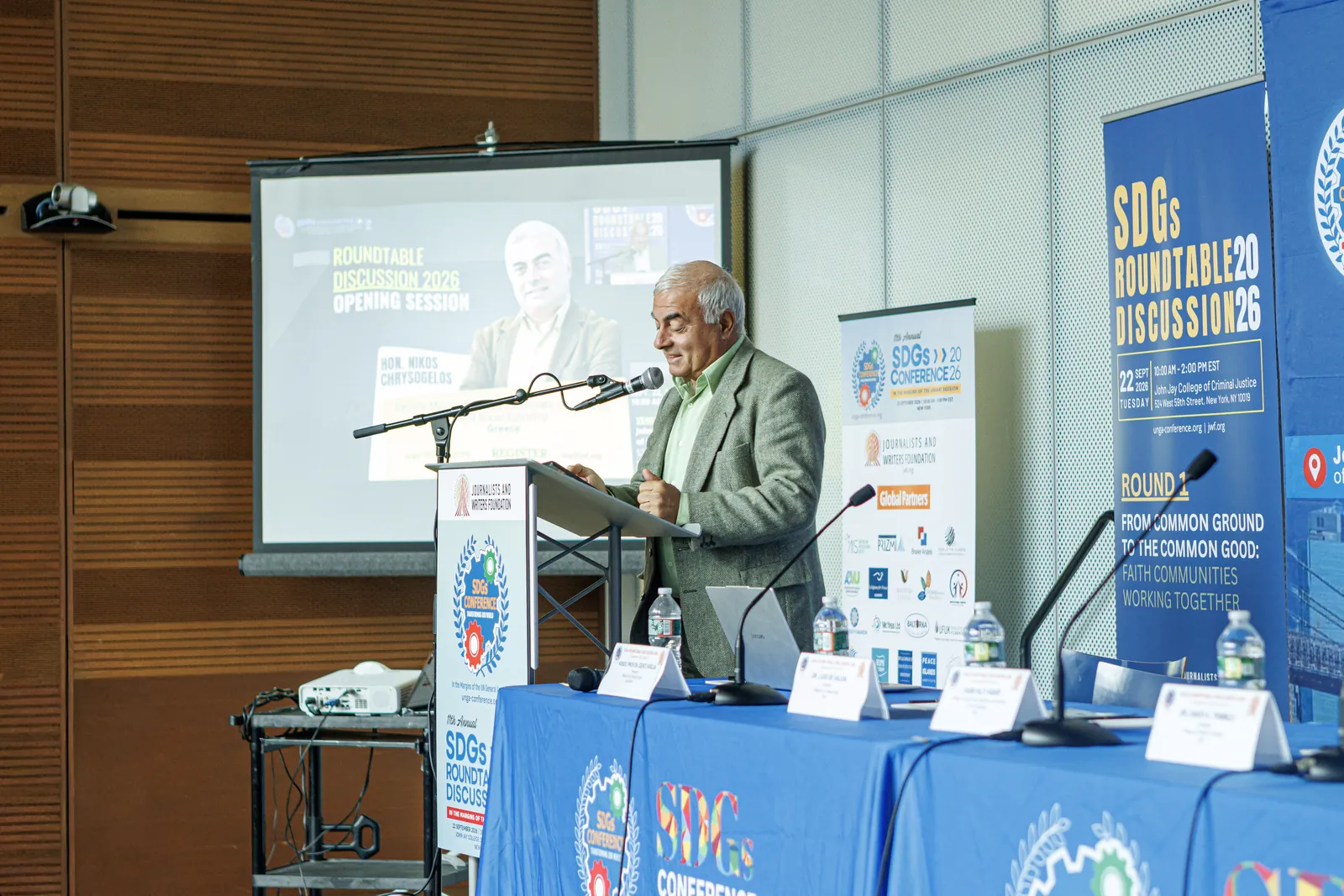 Hon. Nikos Chrysogelos, Deputy Mayor of Athens for Climate Governance and Social Economy, called for stronger efforts to implement existing agreements. “There is no lack of treaties, declarations and goals,” he said, pointing to the gap between making commitments and carrying them out. He stressed that climate governance should distribute benefits fairly and give people a meaningful role in decisions that affect their lives.
Mr. Chrysogelos urged participants to build bridges across borders and generations and to recognize young people as leaders who can contribute now. “We cannot decide about the future without the participation of the generations who will live it,” he said. Drawing on Athens’ climate initiatives, he described involving young people in planning and offering small grants to support their climate projects. He argued that government agreements must be matched by community engagement, highlighting the roles of local authorities, civil society, and faith communities in linking climate action with social justice and shared responsibility. “They cannot be solved without collaboration and without citizens’ engagement,” he said of society’s challenges.