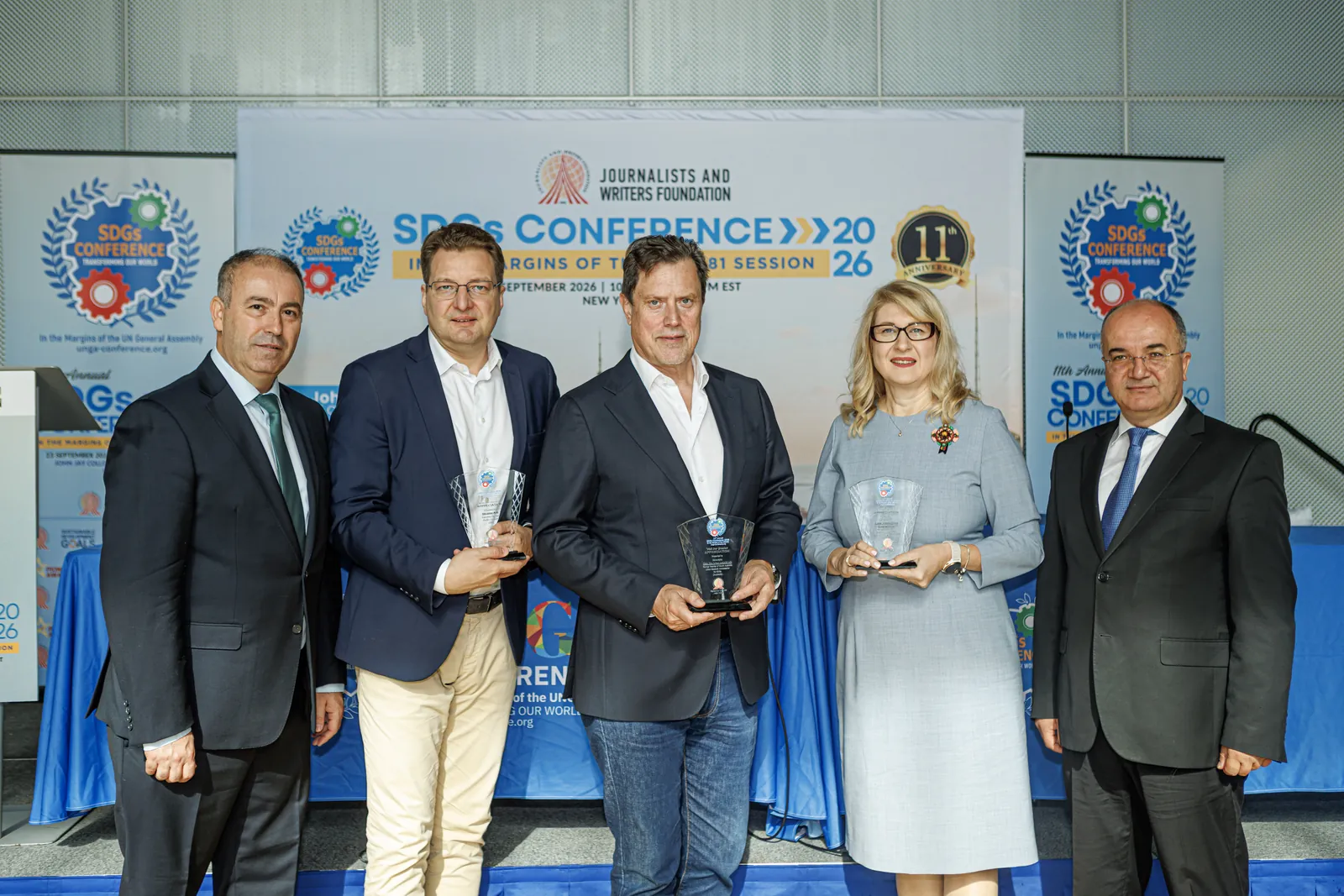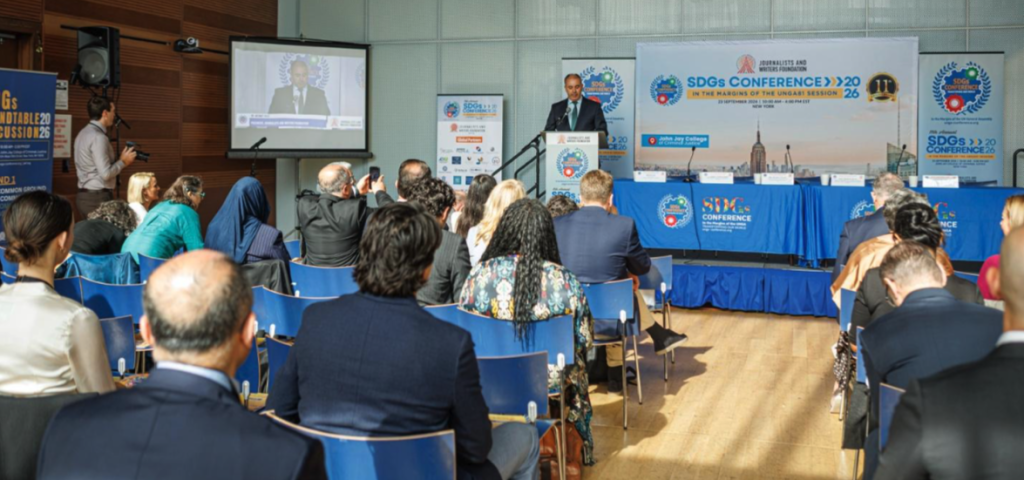
In his opening speech, Dr. Mehmet Kilic welcomed participants to the 11th Annual SDGs Conference 2026 at John Jay College of Criminal Justice, organized by the Journalists and Writers Foundation in partnership with 56 global partners from 30 countries. Dr. Kilic praised the diverse gathering of changemakers and leaders committed to shaping a better future for all where no one is left behind.
Dr. Kilic outlined the broader context of UNGA81, whose theme is “Restoring Trust, Managing Transformation: A United Nations That Delivers for All.” He highlighted the session’s leadership under President of the General Assembly H.E. Halil-ur Rahman of Bangladesh, the process of selecting the next UN Secretary-General as António Guterres approaches the end of his term, and the 250th anniversary of U.S. independence. He also noted that heads of state were delivering their General Debate speeches during High-Level Week. Dr. Kilic emphasized the importance of civil society, community and interfaith leaders, and youth delegates gathering in New York to raise their concerns about global challenges. He said the conference would bring speakers together to discuss possible solutions and share civil society practices for building peaceful and inclusive societies.
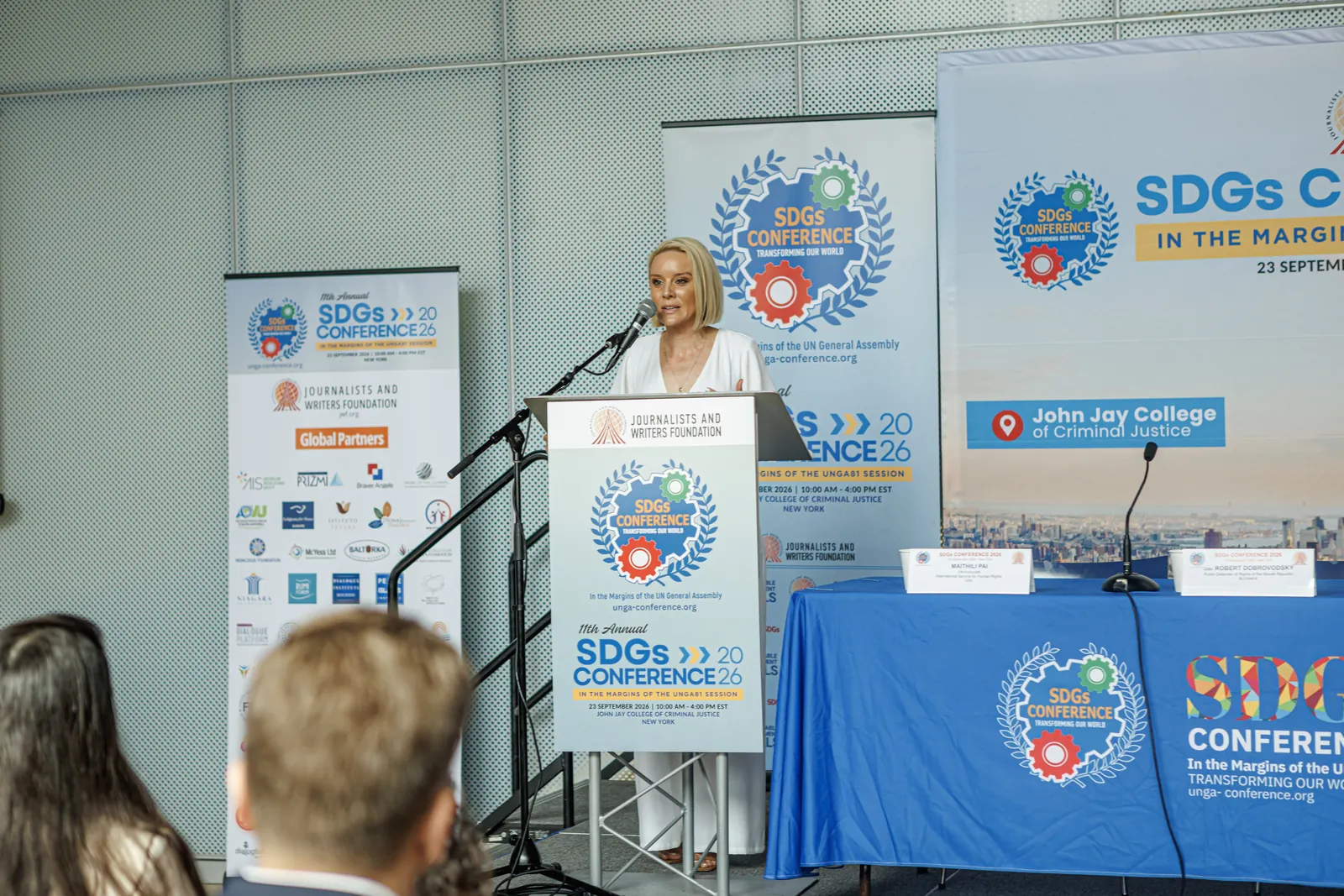 Master of Ceremonies Shanelle Franklin, an international speaker and award-winning broadcaster from South Australia, highlighted the human relationships that make cooperation possible. She described laughter and shared moments as ways to connect across differences—not as solutions to conflict, but as openings for empathy and more constructive dialogue. Drawing on her grandfather’s belief that people can work through disagreement without turning it into an argument, Franklin said, “Disagreement doesn’t need to mean disconnection.”
She emphasized that sharing a laugh can help people see the person behind a title or position. “Connection changes the conditions in which difficult conversations happen,” she said. Franklin’s central message was that people need to connect with one another before they can effectively advocate, negotiate, or solve problems together.
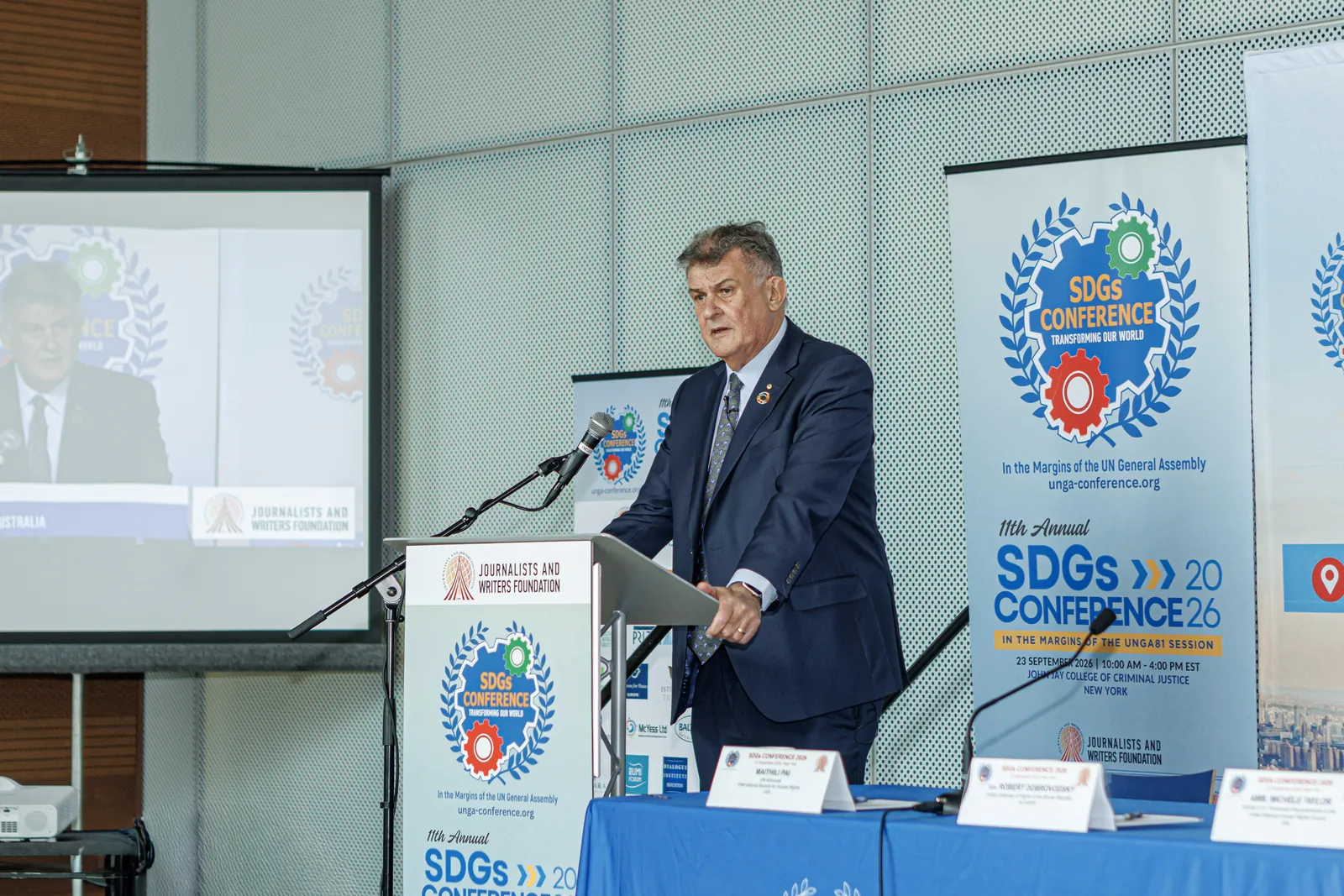 The first keynote speaker, the Honorable Reverend Dr. Lynn Arnold AO, former Premier of South Australia, addressed how multilateralism can be advanced to revitalize the Sustainable Development Goals (SDGs). He described the SDGs as both an acknowledgment of serious global challenges and a framework for hope—but said that hope depends on meaningful action. “The SDGs are based on core values of decency,” he said. “They will be worthless if there were to be no meaningful action to achieve them.”
Drawing on historical examples, Rev. Dr. Arnold urged participants to examine the root causes of global risks rather than rely on responses that address only their symptoms. He focused on the movement of people, connecting rural-to-urban migration with the growth of informal settlements, poverty, and environmental pressures. While recognizing countries’ right to manage their borders, he cautioned that building walls cannot resolve the conditions driving displacement and may deepen division. “We must start thinking about community globally, not just chauvinistically,” he urged.
Rev. Dr. Arnold called for a major multilateral initiative—comparable in scale to the Bretton Woods institutions—to support sustainable livelihoods, employment, and climate resilience in countries of origin. He said such investment could advance several SDGs, including those focused on poverty reduction, food security, health, and global partnerships.
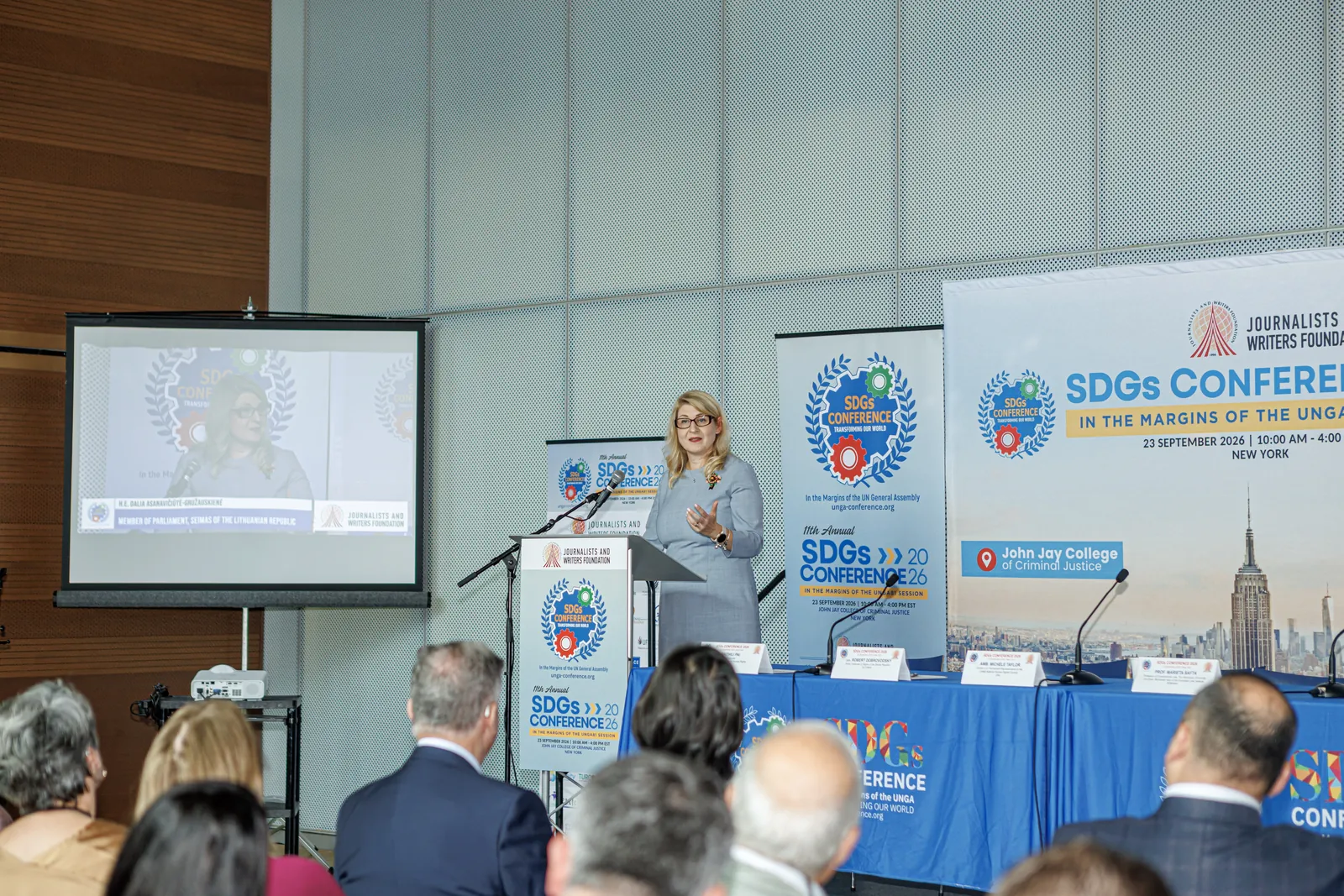 The next keynote speaker, Her Excellency Dalia Asanavičiūtė-Gružauskienė, a Member of Parliament in the Seimas of the Republic of Lithuania, addressed the renewal of trust in multilateralism as a means of protecting human rights. Drawing on Lithuania’s experience of occupation, peaceful resistance, and restored independence, she stressed that freedom cannot be taken for granted and must be defended. “We know that freedom of the individual and state cannot be taken for granted. We must defend it every single day,” she said.
H.E. Asanavičiūtė-Gružauskienė connected Lithuania’s history to today’s global landscape, citing armed conflicts and the human rights violations they cause. She challenged the international community to move beyond expressions of concern and take action to prevent abuses and hold perpetrators accountable. “Can we respond not only with words of regret, but with action?” she asked.
She argued that the United Nations must reform and demonstrate its value by preventing conflict, establishing and upholding international rules, building public trust, and protecting human rights in countries of every size. She emphasized that reform should not simply accommodate powerful states; UN bodies, including the Security Council, should represent regions fairly and uphold the principles of the UN Charter. “This does not mean accommodating the interests of the big and powerful,” she said. Her remarks underscored that institutional credibility depends on consistent and impartial action to defend human rights and the rules-based international order.