Skip to content

SDGs CONFERENCE 2026

IN THE MARGINS OF THE UNGA 81TH SESSION 

23 September 2026, Wednesday | New York

www.unga-conference.org

In the Margins of the 81st Session of the United Nations General Assembly (UNGA81), the Journalists and Writers Foundation will host the 11th Annual SDGs Conference 2026 in New York on Wednesday, 23 September 2026, in New York. This event is organized in collaboration with 56 civil society organizations from 30 countries. 

Over the past decade, the Journalists and Writers Foundation and its global partners have proudly convened this multidisciplinary platform, creating an international community that unites hundreds of high-level UN diplomats, Heads of State, civil society leaders, human rights advocates, journalists, and youth leaders worldwide. The 3 Days of Actions includes the JWF High-Level Reception, the SDGs Roundtable Discussions, SDGs Conference, and the Pioneers in SDGs Awards. These initiatives aim to promote action-oriented and inclusive policy proposals to accelerate the implementation of the Sustainable Development Goals (SDGs) while addressing complex issues and responding to emerging threats to international peace and security. 

PANEL 1: RENEWING MULTILATERAL SYSTEMS FOR A NEW GLOBAL FRAMEWORK

The international landscape is at a pivotal juncture, requiring a comprehensive revitalization of multilateral institutions to confront today’s challenges in line with universal human rights and international law. As global power dynamics and financial structures evolve, the UN 2.0 initiative seeks to reform core UN functions through a coordinated framework aimed at enhancing efficiency, transparency, and accountability. This reform comes at a critical moment, as the UN prepares to elect its next Secretary-General, emphasizing greater openness and inclusivity to rebuild trust in multilateral leadership.  

Amid pervasive global challenges—such as rising authoritarianism, shrinking civic freedoms, cybersecurity threats, misinformation, and societal polarization—geopolitical shifts are undermining democratic institutions. Reshaping multilateralism in this context demands collective efforts to strengthen governance, uphold shared values, and adapt systems to new technological and geopolitical realities. Enhanced international collaboration and alignment of priorities are essential to reinforcing rules-based global governance, human rights, gender equality, and multilateral cooperation, especially as public confidence in international institutions wanes. Fostering a shared sense of purpose and the principle of “leaving no one behind” has become more vital than ever.  

Panel 1 will explore how reforms can create a more resilient, inclusive, and effective multilateral system capable of responding to today’s contested global environment and empowering future generations. It will identify factors contributing to fragmentation and propose inclusive policy actions to shape a renewed multilateral architecture suited for the future.  

Key topics to be discussed include:

  • The Pillars of the UN 2.0 Initiative: A Coordinated Framework to Renovate the UN Operations with innovative skills and forward-thinking culture
  • A Projection into the next UN Secretary-General Elections: Transparency and Reform of the Selection Process
  • Reshaping the Future of Multilateralism: Global Challenges testing the Existing International Systems;
  • Overarching priorities of the European Union at the UN for rules-based global governance agencies; 
  • Emerging Trends shrinking Civic Spaces amid Rapid Geopolitical Changes.

PANEL 2: BRIDGING DIVIDES: STRENGTHENING CIVIC TRUST AND REBUILDING SHARED VALUES

Political polarization is no longer simply a domestic challenge; it has become a global obstacle to sustainable development. When societies lose the capacity to engage differences constructively, trust in institutions erodes, social cohesion weakens, and collective action becomes increasingly difficult. In this environment, progress toward the Sustainable Development Goals (SDGs)—particularly those related to peace, justice, strong institutions, and inclusive societies—faces significant headwinds.

Yet polarization is not inevitable. Around the world, citizens, civil society organizations, faith communities, and public leaders are developing practical approaches to restoring trust, strengthening civic relationships, and fostering a renewed sense of shared purpose. 

Panel 2 will explore how societies can bridge deepening divides and cultivate the habits of listening, humility, and collaboration necessary for democratic resilience and sustainable development. Special attention will be given to community-based depolarization efforts that equip ordinary citizens to engage across political, ideological, religious, and cultural differences.

Key topics to be discussed include:

  • Main drivers of political polarization and social discontent today;
  • Impacts of polarization towards the progress on sustainable development and social cohesion; 
  • Reclaiming civic agency and strengthening participatory democracy;
  • Practical approaches helping people to listen, disagree respectfully; and work together across differences;
  • The role of education, media, technology and faith communities in either exacerbating or mitigating polarization.

PANEL 3: PRESS FREEDOM AND INDEPENDENT JOURNALISM AS A CROSS-CUTTING ENABLER OF PEACE

In today’s increasingly interconnected and digital world, press freedom and independent journalism serve as essential pillars that promote positive peace, support sustainable development, and facilitate conflict resolution. However, the rapidly evolving information ecosystem poses significant challenges. 

Content journalism on social media platforms has expanded faster channels for information dissemination, but has also further facilitated the spread of disinformation, misinformation, and hate speech, diminishing public trust and the integrity of the information environment. Protecting journalistic integrity in this landscape requires robust safeguards, legal protections, and ethical standards to ensure truthful reporting and the safety of journalists.

At the same time, journalists face mounting threats beyond misinformation. Transnational repression, digital attacks—including cyber harassment, surveillance, and targeted disinformation campaigns—are increasingly used to intimidate or silence media workers, particularly those exposing human rights abuses or challenging authoritarian regimes. These threats weaken press independence and threaten social cohesion and peace.

Women journalists have faced particular brutality, with a global surge in violence targeting them, shaped by regional risks and cultural contexts. Gender-based violence, harassment, and threats hinder their participation and ability to report on critical issues, leading to a rise in self-censorship. Addressing these challenges requires gender-responsive strategies that promote safety, equality, and empowerment within the media sector.

Moreover, concerns about artificial intelligence and automated content creation threaten to undermine public trust in media institutions. As AI-driven disinformation and deepfake technology become more sophisticated, combating these issues demands renewed efforts to enhance media literacy, transparency, and accountability.

Panel 3 will explore how protecting journalistic integrity, combating digital repression, safeguarding women journalists, and countering AI-driven disinformation are essential for building resilient, independent media ecosystems that underpin peace, democracy, and human rights worldwide.

Key topics to be discussed include:

  • Protecting Journalistic Integrity and the Information Ecosystem in the era of Content Journalism on Social Media Platforms
  • Combatting Transnational Repression and Digital Attacks on Journalists
  • Addressing the Global Suge in Violence against Women Journalists: Regional Challenges and Gender-Responsive Solutions
  • Strengthening Public Trust in Media against Artificial Intelligence and Disinformation Trends.

PROGRAM

SDGs CONFERENCE 2026

In the Margins of the UNGA 81st Session

23 September 2026, Wednesday | www.unga-conference.org

10:00 AM – 10:30 AM
OPENING SESSION: Welcome Remarks & Keynotes

10:30 AM – 12:00 PM

PANEL 1: RENEWING MULTILATERAL SYSTEMS FOR A NEW GLOBAL FRAMEWORK

  • The Pillars of the UN 2.0 Initiative: A Coordinated Framework to Renovate the UN Operations with innovative skills and forward-thinking culture
  • A Projection into the next UN Secretary-General Elections: Transparency and Reform of the Selection Process
  • Reshaping the Future of Multilateralism: Global Challenges testing the Existing International Systems;
  • Overarching priorities of the European Union at the UN for rules-based global governance agencies; 
  • Emerging Trends shrinking Civic Spaces amid Rapid Geopolitical Changes. 

12:15 PM – 1:45 PM 

PANEL 2: BRIDGING DIVIDES: STRENGTHENING CIVIC TRUST AND REBUILDING SHARED VALUES

  • Main drivers of political polarization and social discontent today;
  • Impacts of polarization towards the progress on sustainable development and social cohesion; 
  • Reclaiming civic agency and strengthening participatory democracy;
  • Practical approaches helping people to listen, disagree respectfully; and work together across differences;
  • The role of education, media, technology and faith communities in either exacerbating or mitigating polarization.

2:00 PM – 3:30 PM 

PANEL 3: PRESS FREEDOM AND INDEPENDENT JOURNALISM AS A CROSS-CUTTING ENABLER OF PEACE

  • Protecting Journalistic Integrity and the Information Ecosystem in the era of Content Journalism on Social Media Platforms
  • Combatting Transnational Repression and Digital Attacks on Journalists
  • Addressing the Global Suge in Violence against Women Journalists: Regional Challenges and Gender-Responsive Solutions
  • Strengthening Public Trust in Media against Artificial Intelligence and Disinformation Trends.

3:30 PM – 4:00 PM CLOSING REMARKS 

3 DAYS OF ACTION

SDGs CONFERENCE 2026
In the Margins of the UNGA81
www.unga-conference.org 


DAY 1: JWF High-Level Reception 2026 (Monday, Sept. 21, 2026)

On the opening day of the High-Level Week, this networking event gathers global partners from various countries to engage with UN Ambassadors, diplomats, journalists, academics, and human rights defenders. As advocates of sustainable peace and development, participants introduce their transformative actions towards a more prosperous world while establishing new networks to generate future multistakeholder collaborations. The High-Level Reception hosts over 150 delegates and global partners worldwide, including Ministers, UN diplomats, civil society members, journalists, academics, youth advocates, etc.
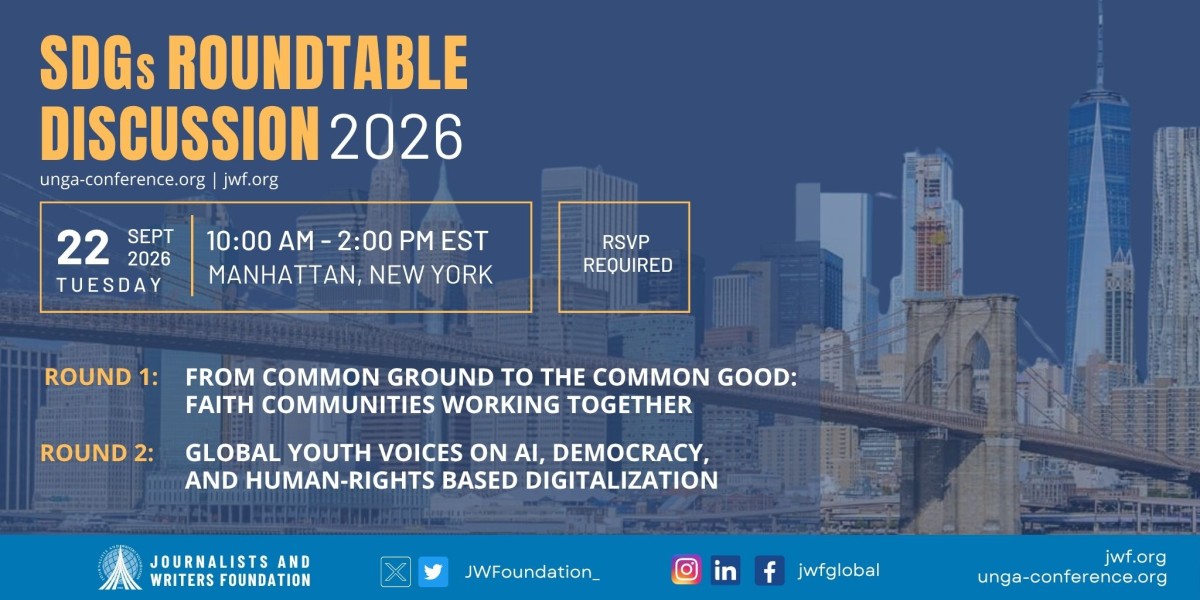
DAY 2: SDGs Roundtable Discussion 2026 (Tuesday, Sept. 22, 2026)

SDGs Roundtable Discussion discussed critical issues to promote and protect sustainable peace and development globally. This side-event aimed to create a platform for the international delegations of interfaith leaders, civil society members, academics, and experts to share their expert opinions, exchange ideas on various development challenges and offer inclusive solutions to the contemporary challenges on social, economic, and environmental issues. Speakers explored the pivotal role of interfaith dialogue in achieving the SDGs while sharing civil society best practices and initiatives for the SDGs. SDGs Roundtable Discussions host distinguished speakers from around the world, including prominent interfaith leaders, civil society pioneers, peacemakers, academics, etc.
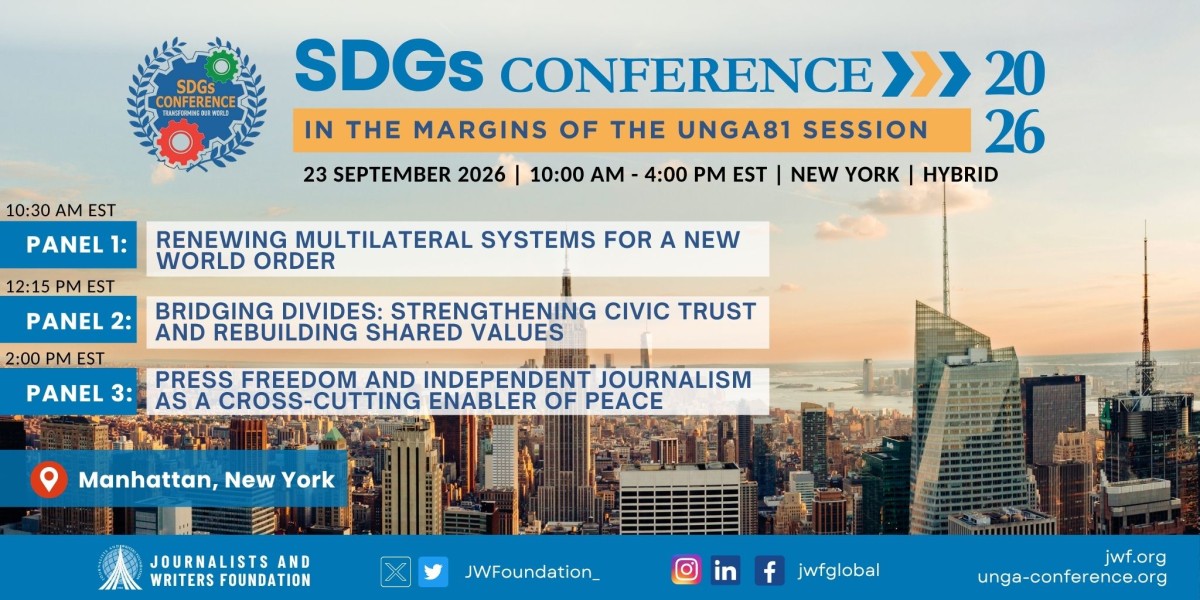
DAY 3: SDGs Conference 2026 (Wednesday, Sept. 23, 2026)

This multi-stakeholder platform generated an opportunity to offer inclusive policy suggestions to address setbacks of the stagnating implementation of the Sustainable Development Goals. The SDGs Conference also unfolded key thematic discussions aligned with broader global development frameworks, offering a once-in-a-generation opportunity to revive multilateralism with the mission of reflecting the realities of our day and address future challenges and opportunities. SDGs Conference 2026 hosts outstanding speakers across the globe, including UN Ambassadors, journalists, academics and human rights defenders, and prominent civil society leaders.

Additional Activities

Manhattan Cruise Tour: Our international guests will have the chance to embark on the Manhattan Cruise Tour on Sept. 22nd, offering a spectacular view of the NYC Skyline from the boat. 

Institutional Visits: Additionally, we will arrange institutional visits, meet-and-greet sessions with NGO leaders, and family dinners to foster meaningful connections and lasting friendships.