
| PANEL 2: Contributions of the Private Sector | ||
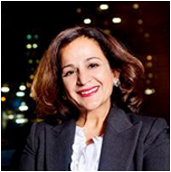 |
H.E. Atefeh Riazi | |
| Assistant-Secretary-General, Chief Information Technology Officer of the United Nations | ||
|
Ms. Riazi started her professional career with the Metropolitan Transit Authority of New York City. During the period of 16 years, she held various progressively responsible positions and was appointed as the Chief Information Officer with responsibilities for implementing the MetroCard in New York City. Since 2009, Ms. Riazi has served as the Chief Information Officer of New York City Housing Authority with oversight responsibilities for design and deployment of smart building technologies and cost containment practices. She also served as the Acting General Manager with responsibility for all operations. Prior to joining the Housing Authority, she was the global Chief Information Officer and Senior Partner of Ogilvy and Mather overseeing technology, applications, networks and data centres. |
||
|
H.E ATEFEH RIAZI, the Assistant Secretary-General of Office of Information and Communications Technology, started her speech by saying that there is so much positive energy, commitment, and dedication around us today. Ms. Riazi indicated that it is truly contagious how we all came here together to solve these big issues. She emphasized that for three decades we’ve talking about them, and we’ve been waiting for somebody else to solve them. She underlined that the private sector is looking at the UN, NGOs and the governments by saying that “It’s your problem; diseases, hunger, lack of education, social unrest, youth unemployment, Ebola.” However Ms. Riazi emphasized that all the social issues have been left to the hands of governments to deal with. She said that we should address the question of “how do we all together go from crisis reaction to crisis prevention?” and underlined that SDGs are designed for getting all the elements of the society together. According to Ms. Riazi, the most important thing about the 20th century was the creation of the Internet that we got connected; the world opened up. 15-20 years ago, she indicated that we did not know how the world was. Then she addressed the following questions to the audience: “We got connected, what do we do next? Are we going to make difference? Could I use technology to know a month earlier that there is going to be an Ebola breakout? What can I do? Who can I partner with to know a month earlier?” Ms. Riazi has underlined that it’s all about technology; it’s all about partnership because we have the public sector, great innovation, and great resources. She said that we should look at the advancements in technology; nanotechnology, alternate fuels, organic bio, health care, education and think that is what the global goals are all about for us to come together as a public private sector NGOs and talk about the big social issues. Making all these important highlights, Ms. Riazi indicated that the private sector would be a tremendous partner to the government and to the UN, because it is through innovation, it is through science, it is through investment and resources. Once again, she put an emphasis on the fact that we have the resources, the intellect, the know-how in resolving these issues, resolving it together, and moving forward. |
||
H.E. Atefeh Riazi
Eric Kabera
| PANEL 1: Contributions of Civil Society | ||
 |
Erik Kabera | |
| Director, Kwetu Film Institute (Rwanda) | ||
|
Mr. Kabera is the founder of Kwetu Film Institute, a regional film, TV, arts and media school based in Kigali, Rwanda. Many films including the one on the Rwandan genocide 100 Days and multiple documentaries and shorts specializing on the Great Lakes region and Rwanda have been acclaimed in prestigious international film festivals. Eric Kabera also founded the Rwanda Cinema Centre (RCC) in 2001 with the intention of training and facilitating filmmaking in Rwanda. Eric Kabera made his studies in psychology, pedagogy and law. After a training offered by Reuters Foundation in London, he became a radio journalist for 3 years with the national broadcaster and a freelancer for the Africa Section of the BBC. |
||
|
ERIC KABERA, Director and Founder of the Kwetu Film Institute based in Rwanda, presented in his speech the three main priorities of the Sustainable Development Goals (SDGs), as well as his experience as a filmmaker. Mr. Kabera started his remarks by reflecting on the fast growth rate of Africa in the recent years. He reassured the audience that the Africa is no longer allowing others to define it as an exotic and wild place only for safaris and charity. Mr. Kabera said that such image of everlasting wars, displacements, and hungry children have been prejudicial to Africa. Mr. Kabera said, “Today Africa is claiming its space” while he was discussing the first priority of the Sustainable Development Goals: building knowledge and accessing education. He explained the role that the digital revolution has had in helping Africans stand at the same platform as the rest of the world where they can communicate, claim their identity, share ideas, and be conscious citizens. In addressing the second priority of SDGs: shaping a people-centered and earth-friendly economic vision, Kabera pointed out how telephone penetration in Africa is increasing rapidly as it offers Africans the opportunity to perform mobile banking, e-marketing, e-payments and money transfer. He also added that linking farmers and small-scale manufacturers to all factors of production (markets, skills, and financial avenues) has increased financial penetration and unlocked the productivity of the private sector, especially for SMEs (small and medium-sized enterprises). Mr. Kabera also indicated how animal and plant species in Africa are frequently exposed to abuse and exploitation. He started discussing the third priority of SDGs, organizing for Human Rights and Peace, by defining democracy and good governance to be catalyzers for human rights and peace. Mr. Kabera said that people in Africa are becoming more politically aware, and he supported this claim by alluding to the Arab spring, the up-rise in Burkina-Faso, the social activism in Senegal, the DRC and now in Burundi. Kabera proposed that the widespread of social media in Africa has enabled Africans to organize, agitate and claim their rights; thus, “It is becoming increasingly risky and precarious to be a dictator in Africa.” In his reflection on his experience as a filmmaker, Kabera stated that women in Rwanda are empowered and are taking the lead in producing independent films, music, theatre and fine arts. He expressed that his incentive to enter the world of cinema was his frustration to see Africa through Western lenses where the desire to make profits led to a piecemeal portrayal of the African history, condition, and other nations’ self-glorification. The films that Kabera produced have been at the forefront of telling the Rwandan story to the world in a respectable and dignified manner. Following his experience as a filmmaker, Kabera decided to set up the first film and TV school in Rwanda, as well as the Kwetu Film Institute to allow the youth to embark on this journey of telling the story of Africa. In conclusion, Kabera reflected on the role of the African youth in taking ownership of Africa’s identity, image, and story. With a great access to media, Kabera says, “The African youth is now writing its own history; contributing to how Africa is shown to the rest of the world.” |
||
Savas Metin
| PANEL 1: Contributions of Civil Society | ||
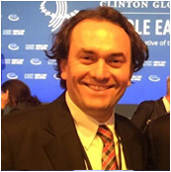 |
Savas Metin | |
| Secretary General of Kimse Yok Mu | ||
|
Savas Metin is the Secretary-General of Kimse Yok Mu. He leads the organization’s international relations department and works to create unity among corporations, NGOs, and international organizations. Kimse Yok Mu is a humanitarian aid organization based in Turkey with 40 branches throughout the country. In addition, Kimse Yok Mu expands its humanitarian relief to over 110 countries through tens of thousands of volunteers around the globe. Mr. Metin, as an educator, advances peace education through language integrated into curriculums designed by Kimse Yok Mu volunteers. With an integrated learning environment that teaches children to accept one another regardless of race, religion, or social standing, they will advance the post-2015 agenda and stymie civil war one person at a time.
Mr. Metin graduated from Middle East Technical University with his Bachelor’s in Statistics in 1997. He heads a dedicated fleet of Kimse Yok Mu volunteer doctors, teachers, disaster teams, and hundreds of staff in our branches worldwide.
|
||
|
SAVAS METIN, the Secretary General of Kimse Yok Mu, opens his speech by introducing the non-governental humanitarian aid organization based in Turkey. Kimse Yok Mu has taken significant steps in the process of integrating itself with global partnerships in order to achieve the UN Sustainable Development Goals in an efficient and productive way. Metin proceeded to discuss the topic of sustainable development, stating “sustainable development offers a better life for each person without depleting vital resources”. He indicated that the Sustainable Development Goals will offer a plan for each country, and will offer a process, which will integrate local and global movements with short and long-term objectives concerning economic and environmental issues and human rights and development. Metin stated that Kimse Yok Mu creates programs in order to contribute to the achievement of the SDGs ranging from hospitals, schools, orphanages, social complexes, and water wells. On the other hand, he also emphasized the importance of education, in particular education for refugee children, as well as the organizations last project on agricultural training in Niger. According to Metin, the human rights approach designates universal education as a basic human right that must be exercised everywhere. Education is particularly important for those who have been displaced from their homes. Savas Metin stated importance of recognizing that despite this fact, the actual implementation of this education has not been organized in many countries that desperately require it. There must be better institutional organization of education for refugee children. This is the responsibility of civil society. Kimse Yok Mu has opened two schools in Turkey, which is densely populated by refugees. Another project organized by Kimse Yok Mu has been implemented in Niger, Niamey, and focuses on agricultural training and development for farming families. |
||
H.E BESNIK MUSTAFAJ
| PANEL 1: Contributions of Civil Society | ||
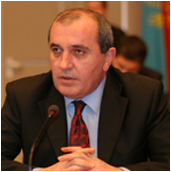 |
Besnik Mustafaj | |
| President, The Albanian Forum for the Alliance of Civilization (Albania) | ||
|
Besnik Mustafaj served as a Minister of Foreign Affairs of Albania between 2005-2007. He is one of the co-founder of the Albanian Democratic Party. In the first free elections, he was elected as a member of the Albanian Parliament and was re-elected three times. Between 1992-1997 he served as an Ambassador of Albania in France and as an Ambassador to UNESCO. He is the co-founder of the Albanian’s PEN club also co-founder of the Albanian Helsinki Committee. After resigned politics, he founded the Albanian Forum for the Alliance of Civilizations where currently he holds the chair of President. As an intellectual he is active in the dialogue between cultures and civilizations. He is member of the Advisory Board of Anna Lindh Foundation and President of the Euro-Mediterranean network of ONG “EuromedinCulture (s)”. |
||
|
H.E BESNIK MUSTAFAJ, President of The Albanian Forum for the Alliance of Civilizations and Former Minister of Foreign Affairs in Albania, delivered a speech that addressed the difficult birth of the civil society in the post communist societies. He said that the fall of the communist system left behind a total void. In parallel to constructing a state abiding by the rule of law and structuring an economy according to the principles of free market, H.E. Mustafaj said that “it was also emergent to bring into being the civil society.” However, he added that the difficulties were numerous. Some of which that he mentioned were, firstly, that neither the common people nor the political rulers believed in the utility of the nongovernmental organizations or the civil society. Secondly, the society lacked the human resources and the will to dedicate them to the civil society. Thirdly, financing is missing. Lastly, the “voluntary work” under the communist regime was, in fact, another obligation and another mean to exploit the individual. H.E. Mustafaj ended his speech by reflecting on his experience as a politician and a member of the civil society for a quarter century, and used his knowledge to bring illustrating examples. |
||
DR. HELMUT DINSE
| PANEL 1: Contributions of Civil Society | ||
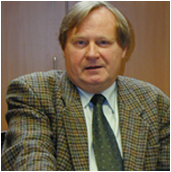 |
Dr. Helmut Dinse | |
| President, Eringerfeld Educational Institution (Germany) | ||
|
Dr. Dinse is the headmaster of Realschule Eringerfeld. He studied German literature and language, Philosophy, Pedagogics and Geography in university. He worked as a school teacher from 1973 to 1979 and principal of high schools since 1979. Dr. Dinse has extensively published in various journals on the topics such as German middle ages literature and language; social and theological geography; school management, environmental education and school management, teaching methods. |
||
|
DR. HELMUT DINSE, President of Eringerfeld Educational Institution in Germany, gave a speech on the contribution of the civil society to the achievement of Sustainable Development Goals. He started by discussing the role of education in sustainable development. Having considered education a highly complex concept to define, Dr. Dinse used Plato’s allegory of the cave to conclude that only very few individuals are called to develop an enlightened worldview. Based on this assumption, he concluded that education and worldview are irreplaceable foundations for a sustainable development. Dr. Dinse said that only through an excavated education on sustainable development does the notion of a responsible use of recourses get rooted in a society. Dr. Dinse’s second point was on “social justice” in the German educational landscape. He stated his conviction that only the socially responsible individuals have the right measure of education. Therefore, he said that the promotion of social competence, which is neglected in Germany’s social context, has always been a priority in his teaching practice. Dr. Dinse expressed his disappointment with the study results that have shown that German educational landscape is shaped more by social inequality than by equality of chances. He added that, in Germany, there is a lack of teachers with social empathy. “Children and youth from families with a migration background are still among the social outsiders in Germany,” said Dr. Dinse. He elaborated saying that children with learning disabilities are also at a disadvantage since their needs are unacknowledged. In concluding this point, Dr. Dinse underlined the crucial role that the teacher plays in establishing social justice among his/her students. In his third point, Dr. Dinse discussed the educational initiative of the Regenbogen e.V, a school in Germany that aims to support the education of students from different countries to create equal opportunities for everyone. He stated that the visible discrimination that children with an immigration status face at school is due to the cliché that the parents of these children are not interested in giving them the best education. Dr. Dinse asserted the lack of truth in such statement and insisted on the necessity to give these families information about the complex facets of the German school system. In Regenbogen e.V, Dr. Dinse said that there was private tutoring and coaching of students with non-German backgrounds. Dr. Dinse’s last point discussed the successful story of the Gymnasium and the Realschule Eringerfeld, which support children‘s school careers and their personal development. He considered the integration program at these institutions, which promotes cultural and religious tolerance between all students, an indicator of success at these schools. Dr. Dinse also commented on these schools’ role in teaching their students open-mindedness, tolerance, acceptance, and all corresponding characteristics. In conclusion, Dr. Dinse expressed his wish in having all students learn the “worldview” that contributes to a sustainable development and social equality in Germany. |
||