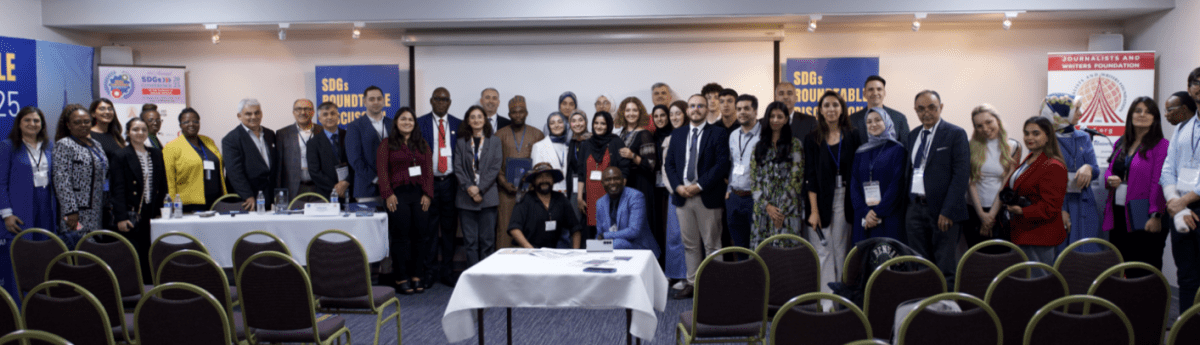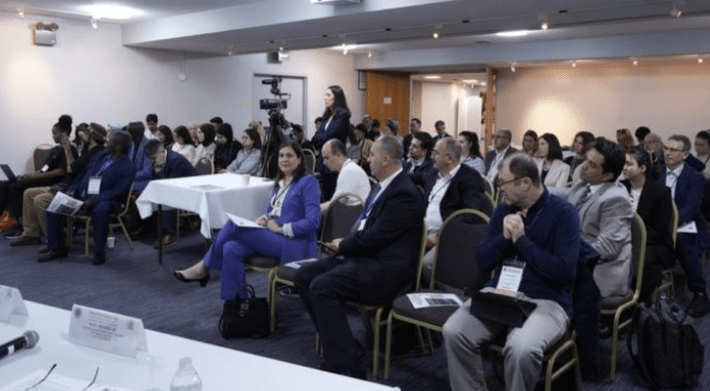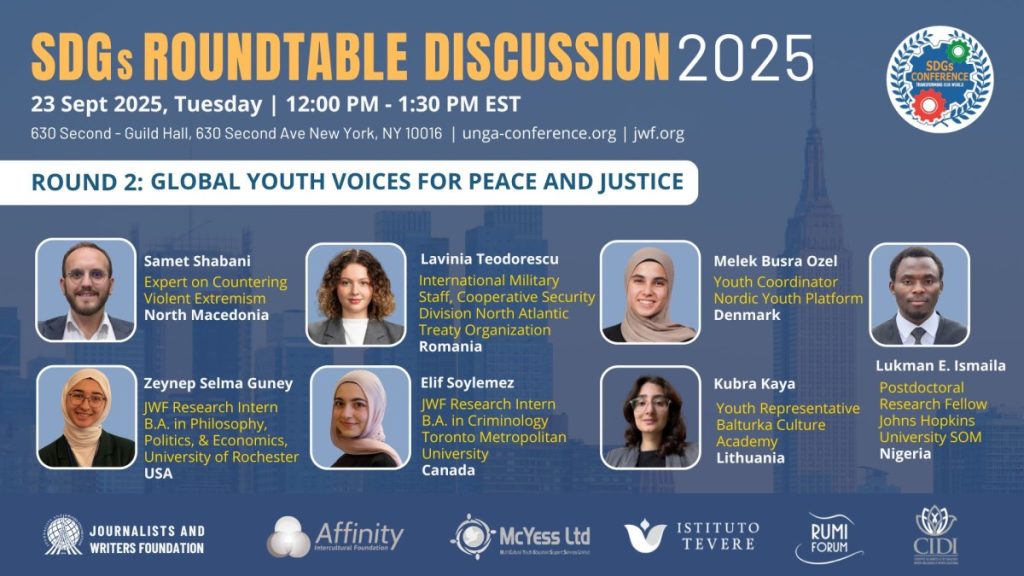
As a part of the SDGs Conference 2025, the Journalists and Writers Foundation (JWF), in partnership with its 56 NGOs from 30 countries, organized the SDGs Roundtable Discussion 2025 to discuss critical issues to promote and protect sustainable peace and development. In today’s global world, young people stand at the forefront of advocating for peace, justice, and social cohesion. This panel aims to showcase the vital role of youth in shaping peaceful societies and to explore strategies for amplifying their voices in decision-making processes at local, national, and global levels.
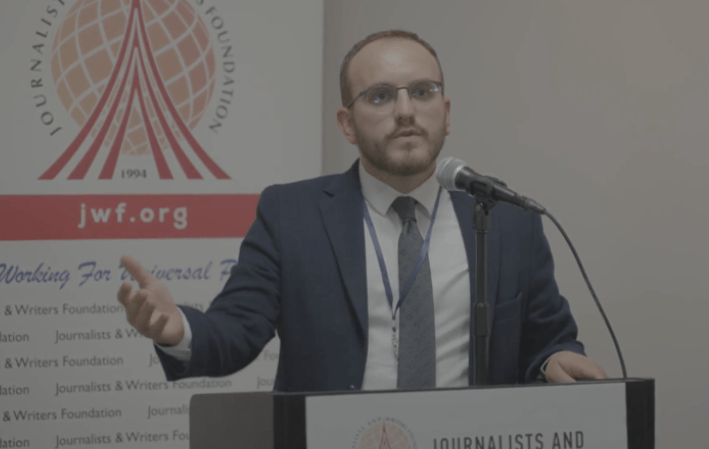
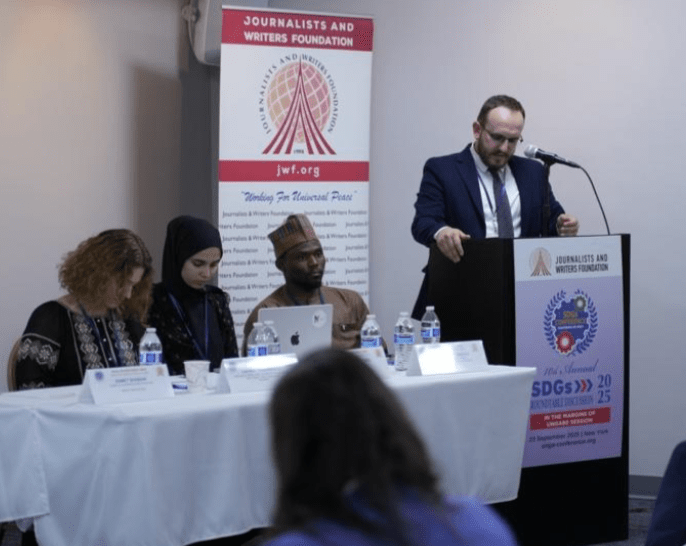 In his Opening Remarks for the Roundtable 2 on “Global Youth Voices for Peace and Justice,” Moderator Samet Shabani, a Countering Violent Extremism (CVE) Expert and a peace practitioner, emphasized the importance of sustainable knowledge transfer between generations as a cornerstone for achieving the Sustainable Development Goals (SDGs). Reflecting on the role of youth, Mr. Shabani underscored that the success of the SDGs depends on equipping younger generations with wisdom, experience, and tools for peacebuilding. He introduced the roundtable’s panel of international youth leaders, hailing from Romania, Denmark, Canada, Lithuania, and the Czech Republic, highlighting the geographic and thematic diversity of their contributions.
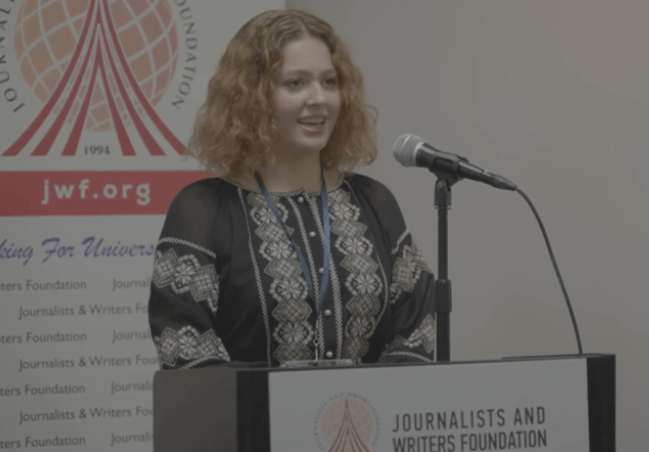
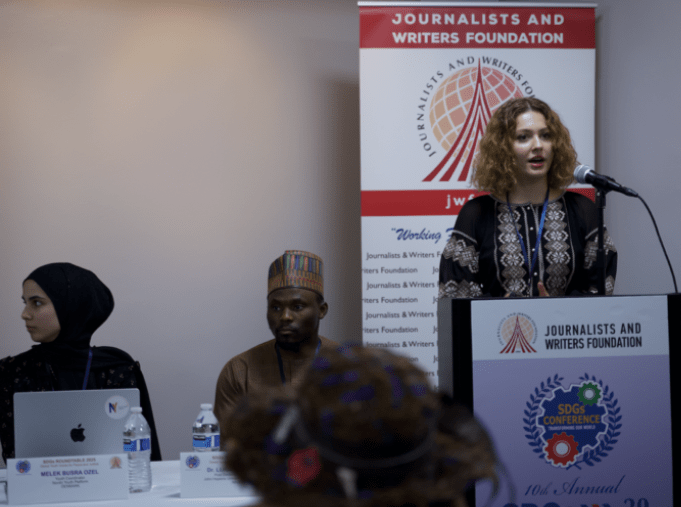 First panelist of Round 2, Lavinia Teodorescu, International Affairs Researcher and Analyst from Harvard University, opened her remarks with a personal reflection rooted in her family history. Sharing the story of her grandfather, a World War II veteran, she emphasized how his experiences taught her the true cost of war and the fragile nature of peace. This background has shaped her belief that peace must not be taken for granted—it requires active engagement, intergenerational dialogue, and continuous commitment.
As Head of Communications at the NATO Youth Organization, Ms. Teodorescu addressed the skepticism many young people feel toward international institutions. She acknowledged that while such bodies may seem distant, they are becoming more open to youth engagement. Citing examples such as NATO’s advisory forums and youth outreach, Ms. Teodorescu encouraged young people to not only critique these institutions but also to participate in and reshape them. Grassroots activism and institutional involvement, she argued, are not mutually exclusive but should work in tandem. Lavinia Teodorescu concluded by urging young people to take an active role in peacebuilding through informed dialogue, civic participation, and trust-building. In an age of polarization and misinformation, youth engagement is critical to safeguarding democratic values and advancing global cooperation. Her message was a call to action: youth must not just inherit peace but help build and protect it.
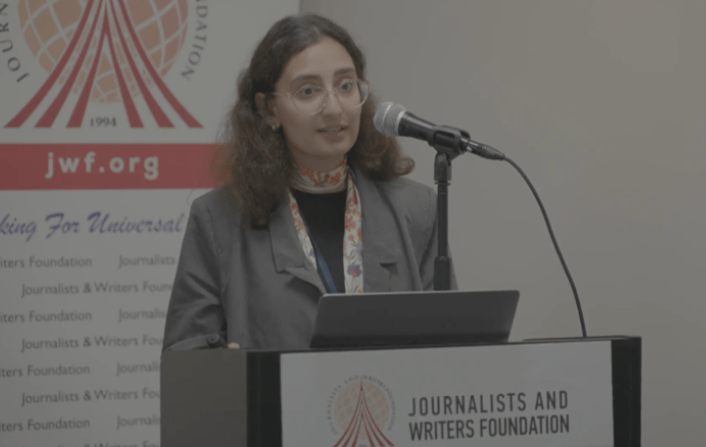
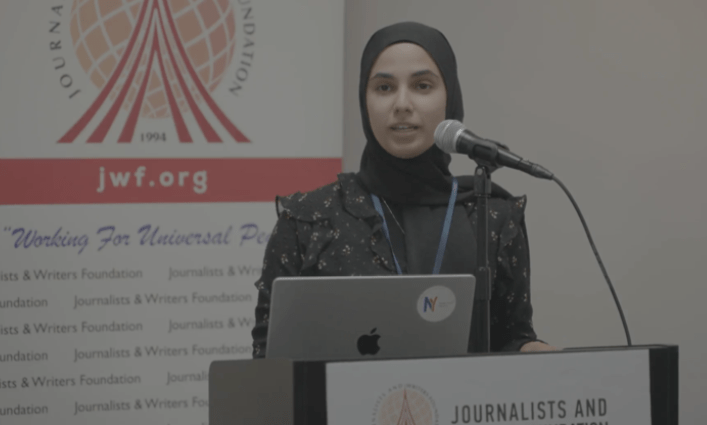
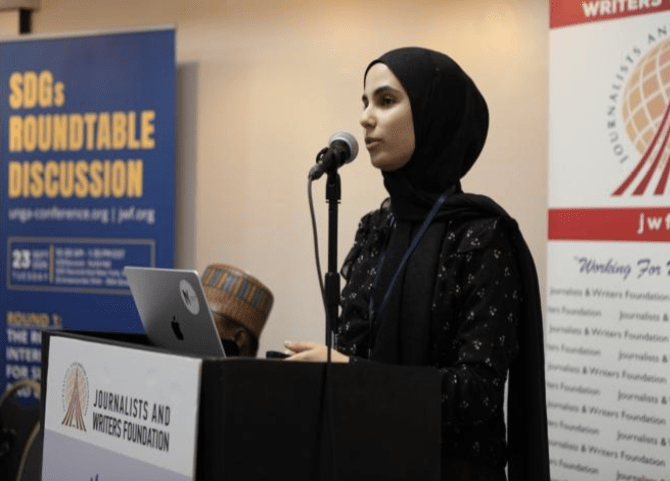 Next panelist, Melek Busra Ozel, representing the Nordic Youth Platform from Denmark, who is currently pursuing a BSc in Cyber Technology at the Technical University of Denmark, delivered a compelling reflection on the role of digital tools in youth-led peacebuilding. Drawing from her dual experience in youth coordination and tech education, she explored how a generation of digital natives is uniquely positioned to navigate today’s paradoxical world—a world marked by both deep global connectivity and persistent social fragmentation. Ms. Ozel framed her speech around a central question: not whether digital platforms are relevant, but how they can be harnessed responsibly for peace, justice, and social cohesion.
She offered a broad definition of digital tools, ranging from social media platforms like Instagram and X, to civic engagement apps, e-learning systems, and immersive technologies such as virtual reality simulations. These tools, she argued, offer unprecedented opportunities to foster cross-cultural dialogue, enable real-time knowledge sharing, and amplify youth voices on the global stage. However, Melek Busra Ozel also highlighted the fragility of this power. The same platforms that connect youth can also expose them to hate speech, disinformation, and exclusion.
In this context, Ms. Ozel emphasized that peacebuilding in the digital era must prioritize inclusive dialogue, reliable information, empathy-building, and the amplification of marginalized voices. Online platforms can become spaces where youth from diverse backgrounds meet and share stories, helping to break down prejudices before they harden. Initiatives such as UNESCO’s Peace Journalism Training illustrate how digital media can empower young people to report on conflict in sensitive, constructive ways. Immersive technologies like serious games and virtual simulations also have the potential to teach conflict resolution, empathy, and non-violent communication in interactive and accessible formats. Finally, by leveraging digital tools strategically, young people can challenge traditional power structures and play a key role in shaping peaceful and inclusive societies.
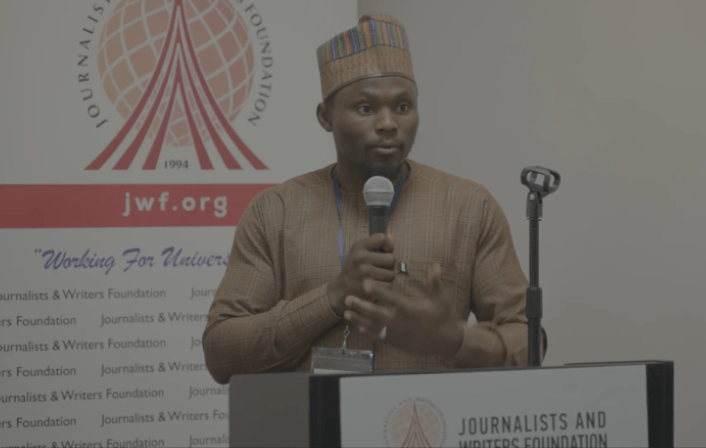
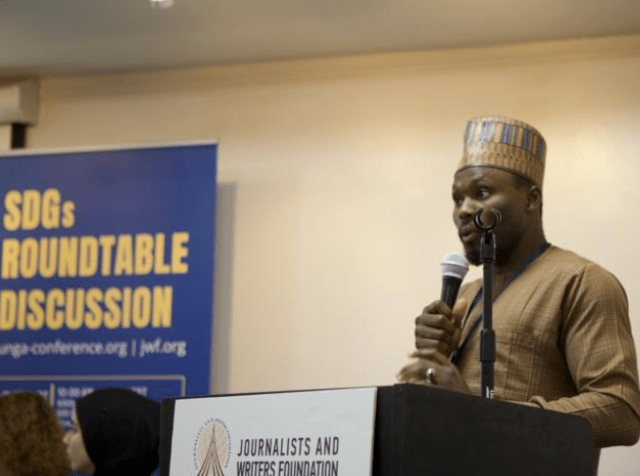 Dr. Lukman Ismaila, Postdoctoral Research Fellow from Johns Hopkins University SOM, from Nigeria, began his contribution with deep gratitude to the institutions and individuals who shaped his academic and personal journey. He emphasized that his story is not only personal but emblematic of how support structures can empower youth to become changemakers. Inspired by his own trajectory, he founded the Haleyouth Foundation in 2019, a nonprofit focused on mentoring and equipping young people in Nigeria through education, STEM training, and economic empowerment. Through various programs, the foundation has impacted thousands of youths, promoting resilience, social cohesion, and leadership within their communities.
Reflecting on the theme of youth-led peacebuilding, Dr. Ismaila stressed the interconnected roles of education and economic empowerment as foundational elements of cohesive societies. Haleyouth’s programs include school support schemes that provide materials and mentoring to students, especially young girls, as well as digital skills and entrepreneurship training to youth and young adults navigating daily socio-economic challenges. Beyond grassroots initiatives, Dr. Lukman Ismaila also shared insights from his work at the intersection of healthcare and data science. He described a recent project focused on responsible data governance in Africa, aiming to improve access to medical imaging data for research and innovation across borders. His personal commitment to Sustainable Development Goals including zero hunger, health, education, and strong institutions that drives both his scientific work and community leadership.
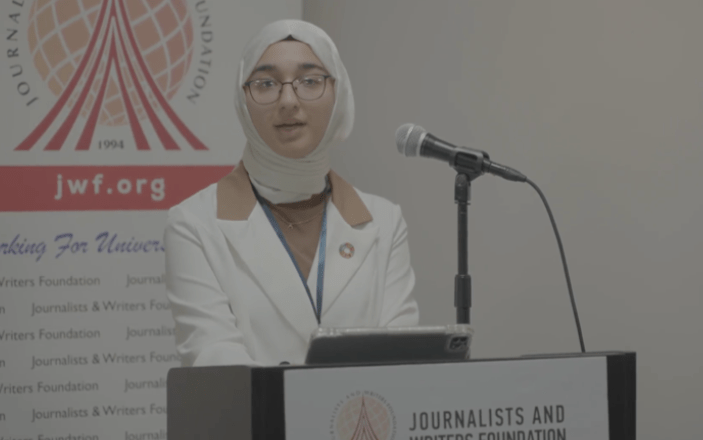
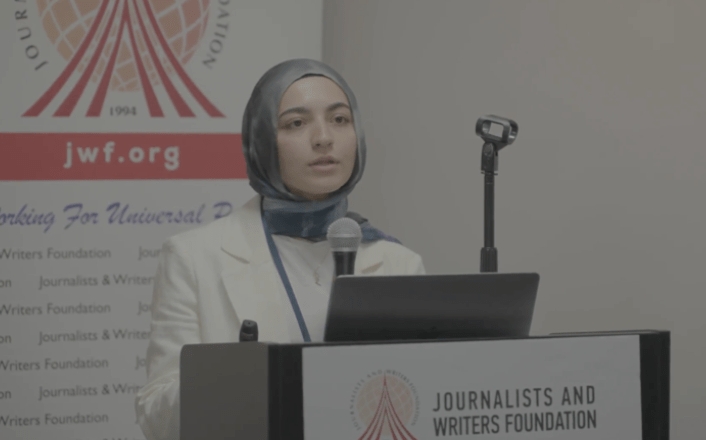
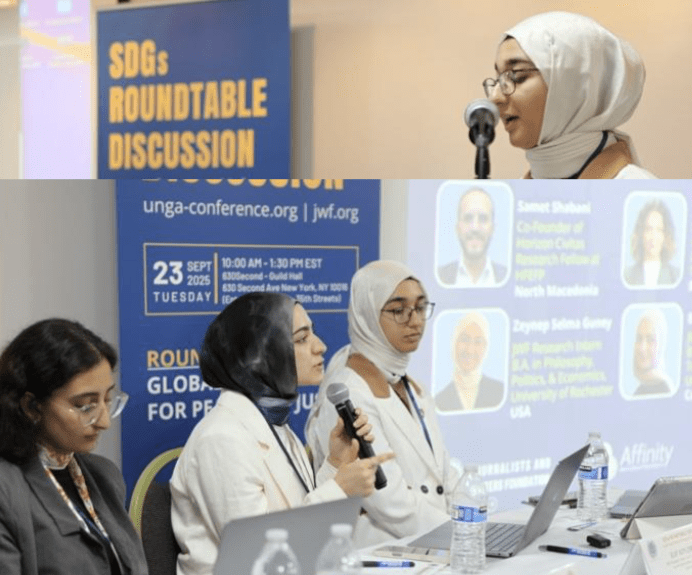 Speaking jointly as the JWF Summer 2025 Research Interns, Zeynep Selma Guney from Rochester, New York and Elif Soylemez, from Canada, delivered a compelling address rooted in the findings of their policy paper entitled “Rebuilding Youth Trust in Diplomacy”. Drawing on interviews, field conversations, and analysis, they sought to bridge the gap between theory and the lived realities of young people. With over 1.8 billion youth globally, Ms. Guney and Ms. Soylemez emphasized the urgency of moving from symbolic inclusion to meaningful participation, citing the stark statistic that only 2.6% of parliamentarians worldwide are under 30. For them, this underrepresentation is not just numerical—it is structural and unjust. “Youth,” Zeynep Guney asserted, “cannot remain passive recipients of policy.”
Their speech identified four interconnected barriers to youth engagement: exclusion from policymaking spaces, a lack of trust and visibility, systemic inaccessibility shaped by socioeconomic inequalities, and tokenistic involvement that fails to translate into real influence. Elif Soylemez emphasized that unpaid internships, limited networks, and performative gestures often reproduce privilege rather than challenge it. Together, they argued for a new model of inclusion—one grounded in transparency, shared responsibility, and intergenerational partnership. Leadership, they reminded the audience, must create space for others: “Mentorship and shared responsibility must become the norm, not the exception.” In closing, they praised emerging frameworks like the UN’s Youth, Peace and Security Agenda, but urged institutions to move from policy promises to concrete practices. Trust, they noted, is not built through reports but through presence—when youth voices are heard, seen, and empowered at every level.
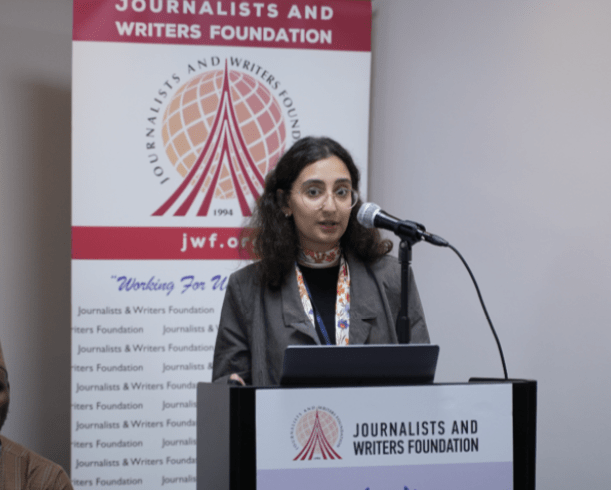 Kubra Kaya, Youth Representative of Balturka Culture Academy based in Lithuania, offered a deeply heartfelt and vivid reflection on how youth-led cultural dialogue can dismantle prejudice, foster belonging, and build peace. Drawing from her personal journey as a Turkish student in Lithuania and her leadership at the Balturka Culture Academy, she spoke of the invisible borders that persist even after physical ones are crossed. Refugees, migrants, and newcomers, she noted, often carry both memories and trauma into societies still healing from their own histories. Yet she reminded the audience of a timeless truth: humanity thrives not through exclusion, but through welcome. “When we choose to build bridges instead of walls,” she said, “we transform strangers into neighbors.”
Kaya highlighted how the Balturka Culture Academy, since 2019, has embraced the Sustainable Development Goals as everyday practices—not just distant ideals. Through SDG 10: Reduced Inequalities, SDG 16: Peace, Justice and Strong Institutions, and SDG 17: Partnerships for the Goals, the organization works to foster peaceful coexistence between locals and newcomers in Vilnius. One of their most powerful initiatives, she shared, is a cultural evening where displaced persons and international students learn and recite Lithuanian poems and songs. What may appear as a simple gesture—hearing one’s cultural treasures spoken lovingly by a newcomer—becomes a profound moment of connection, breaking down suspicion and cultivating mutual respect.
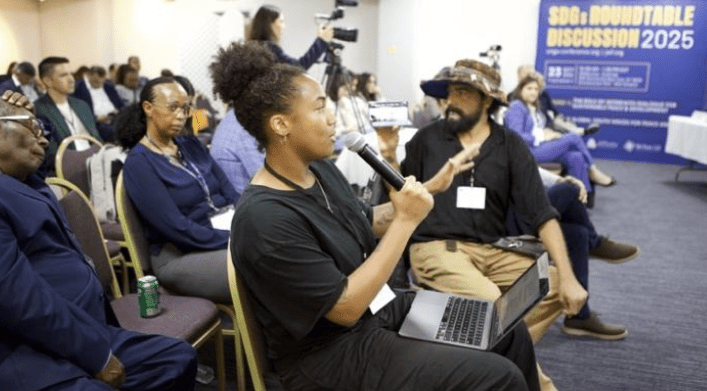
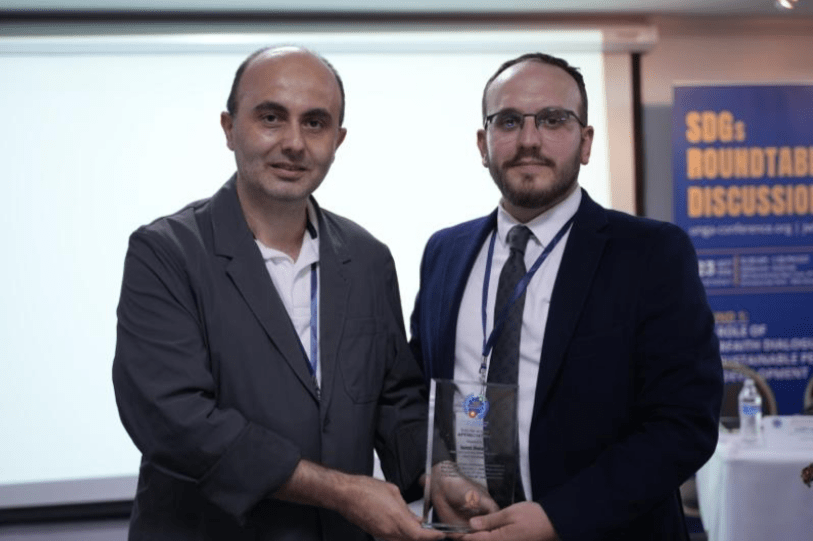
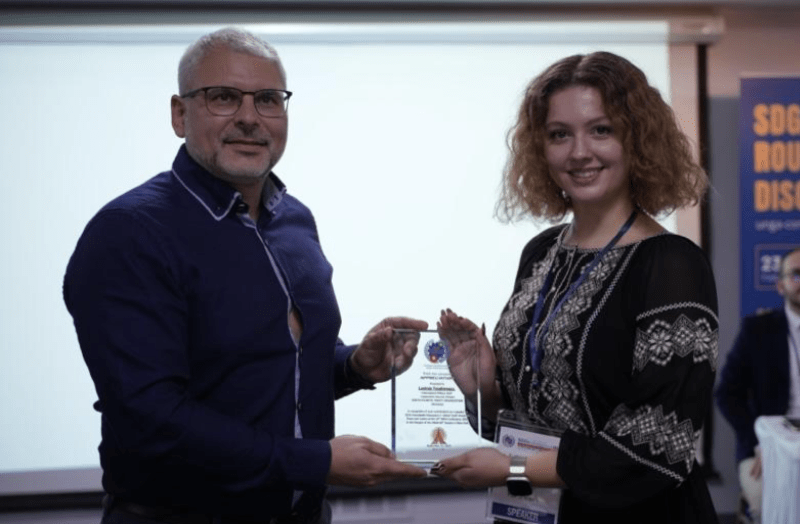
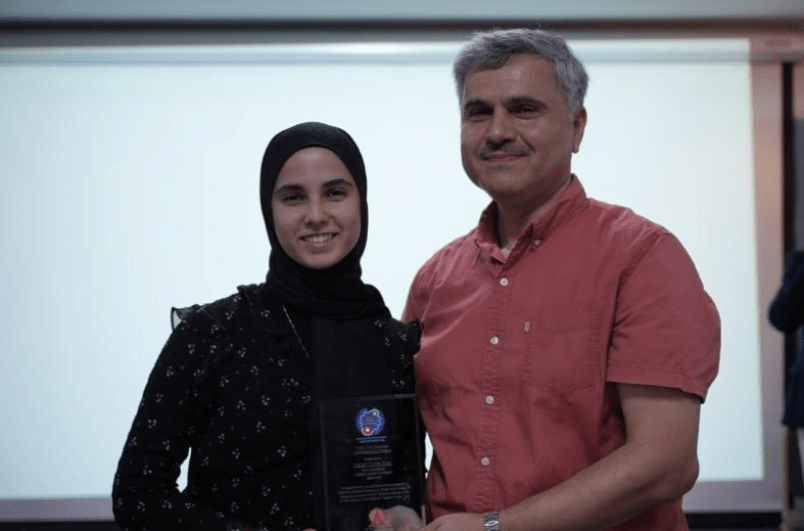
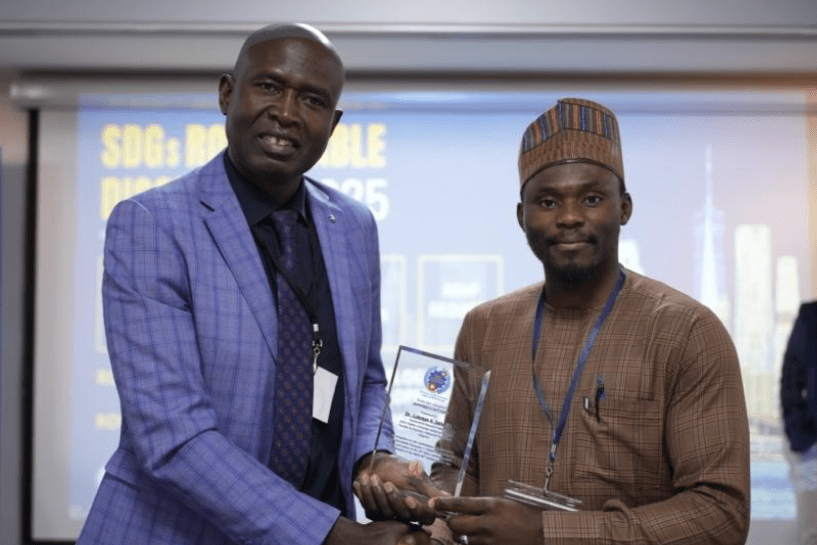
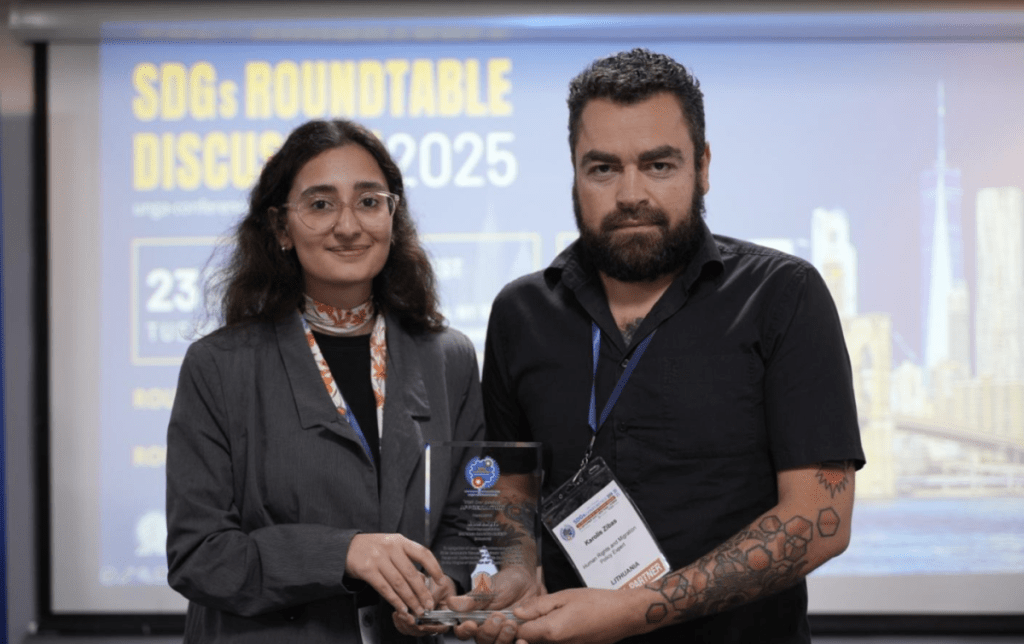
The session continued with a vibrant engagement of the audience with the young professionals addressing additional questions. The gathering ended with a plaque ceremony to appreciate the valuable inputs of youth leaders from Denmark, Lithuania, Nigeria, Romania, and the USA.