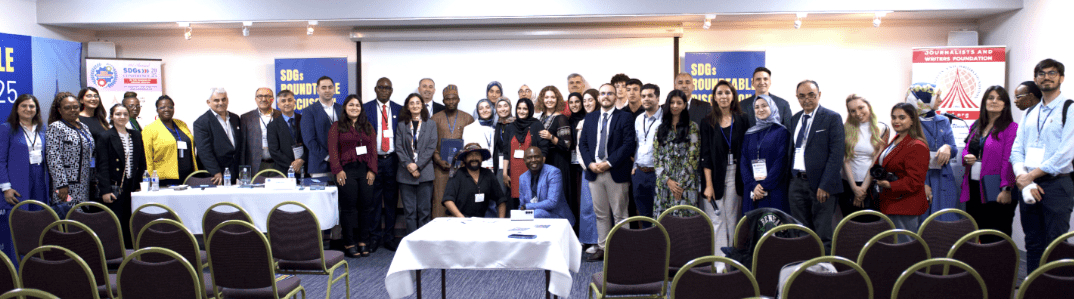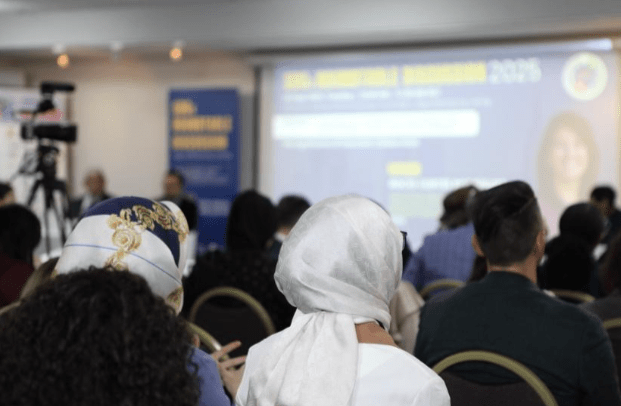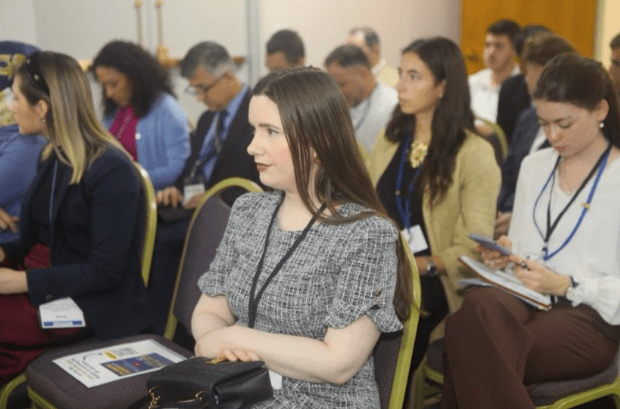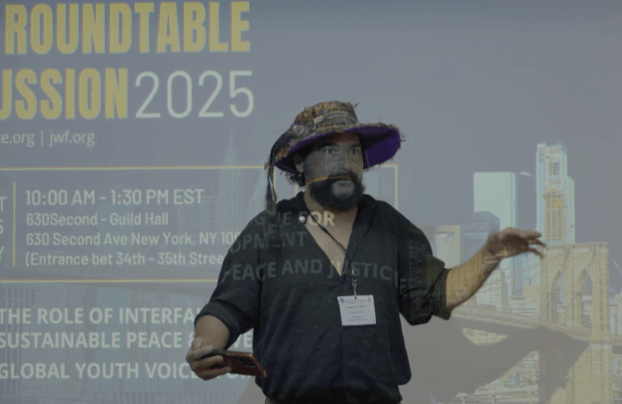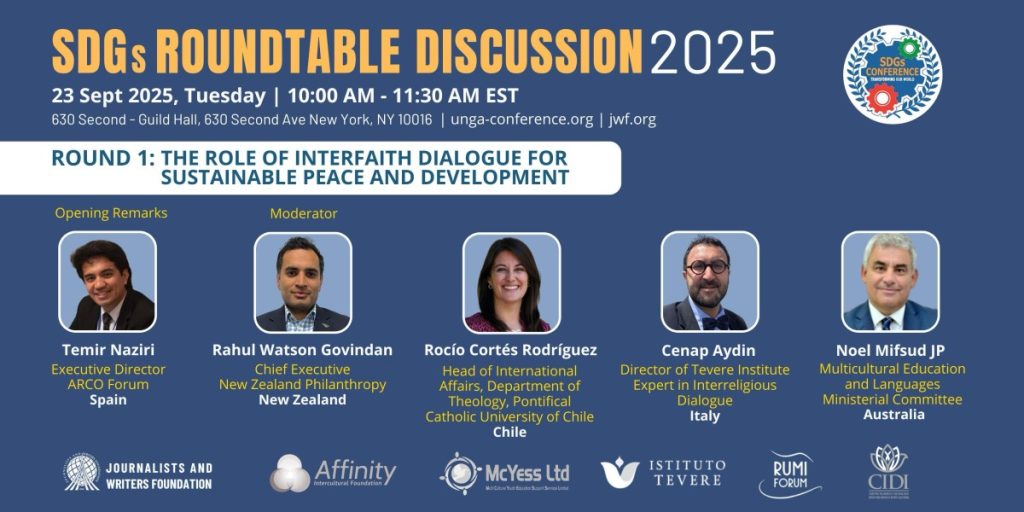
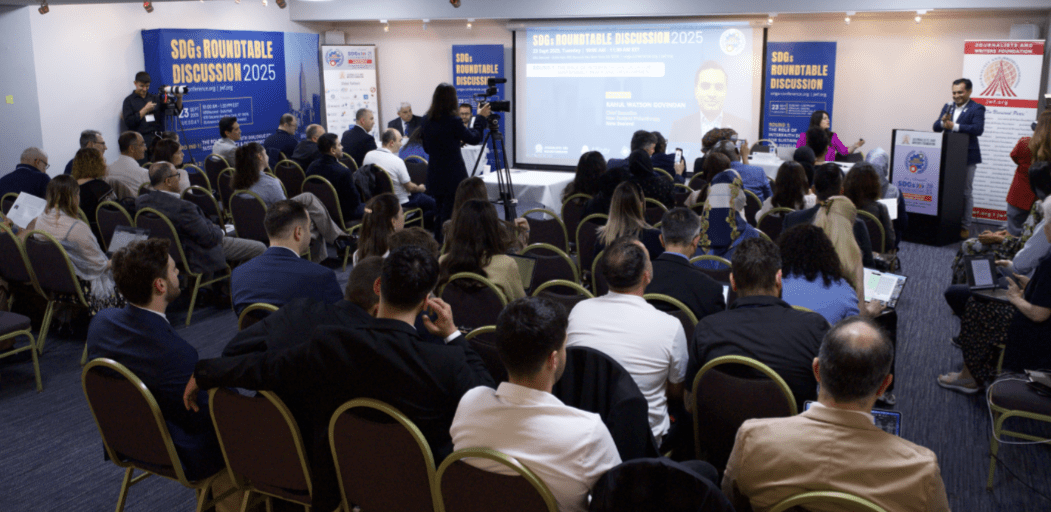
As a part of the SDGs Conference 2025, the Journalists and Writers Foundation (JWF), in partnership with its 56 NGOs from 30 countries organized the SDGs Roundtable Discussion 2025 to discuss critical issues to promote and protect sustainable peace and development. This side-event created a platform for multiple stakeholders, including experts, practitioners, and civil society leaders to raise awareness on social problems and exchange ideas on possible solutions to social, economic, and environmental issues.
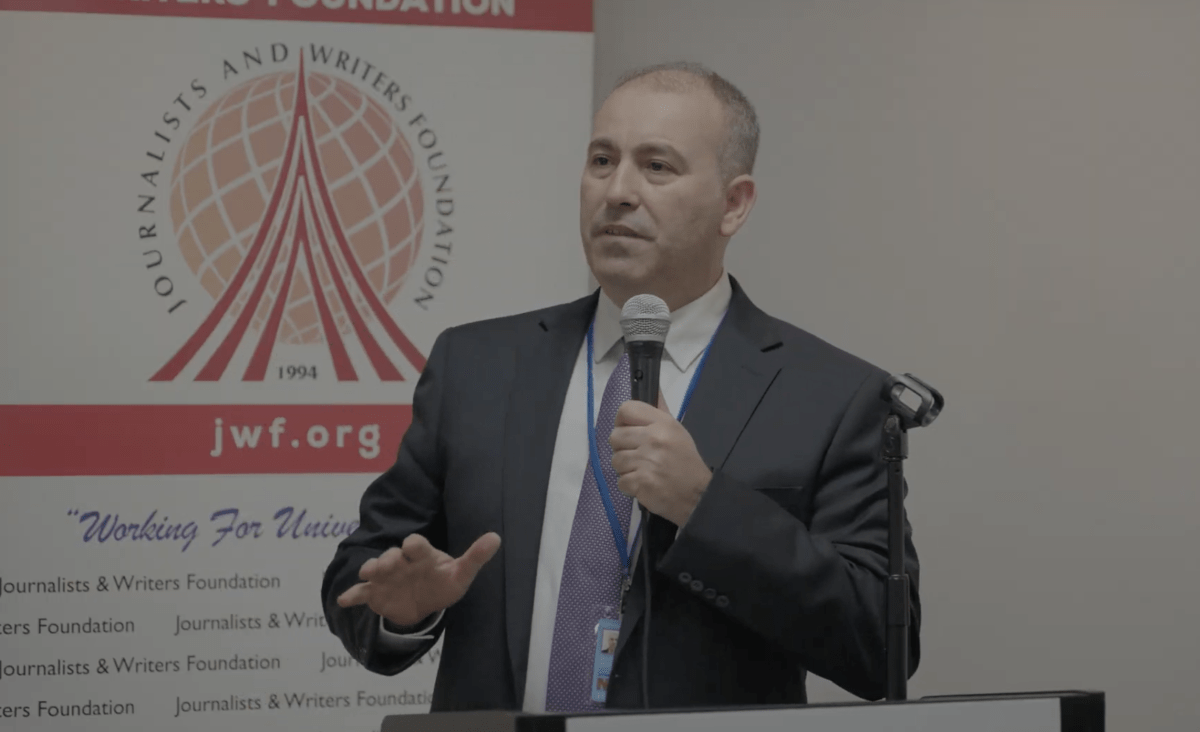 In his Welcome Remarks, Mehmet Kilic, President of the Journalists and Writers Foundation, welcomed participants to the SDGs Roundtable Discussion 2025, expressing deep appreciation for the presence of speakers and practitioners from 24 countries across five continents. Reflecting on JWF’s long-standing engagement with the UN system since 2012, Mr. Kilic highlighted JWF`s growing international reach, with 56 global partners from 30 countries, representing civil society, journalism, academia, faith-based networks, and youth movements. Mr. Kilic emphasized the unique role of the Roundtable in creating space for interfaith and intercultural dialogue as a pathway to peace, justice, and inclusive development.
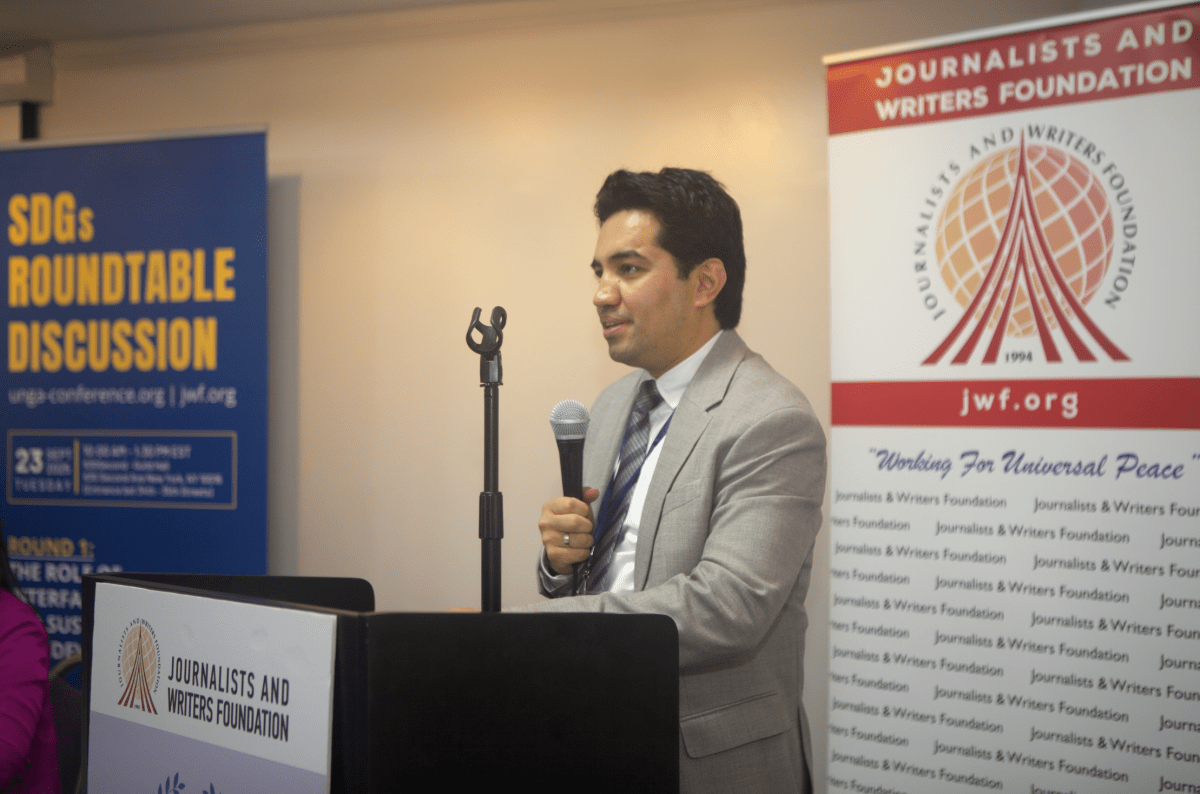 Opening Remarks were delivered by Temir Naziri, Executive Director of ARCO Forum, based in Spain. Drawing from nearly two decades of experience in Central Asia, Mr. Naziri shared his journey fostering peace through music, shared service, and intercultural dialogue. He emphasized that interfaith dialogue is not about theological debates, but about common humanity: family, children, dreams, and dignity. These small, interpersonal encounters, he argued, are the very building blocks of peace, aligning deeply with the heart of the SDGs.
Citing examples such as climate action, environmental stewardship, and protection of sacred sites, Temir Naziri encouraged religious communities to work together toward joint ethical responsibilities, especially in times of crisis and disaster. He referenced global peacebuilding efforts that foster reconciliation and de-escalate violence as essential contributions to SDG 16: Peace, Justice and Strong Institutions. Marking the 16th anniversary of the Vatican Declaration on Interfaith Dialogue, he celebrated the proliferation of interreligious initiatives worldwide. It is through dialogue, he affirmed, that societies can transform competition into cooperation, prejudice into partnership, and diversity into collective strength. Temir Naziri`s call to action urged the empowerment of youth, women, migrants, and minorities within these platforms, ensuring that the SDGs move from rhetoric to reality in communities worldwide.
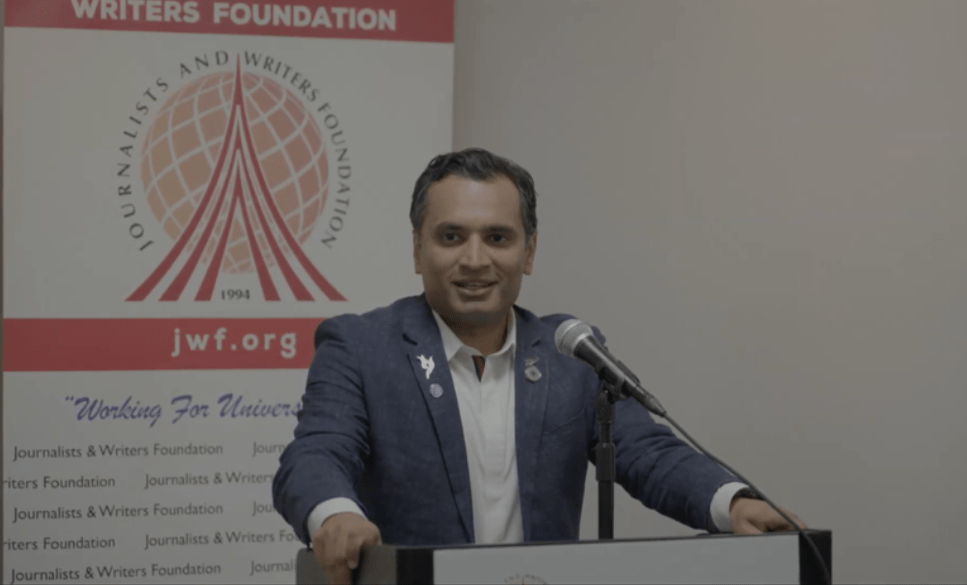 Following the Opening Session of the SDGs Roundtable Discussion 2025, Moderator Rahul Watson Govindan, Chief Executive of Philanthropy New Zealand, welcomed participants from across the globe and framed the conversation around the urgent need for interfaith dialogue in the pursuit of sustainable peace, democracy, and the SDGs. Mr. Govindan identified several contemporary challenges including political manipulation of religious identity, lack of trust and miscommunication, perpetuating division and misunderstanding, exclusion of youth and marginalized voices, and more. Rahul Govindan called for a shift beyond conversations to strategic collective action, urging participants to explore innovative methods for collaboration, align with the SDGs, and ensure that interfaith dialogue continues to amplify dignity, inclusion, and peace at all levels of society.
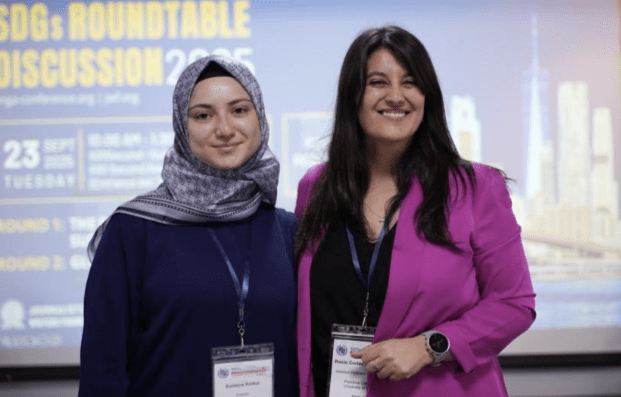
First panelist, Assistant Professor of Theology from Pontifical Catholic University of Chile, Rocío Cortés Rodríguez started her remarks by reflections on the centennial of Chile’s 1925 Constitution, which marked the formal separation between church and state. Framing this moment as both a national milestone and a regional opportunity for reflection, she argued that secular governance need not equate to the exclusion of religion from public life. Instead, she emphasized the enduring and constructive role of religious actors in civic life and policymaking, advocating for an inclusive vision of interfaith engagement that balances legal secularism with lived religious plurality.
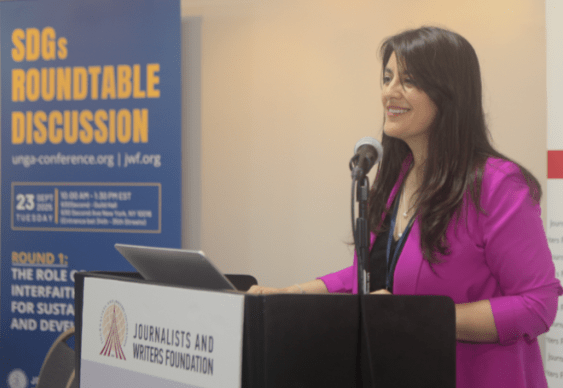 Prof. Cortés Rodríguez`s presentation revolved around three foundational principles: hospitality, interreligious collaboration, and religious literacy. Hospitality was defined not merely as polite reception but as a radical openness to the “other”, a spiritual and ethical practice rooted in sacred texts across traditions. Interreligious collaboration, she noted, requires acknowledging theological common ground and shared ethical commitments, citing examples from Chile’s dictatorship era when diverse faith communities united to defend human rights. Finally, religious literacy was presented as a civic skill that fosters empathy and peace, enabling individuals to understand how religious identities shape everyday lives and moral decisions. Her contribution underscored that sustainable development and peace cannot be achieved without mutual understanding across religious differences. Interfaith dialogue, she argued, must extend beyond intellectual discourse to include shared action, inclusive education, and relational transformation. Prof. Cortés Rodríguez called for strategic, long-term investment in dialogue and collaboration as critical tools to counteract polarization, religious illiteracy, and the marginalization of spiritual perspectives in secular societies.
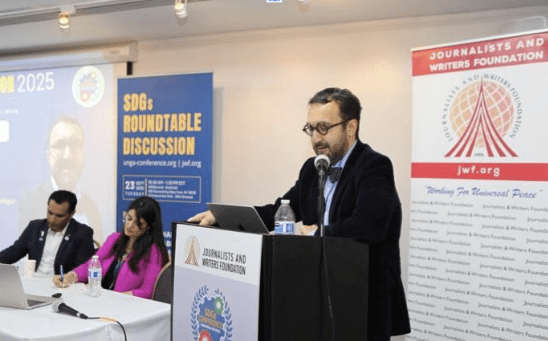 Cenap Aydin, Director of Tevere Institute from Italy, began his remarks by invoking a mystical reflection from Saint Gregory of Narek, drawing attention to humility and shared humanity as foundational elements of sustainable peacebuilding. Speaking from both personal memory and institutional experience, he described his arrival in New York as “the dream of many”, a symbol of the world’s pluralistic aspiration. He emphasized that interreligious dialogue is not an abstract ideal but a lived practice, especially in urban spaces like New York and Rome where faith communities coexist side by side. In this context, he proposed that interfaith collaboration must be seen as an active contributor to the Sustainable Development Goals (SDGs), especially those relating to peace, education, health, and justice.
Central to his presentation was the assertion that interfaith dialogue must move from conversation to collaboration, rooted in shared ethical principles such as human dignity, compassion, justice, and responsibility. Mr. Aydin emphasized that religious communities by virtue of their moral authority and deep community networks and possess unique capacities to mobilize grassroots efforts toward development. Citing practical examples, Mr. Aydin highlighted his coordination of a major European Commission project that led to the creation of the Interfaith Council for the Safety of Places of Worship in Europe. Cenap Aydin concluded with an argument that religious actors must be seen as co-creators of development, not peripheral voices. True partnerships, he insisted, require not only financial or technological input but also moral commitment and relational trust. As humanity strives toward the 2030 Agenda, Mr. Aydin urged institutions, governments, NGOs, and multilateral organizations to engage religious and philosophical traditions as essential partners in building a more peaceful, just, and sustainable world.
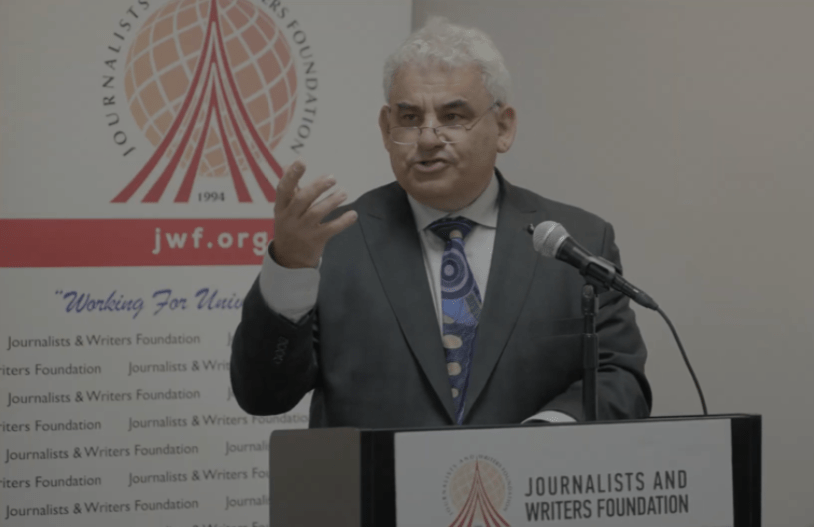 Next panelist, Noel Mifsud JP, a seasoned educational leader and intercultural peace advocate from South Australia, delivered a deeply personal and evocative reflection on the moral imperative of empathy in our increasingly disconnected world. He opened with a haunting memory of impoverished children from the streets of Calcutta. The Chair of the South Australian Multicultural Education and Languages Committee, Mr. Mifsud, urged the audience to recognize that the true enemies of religion are not other faiths, but injustice, poverty, and exploitation.
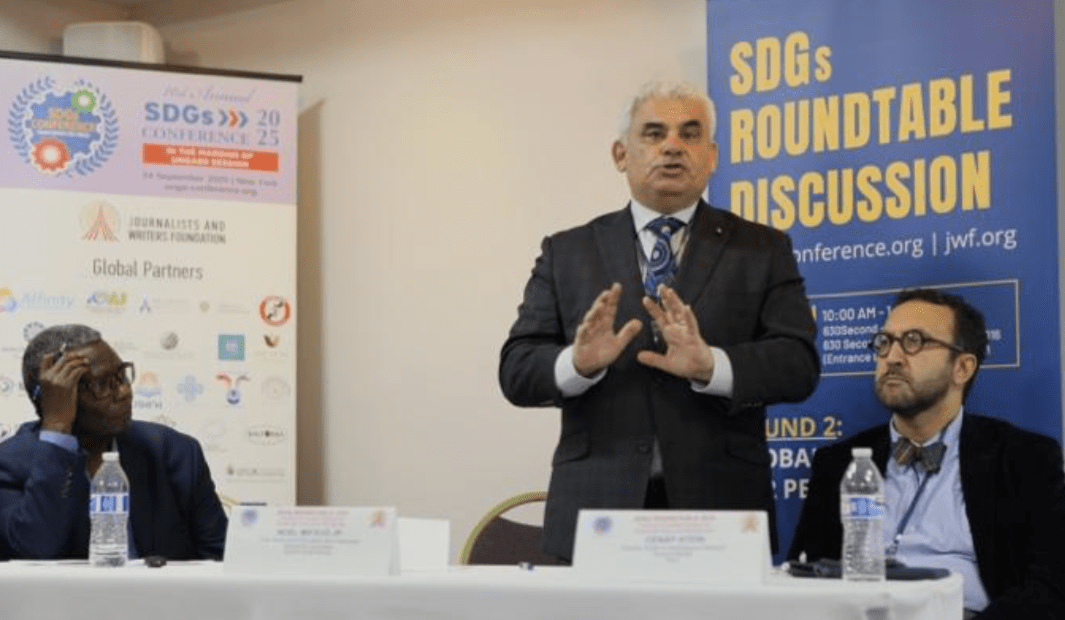
He framed interfaith dialogue not as a polite intellectual exchange, but as a sacred practice rooted in vulnerability, trust, and “prophecy of hope.” Drawing on the Aboriginal Australian concept of Dadirri, shared with him by his colleague and fellow principal, Dr. Miriam-Rose Ungunmerr, Noel Mifsud JP described the importance of “deep listening”—a quiet, still awareness that allows one to truly hear the voice of the land, the stories of others, and the sacred truths within oneself. This practice, he said, must precede meaningful engagement with others. Noel Mifsud JP championed principled pluralism and the inclusion of Indigenous and marginalized voices in global conversations, especially those concerning sustainable development and peacebuilding. He called on participants to choose love and courage over fear and anger, to turn religious dialogue into meaningful action for justice and dignity, and to resist the temptation to walk past suffering with indifference.
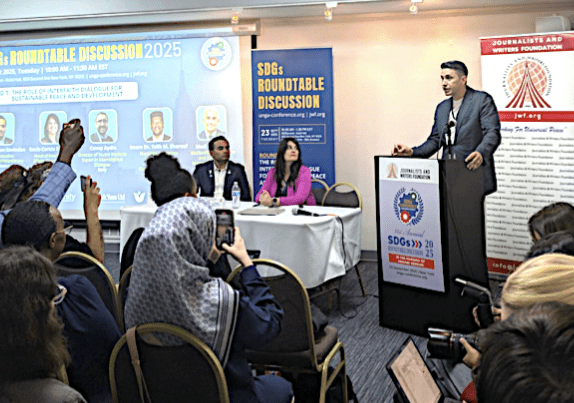 David Heiliger, Director of Gracism Global delivered a heartfelt and vivid speech that emphasized the power of bridge-building in an increasingly fragmented world. Speaking from New York City, hailed as the most linguistically diverse city globally with over 800 languages, he highlighted how its 2,000+ bridges and tunnels metaphorically represent what is needed in our social, cultural, and interfaith lives: connections where there are divides. Drawing on his work with Gracism Global, Mr. Heiliger introduced the concept of gracism, a hopeful fusion of the negative term “racism” with the transformative potential of “grace.” Gracism, he explained, is the intentional act of extending favor and dignity to others regardless of, and sometimes because of, their color, class, or culture.
David Heiliger invited the audience to consider their own intuitive bridge-building strengths, not ones imposed by policy, but those rooted in personal identity and empathy. He encouraged participants to identify and articulate their unique capacities for fostering dialogue and understanding. Using a powerful African proverb about shifting perceptions, from seeing someone as a monster to finally recognizing them as a brother, he underscored how proximity dissolves prejudice and humanizes the “other.” Mr. Heiliger`s speech was ultimately a call to action: to be grace-filled bridge builders in divided spaces, and to deepen interfaith dialogue through connection, curiosity, and courage.
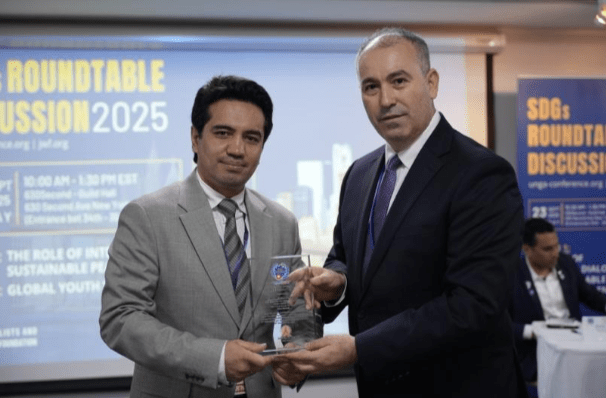
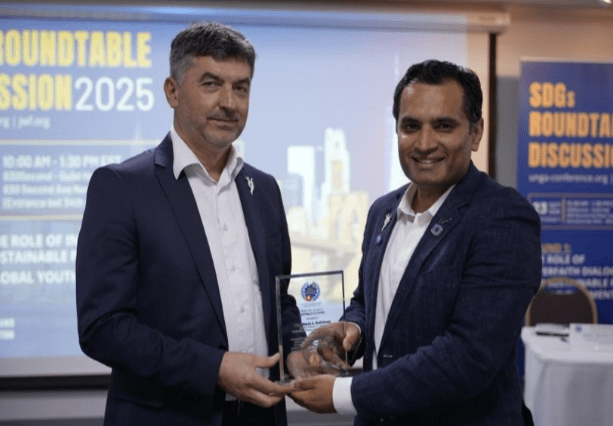
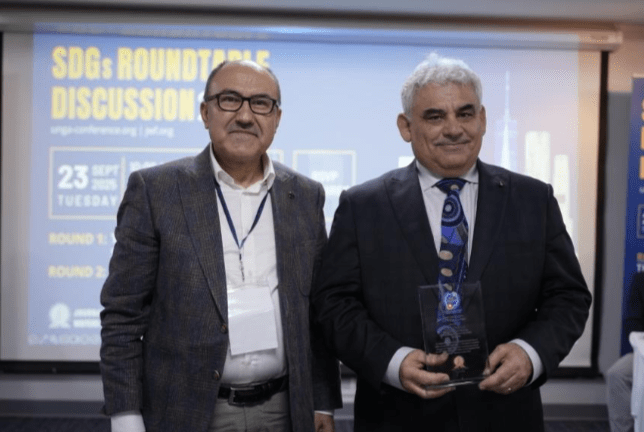
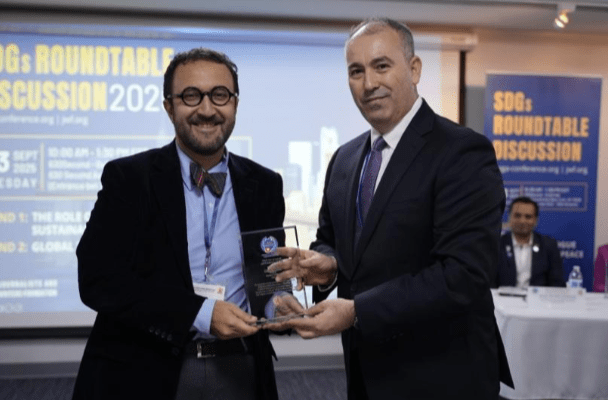
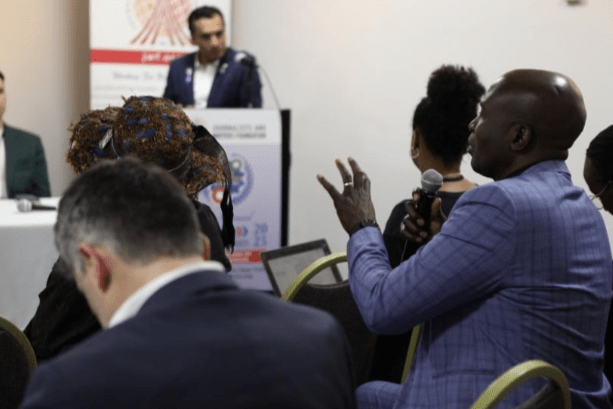
The first round of the SDGs Roundtable Discussion concluded with an interactive dialogue among the participants and a plaque ceremony appreciating the valuable presence of JWF Global Partners from across the continents.