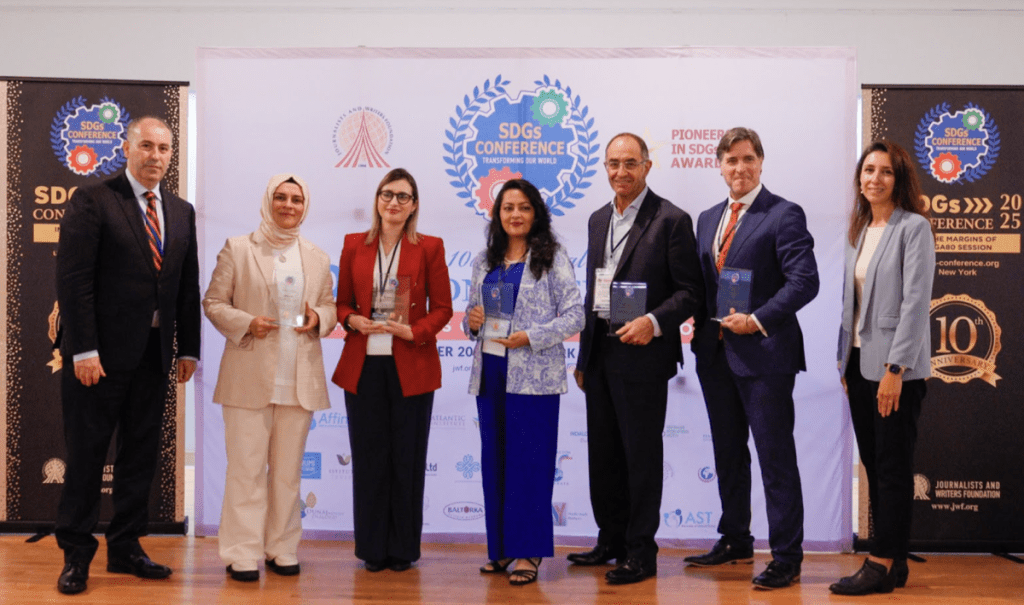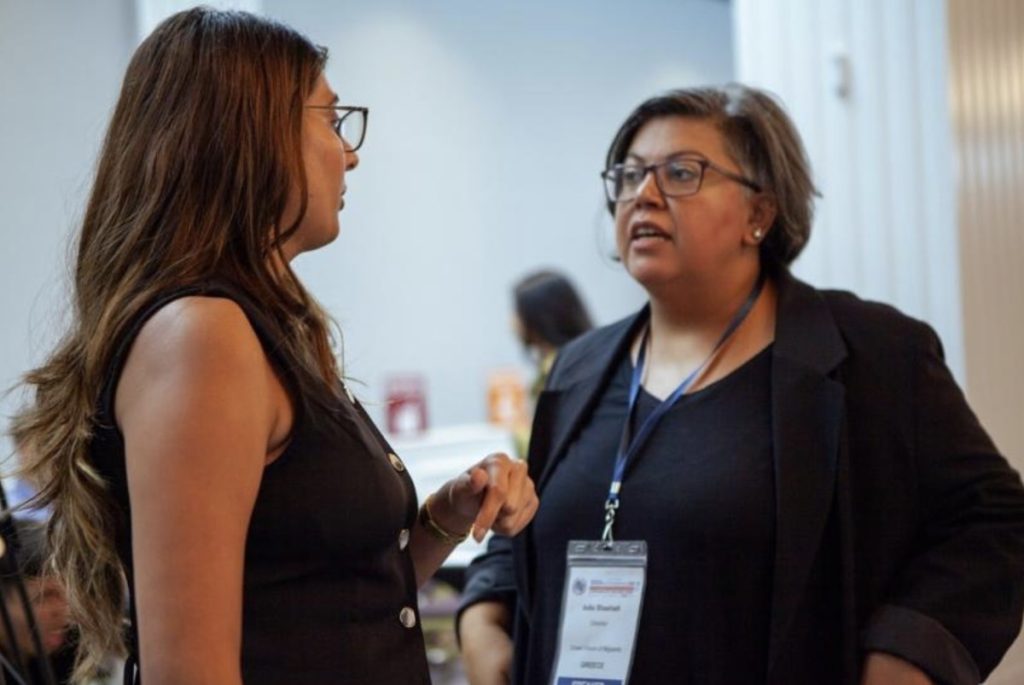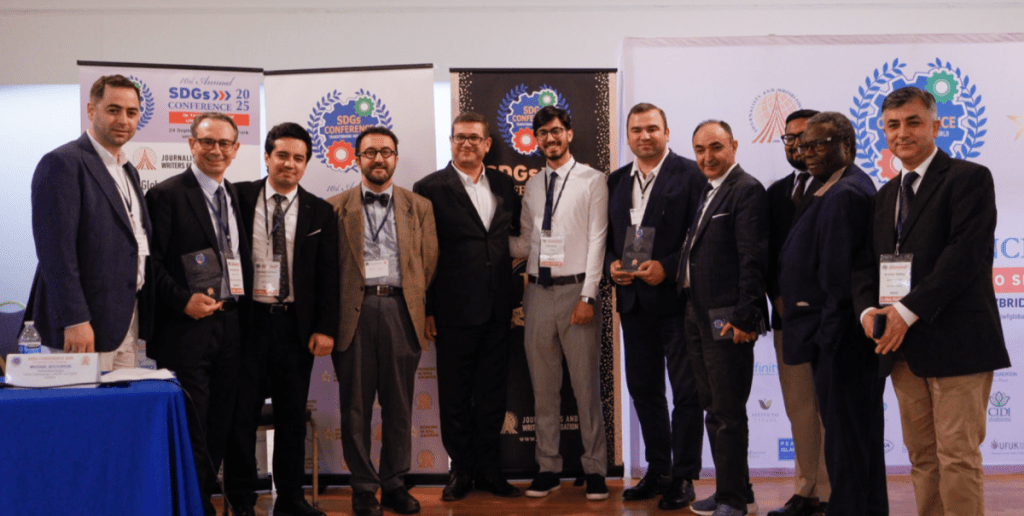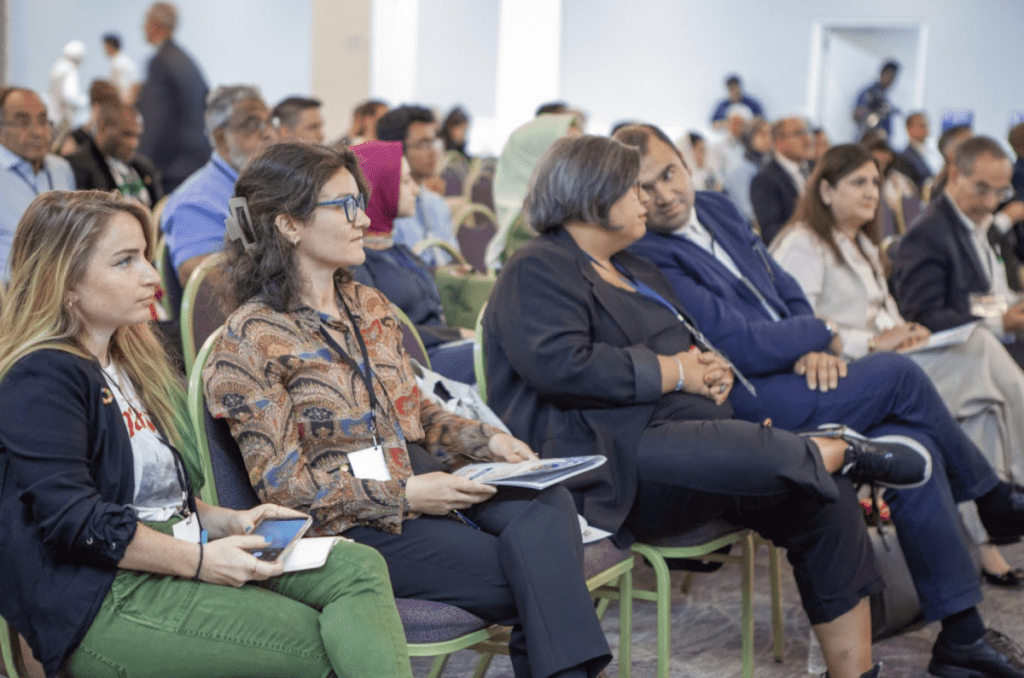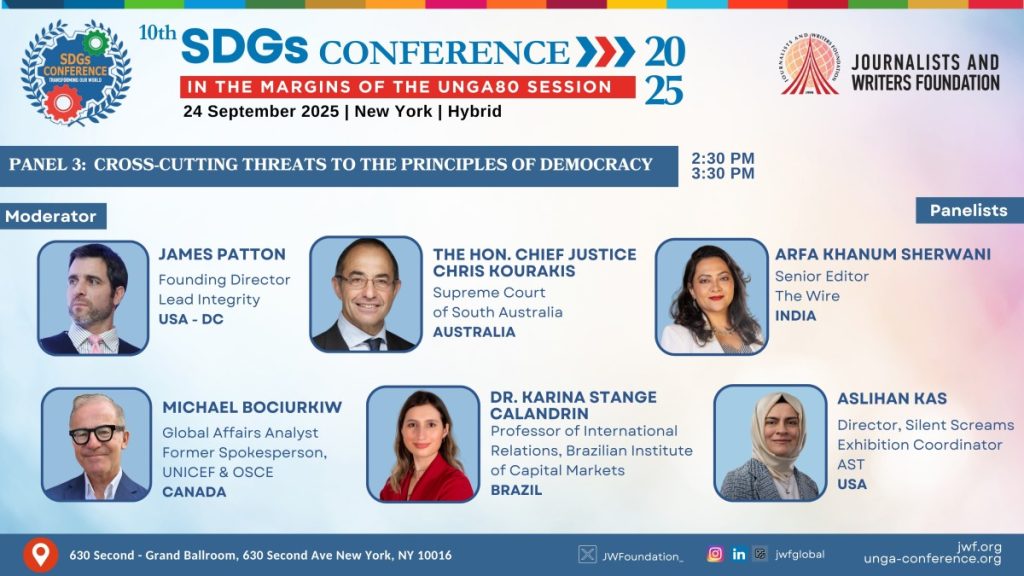
In the Margins of the 80th Session of the United Nations General Assembly (UNGA80), the Journalists and Writers Foundation hosted the 10th Annual SDGs Conference 2025 in collaboration with 56 civil society organizations from 30 countries on Wednesday, 24 September 2025 in New York.
In this world of digitalized media ecosystem, a pilar of democratic governance, social media and technological advancements have become powerful tools for amplifying human rights advocacy and active citizen participation. Human rights defenders utilize digital platforms to mobilize support, expose abuses, and foster greater awareness of social justice issues. However, these same tools are increasingly exploited by authoritarian actors to spread disinformation, manipulate public opinion, and undermine trust in traditional media outlets.
This erosion of trust in mainstream sources exacerbates social divisions, weakening social cohesion and peace. Furthermore, the digital landscape is intertwined with geopolitical tensions, as states and non-state actors leverage technology to influence public discourse, complicating efforts to maintain global stability and uphold the rule of law. The focus of Panel Session 3 “Cross-cutting Threats to the Principles of Democracy” will elaborate on multilateral responses to the rise of autocratic regimes, power of media and technology for human rights and democracy, increasing geopolitical conflicts, violations against civil society organizations including legal restrictions and defamations.
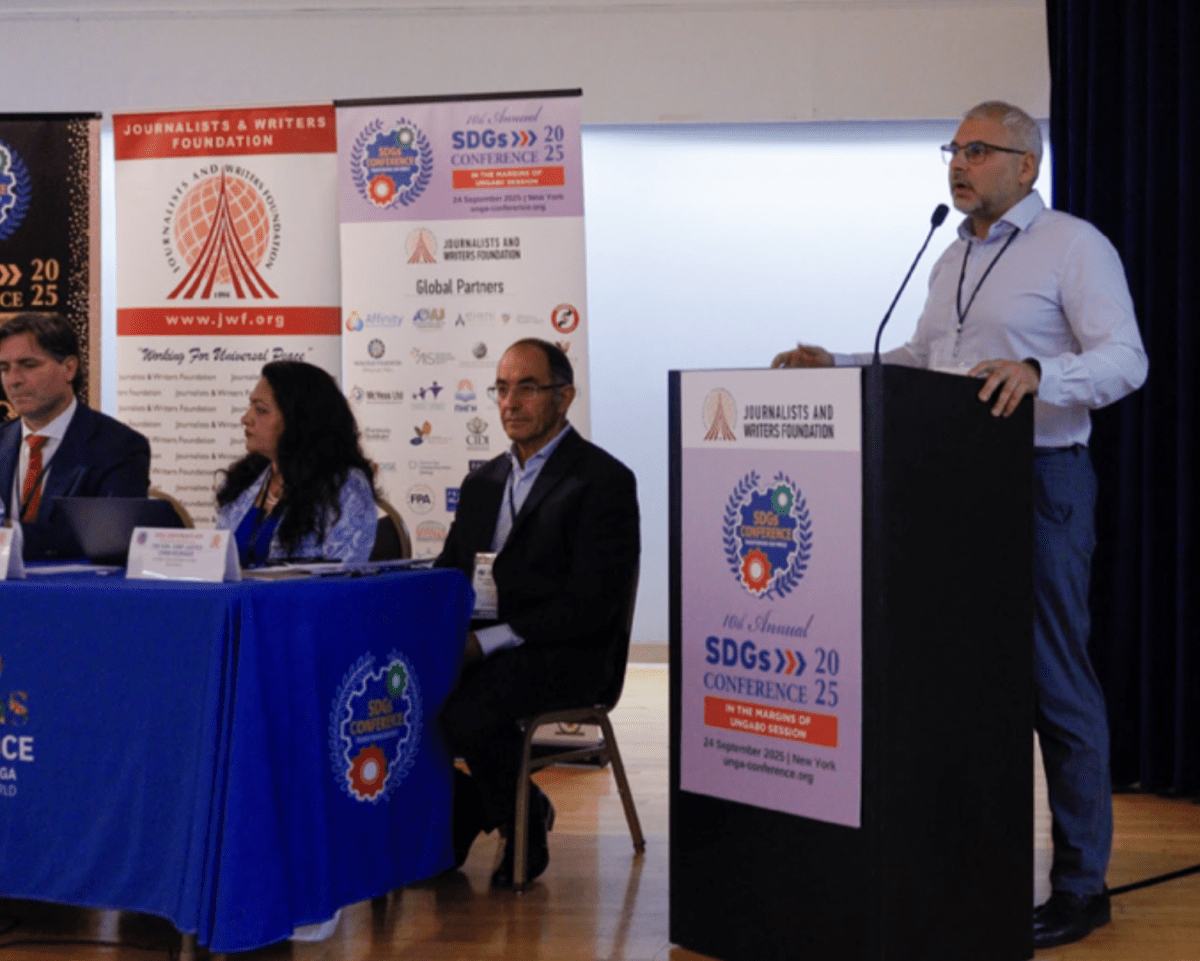 Panel Session 3 was opened by the reflections of the Dr. Ervin Iusein, Vice-President of the Association for Dialogue and Universal Values based in Romania. The Moderator of this critical session, James Patton, Founding Partner of the Lead Integrity based in Washington DC, opened the panel by emphasizing that democracy must be understood not as a pursuit of perfection, but as an “experiment in improvement.” Drawing on his 25 years of fieldwork in over 40 countries, from South Sudan to the United States, Patton illustrated how civic trust is both fragile and essential, built through transparency, unity, and grassroots engagement. He warned that those entrusted with authority often face a human temptation to erode democratic checks and consolidate power, regardless of partisan alignment. This tendency, if left unchallenged, weakens accountability and polarizes institutions. Recounting stories from South Sudan’s independence referendum and from students in the U.S., he underlined how disenfranchisement and political rigidity can lead citizens to disengage—or attempt to reshape institutions in their own image, threatening pluralism.
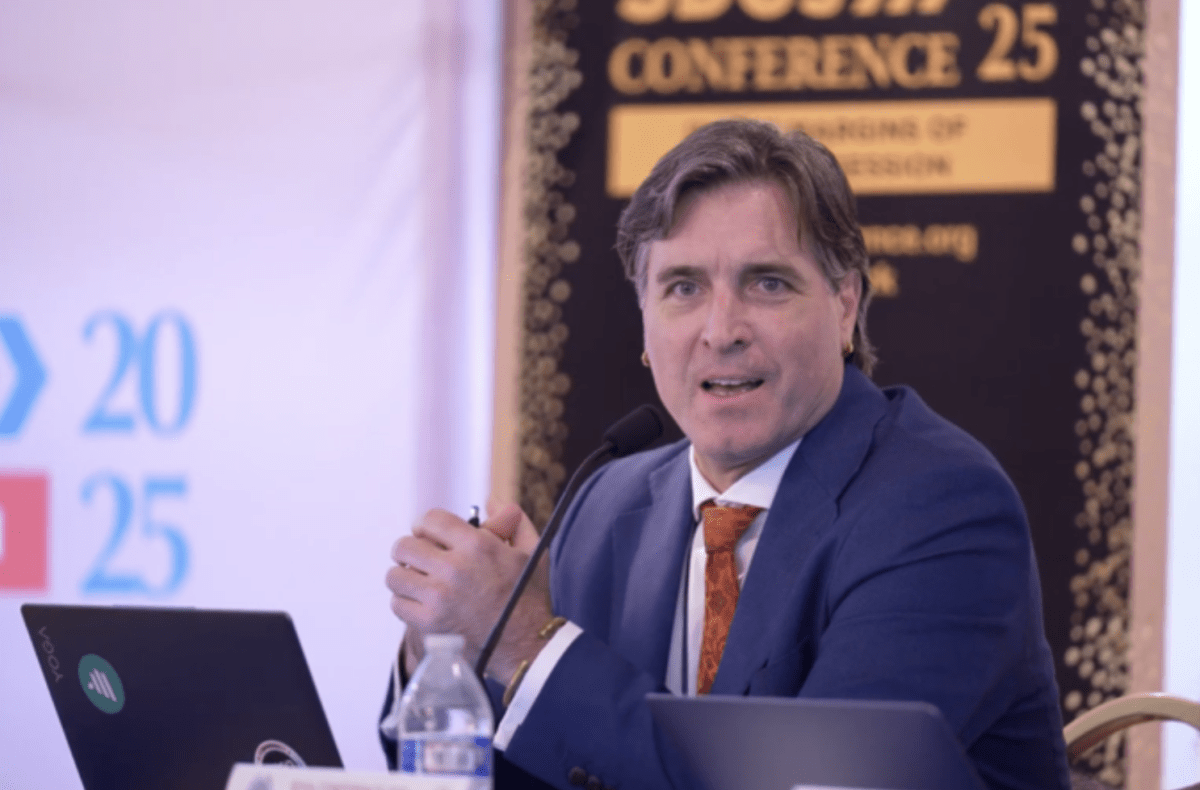 Referencing the 2022 Freedom House and V-Dem reports, Mr. James Patton noted the troubling reality that 72% of the world now lives under autocratic rule, with global democracy retreating to pre-1980s levels. He urged for vigilant constitutional design, independent judicial oversight, and pluralistic civic norms to counteract this decline and safeguard democratic systems. Mr. Patton closed by inviting the panelists to offer both diagnoses of the current moment and concrete pathways for renewal—centering the discussion on accountability, rule of law, and the restoration of trust in governance.
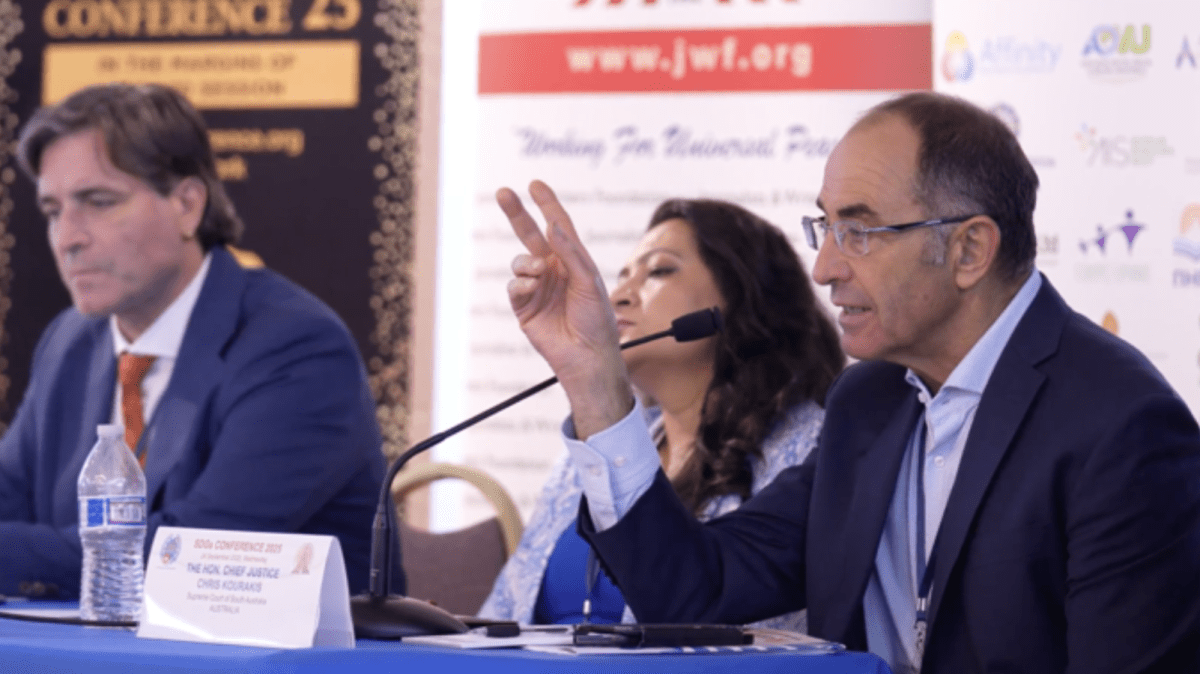 The Honorable Chief Justice Chris Kourakis from South Australia offered a wide-ranging reflection on the rule of law as a cornerstone of democratic governance, tracing its philosophical and institutional evolution from classical Athens to the modern liberal state. He began by acknowledging the fragility of democracy amid growing geopolitical tension, especially as autocratic regimes challenge the independence of the judiciary and the constitutional separation of powers. Drawing on both ancient and Enlightenment traditions, he highlighted Aristotle’s caution that governance by passion—rather than reason—endangers justice, and he underscored Montesquieu’s assertion that liberty requires clear institutional divisions between legislative, executive, and judicial functions.
Moving through English legal history, Hon. Chief Justice Kourakis emphasized how the constitutional settlement following the Glorious Revolution of 1688 marked a critical turning point in curbing monarchical interference in the judiciary. He warned that many of today’s democracias—particularly civil law jurisdictions—face renewed pressures, as evidenced by post-2010 trends in Europe and repression of judges in Turkey and Poland. These challenges, he argued, stem in part from the erosion of public trust and the politicization of judicial appointments, which threaten to weaken the very foundations of the rule of law.
Despite these alarming developments, Hon. Chief Justice Chris Kourakis remained hopeful. He stressed that judicial legitimacy must rest not on power, but on public confidence, grounded in integrity, impartiality, and accessible justice. He called on the legal profession to reaffirm its service to the public by ensuring courts remain independent, responsive, and trusted. Closing with optimism, he affirmed: “Despite the gathering clouds, I remain deeply optimistic that good people standing firm will prevail over authoritarianism.”
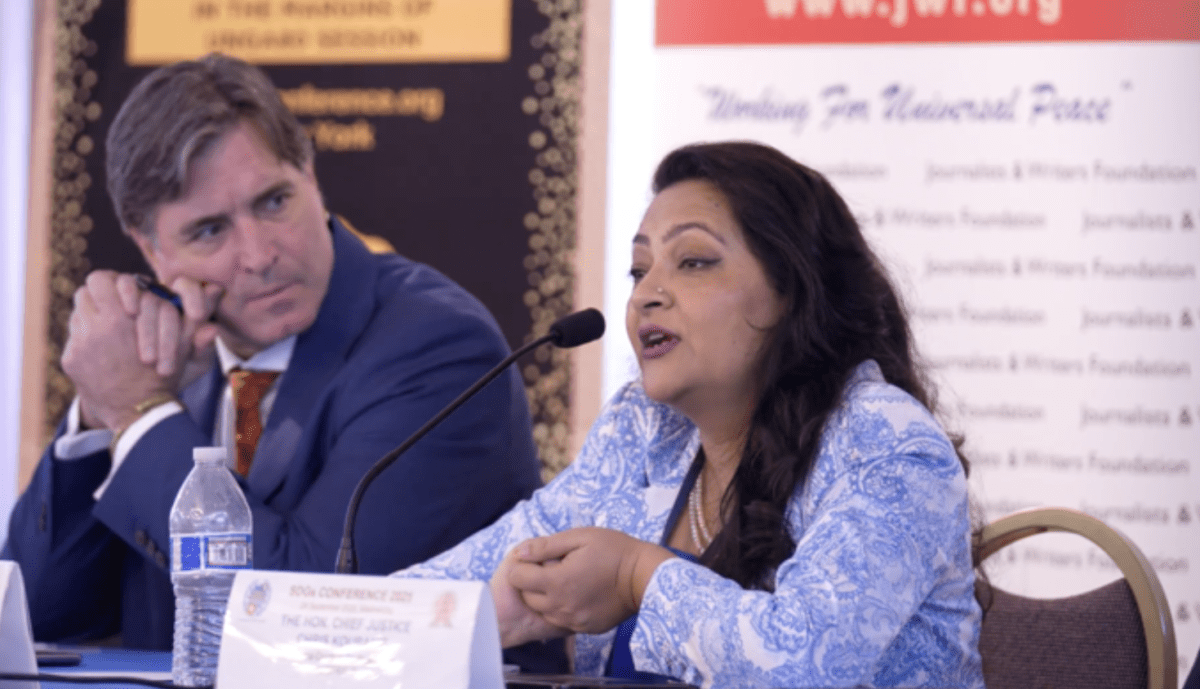 Next, Arfa Khanum Sherwani, Senior Editor of The Wire based in India, delivered a powerful address on the dual role of media as both a pillar of democracy and, increasingly, a tool of authoritarian suppression. Speaking from her experience as a journalist in India, she described the country as both the “best and worst place” to practice journalism today. Despite India’s vast media landscape, home to over 120,000 publications and 900 television channels, she warned of a deepening crisis of information. The majority of media outlets, she argued, have aligned with establishment interests, prioritizing propaganda over truth, thereby eroding democratic discourse and public trust.
Ms. Sherwani emphasized that only a small fraction of independent media persists in holding power to account, and those who do face increasing threats, censorship, and legal harassment. She cited recent court-ordered takedowns of over 130 investigative articles as examples of institutional efforts to silence dissent. She also highlighted the systematic targeting of India’s Muslim minority through inflammatory media campaigns and state-sponsored narratives, drawing attention to a growing climate of hatred, disinformation, and fear.
Calling for urgent reform, she underlined the importance of transparency, ethical journalism, and media literacy as safeguards for democracy. In an age where digital platforms are weaponized to divide, Ms. Sherwani stressed that restoring trust in media is essential not just for informing citizens, but for preserving social cohesion and democratic participation. She concluded by reminding the audience that democracy depends on credible information and that protecting the freedom and integrity of the press is fundamental to any hope for lasting peace and inclusive governance.
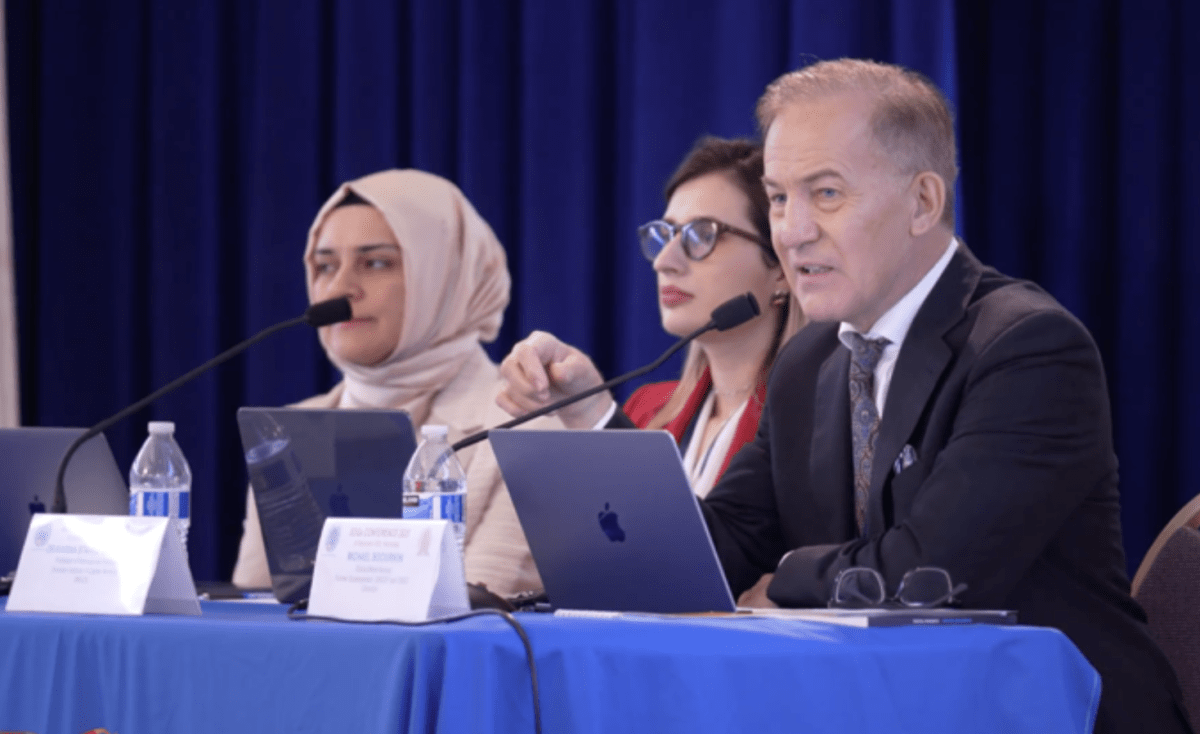 Following Arfa Khanum Sherwani`s reflections, Michael Bociurkiw, Former Spokesperson, UNICEF, OSCE and a Senior Global Analyst based in Canada took the floor. As a seasoned journalist, he offered a sobering reflection on the erosion of civic space and the fragility of democratic principles in today’s volatile geopolitical landscape. Drawing from his firsthand experience in Ukraine, he highlighted the human toll of conflict, including the psychological trauma endured by children and the everyday disruptions of life under threat. He stressed how rising authoritarianism, combined with deep budget cuts to international institutions like the UN, has forced humanitarian agencies to make stark decisions, such as choosing between delivering vaccines or feeding families, exacerbating suffering in places like Gaza and beyond.
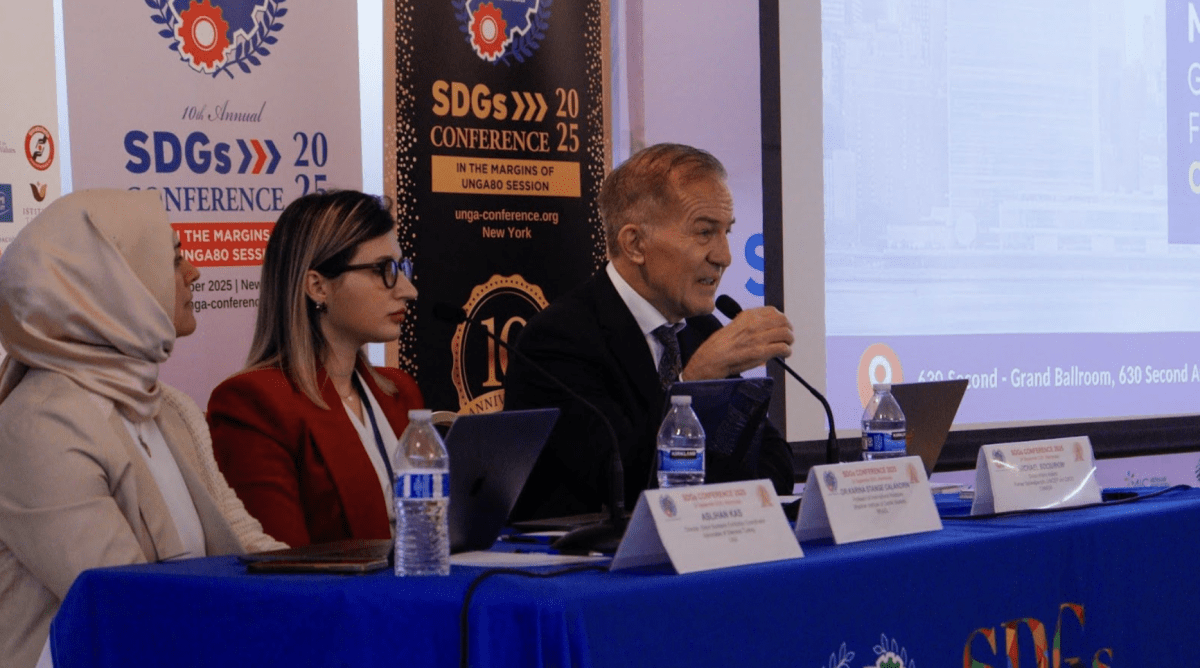
Mr. Bociurkiw emphasized the shrinking space for freedom of expression, warning that border surveillance, censorship, and retaliation against journalists are on the rise, even in countries traditionally viewed as democratic. He cautioned that public figures’ rhetoric, such as the dismissal of the press as “fake news”, has a ripple effect globally, emboldening autocratic leaders and creating dangerous environments for independent media. In this climate, he underlined the critical need to protect journalists, reminding the audience that the deliberate targeting of media workers is a war crime under international humanitarian law.
Michael Bociurkiw pointed to emerging tools of accountability, such as the use of universal jurisdiction and advanced technologies like facial recognition to identify perpetrators of war crimes. He closed by urging coordinated multilateral action to defend the rules-based international order, restore faith in global institutions, and hold violators of human rights accountable, before democratic erosion becomes irreversible.
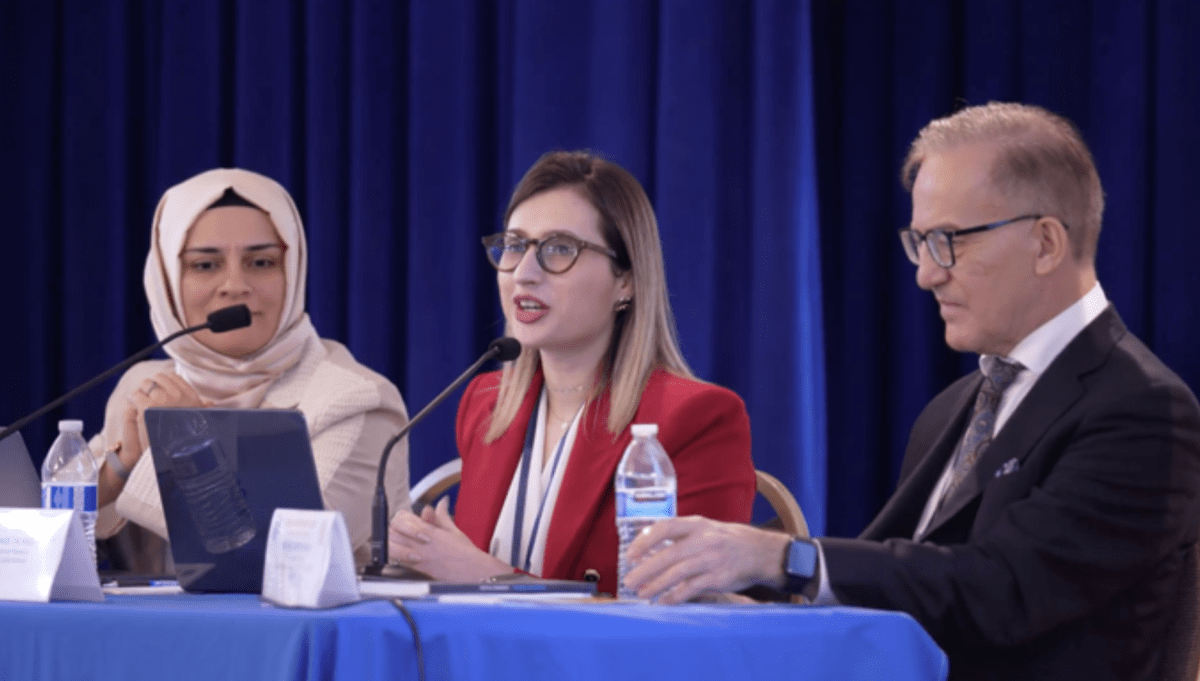 Next panelist was Dr. Karina Stange Calandrin, Professor of International Relations, Brazilian Institute of Capital Markets based in Brazil. Prof. Calandrin offered a powerful reflection on the dual role of digital technology in both empowering civic participation and accelerating democratic decline. Drawing on Brazil’s recent experience, she described how social media has amplified the voices of women, Indigenous activists, and Black youth leaders, while simultaneously becoming a vehicle for disinformation, polarization, and coordinated attacks on democratic institutions. Brazil’s 2018 and 2022 elections, she noted, became case studies in algorithm-driven manipulation, culminating in the January 8, 2023 insurrection, what she called an “algorithmic insurrection,” organized not in secrecy but in the open, through livestreams, Telegram groups, and viral videos.
Prof. Calandrin argued that digital infrastructure has become central to both democratic life and authoritarian consolidation. Messaging platforms like WhatsApp are the sole source of news for many communities in Brazil, often circulating unchecked, emotionally charged misinformation. These digital “bubbles” obstruct dialogue, deepen distrust, and distort public truth, undermining democracy at its core. She cautioned that tech companies profit from outrage, not accuracy, and have failed to moderate content or ensure transparency, especially in non-English contexts. Without collective action, she warned, nations risk becoming “digitally operationalized autocracies” where dissent is suppressed and participation reduced to performative rituals.
In response, she proposed a three-fold strategy: rights-based regulation to ensure accountability during elections; widespread digital literacy, especially for youth, to build resilience against manipulation; and the protection of independent journalism and whistleblowers to safeguard pluralism. Dr. Karina Stange Calandrin concluded with a call to reclaim digital spaces not for fear, but for shared imagination: “Democracy is not just about protecting institutions, it is about preserving dignity, fostering empathy, and building trust, even in disagreement.”
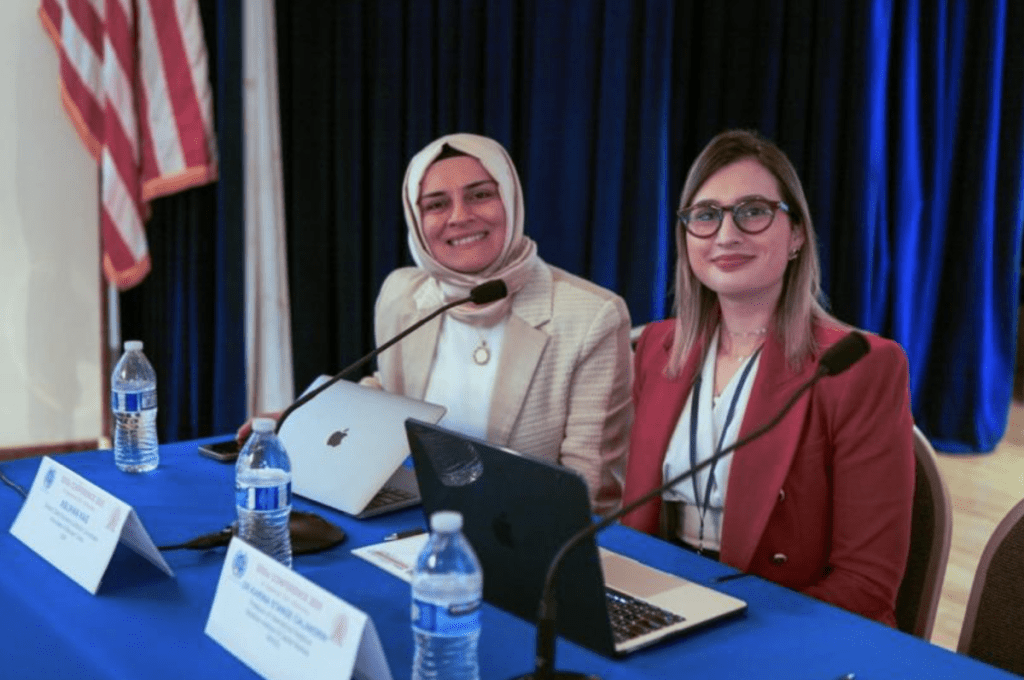
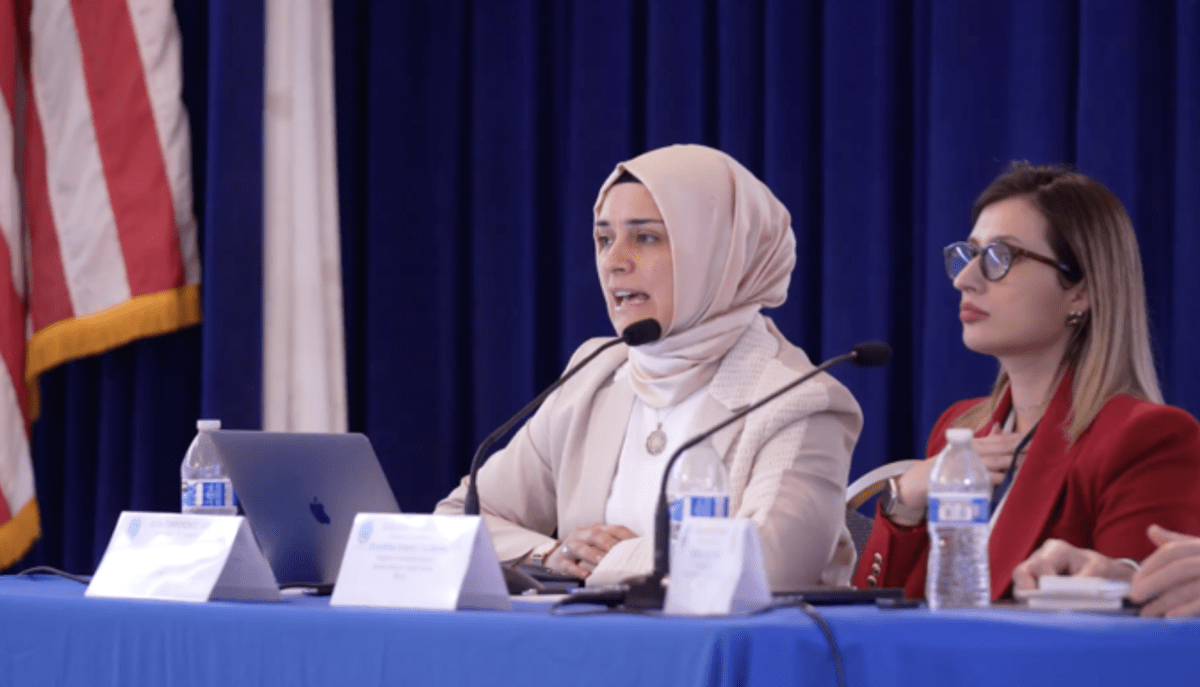 Lastly, Aslihan Kas, Director of the Silent Screams Exhibition Coordinator of the Advocates for Silence Turkey offered a powerful testimony on the challenges facing civil society under authoritarian regimes, particularly drawing on her personal experience as a human rights advocate from Turkey. She emphasized that the crackdown on dissent and civic participation in Turkey, especially following the 2013 Gezi protests and the 2016 attempted coup, has escalated dramatically. Over 2.2 million investigations have been launched against civil society members, educators, journalists, and critics, while more than 100 media outlets have been shut down and numerous journalists imprisoned. Ms. Kas highlighted that beyond the statistics are real people, faces and stories that must be heard. Many have been imprisoned, silenced, or forced into exile, and children have grown up behind bars with their mothers.
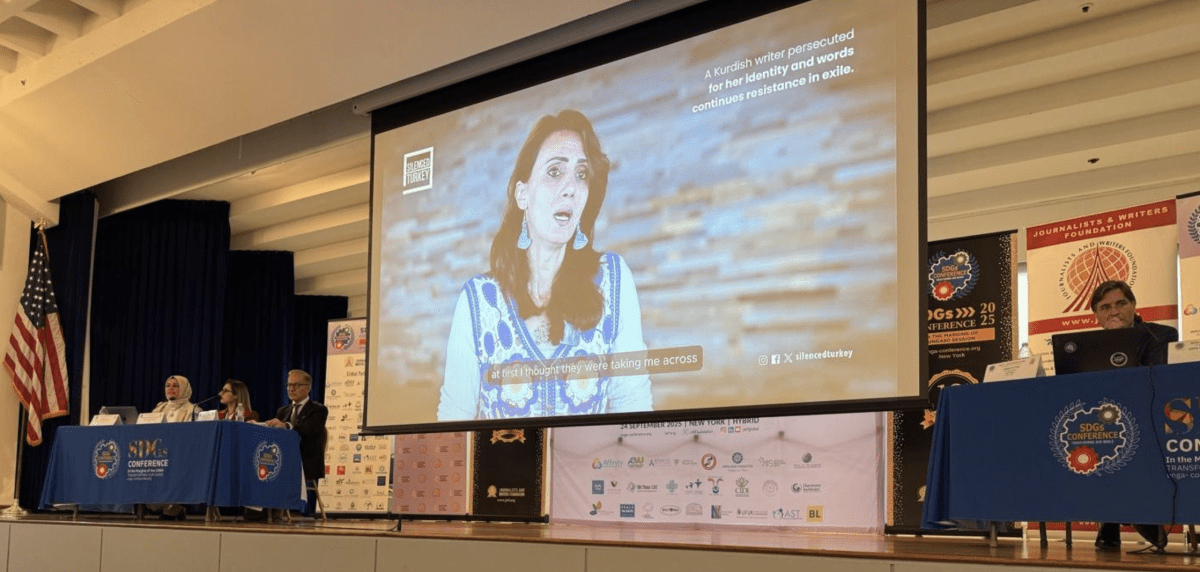
Ms. Kas shared several deeply personal and poignant examples from the Silent Screams exhibition, which she curates. The exhibition, which has traveled across North America and Europe, showcases over 500 personal items and testimonies representing the persecution of journalists, women, children, teachers, and artists. Through these examples, she underscored the cruelty of authoritarian repression and the immense courage of those resisting it. She also highlighted the stories shared in her documentaries Metamorphosis and The Other Children, which have received international recognition.
In closing, Aslihan Kas argued that the erosion of democratic space and civil liberties is not confined to Turkey, but part of a global pattern that demands international solidarity and immediate action. She called for policies grounded in human rights, accountability for violations, and protection for those who risk their lives for justice. “This is not just their story,” she reminded the audience, “but a test for all of us.” Despite hardship, Ms. Kas expressed hope that civil society will continue to fight for freedom, equality, and dignity.
The session ended with an interactive discussion session as panelists received comments and questions from the audience to be followed by a plaque ceremony by the JWF Executive Team.