
| PANEL 4: The Way Forward | ||
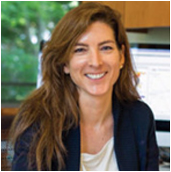 |
Dr. Lisa Goddard | |
| Director, International Research Institute for Climate and Society, Earth Institute, Columbia University | ||
|
Dr. Goddard has been involved in El Niño and climate forecasting research and operations since the mid 1990s. She has extensive experience in forecasting methodology and has published papers on El Niño, seasonal climate forecasting and verification, and probabilistic climate change projections. Currently leading the IRI’s effort on Near-Term Climate Change, Dr. Goddard oversees research and product development aimed at providing climate information at the 10-20 year horizon and how that low frequency variability and change interacts with the probabilistic risks and benefits of seasonal-to-interannual variability. Most of Dr. Goddard’s research focuses on diagnosing and extracting meaningful information from climate models and available observations. Dr. Goddard holds a Ph.D. in atmospheric and oceanic sciences from Princeton University and a B.A. in physics from the University of California at Berkeley. |
||
|
DR. LISA GODDARD, Director of the International Research Institute for Climate and Society, Earth Institute of Columbia, started her remarks by saying there is one development goal on the importance of navigating the climate change and its impacts. But those impacts are not just climate change, we had impacts from climate throughout civilization, and it’s all of these other challenges that were facing in development and humanity; growing populations, added stress on our resources, all of these things are now making climate itself a bigger challenge. And climate information can really help inform the way forward on many of these development goals. If we think about challenges that have been brought up here, such as migration, the stresses on natural resources. All these investments in development, knowing something about the risks we face from climate, what climate may bring in the next season or the next year or two are very important for our preparedness. The humanitarian community has really start to learn that response to disaster can cost many times more than preparedness, and it leads to much more loss of life as well. It can also lead to a loss of decades of investment in human and financial resources in development. It [climate] is really crosscutting and implicit in all these goals. Last year at the UN General Assembly, President Obama announced a U.S. initiative called “Climate Resilient Development”. And what that means is that now all U.S investments and activities, internationally, need to consider the impact of climate variability and change on these activities and changes. I really encourage many countries to think about this as a really explicit part of their development goals. Our institute is a part of Sustainable Development Solutions network, and that’s not an accident. Jeffrey Sacks, who is the director of Columbia Earth Institute, has been a big advocate for the SDGs, He really has furthered the entire Earth Institute, which is really made up of 3 different research institutes. It’s really furthered our position on sustainable development and getting all of this expertise to work together- whether that’s water, agriculture and food security, ecosystems and biodiversity, energy, technology, politics, economics, and the social science to think about how people confront science and new technology, and work that into their particular contexts. All of these are important, they crosscut, and I think that this thinking is so important as we go forward, this innovation and how you bring things together. And I think that’s what we’re going to be able to embrace in this panel; is innovation and how we think about the science, business, education, and the leaders in our community who can bring that forward. |
||
Dr. Lisa Goddard
H.E. Dr. Thomas Gass
| PANEL 4: The Way Forward | ||
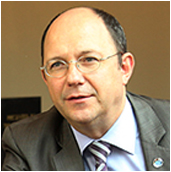 |
H.E. Dr. Thomas Gass | |
| Assistant Secretary-General, Policy Coordination and Inter-Agency Affairs, UN Department of Economic and Social Affairs | ||
|
Mr. Gass was appointed as an ASG by the Secretary-General in 2013. From 2009 to 2013, he served as Head of the Mission of Switzerland to Nepal. He also chaired the Donors of the Nepal Peace Trust Fund, the main instrument for international support to Nepal’s peace process. Before his posting to Nepal from 2004 to 2009, Mr. Gass was Head of the Economic and Development Section at the Permanent Mission of Switzerland to the UN in New York, where he represented Switzerland’s interests, in particular in the Economic and Social Council (ECOSOC), its subsidiary Commissions, the General Assembly and the Executive Boards of the major UN Funds and Programmes. During this time, Mr. Gass was the Chair of the Donor Group of the UN Global Compact. He also served as Policy and Programme Officer for the Swiss Agency for Development and Cooperation, as Deputy Resident Representative of the United Nations Development Programme (UNDP) in Guyana, and as Regional Director for Europe with the International Plant Genetic Resources Institute in Rome. |
||
|
H.E. DR. THOMAS GASS, the Assistant-Secretary General, Inter-Agency Affairs of UN DESA, started his remarks by asking the audience “Can you imagine, one day after adopting these agenda and everyone is talking about how to implement it, and everyone is really looking at himself or herself seriously to see what can be done?” From my perspective, what are the next steps? We had a real paradigm shift, and everybody uses this word, but this time I think it is used appropriately. We moved from a conception of development, which was a very North-South kind of concept. We have to understand the message that is there, that it underpins this new vision of humanity. Firstly, we need to strengthen the relationship between the leaders and the people.We have to strengthen the relationship between duty bearers and rights holders. We have to make sure that service providers, governments know how to respond to the needs of people, and that the people know how to demand, know how to request, know how to understand how the services are being provided. That is the first strategic operational consequence of this new agenda. The second one, which is just as important and in a way is the other side of a balance, is who is left behind. Asking ourselves who is left behind, because there is a very strong commitment here, that in this next 15 years, we will start reaching the furthest. We will leave no one behind, what does that mean for us operationally? What does that mean for our strategies? It means that we have to start by identifying the most vulnerable. I mean that we have to start by understanding why they’re vulnerable. Those are the two, in my perspective, the two most immediate operational consequences of his agenda; strengthening the relationship between duty bearers and rights holders and making sure that we really leave no one behind. The MDGs were about reducing poverty by half. We could choose which half, and we chose the easy half. Now we have to start by identifying the most vulnerable first. So we need to realize this is also about how everyone gets involved, and my job within the UN would be very much to look at the review process of the SDGs. Now I know there are discussions about the goals, whether they are too reductive, or whether the way to communicate them is too reductive, or whether if the people do not understand that we have a complex set of goals and targets. My opinion on this is we have to probably use both of these strategies, we need to make sure that everyone understand that there was a really important deal that struck here last weekend, and that this goal encompassed all the most important issues of life and of this planet and of economy, and there are 17 goals. But then we also need to make sure that people realize this is a new social contract between the governments and the people. Whoever speaks about a contract better read this small script and the small script here are the 169 targets. So let’s speak within countries, within organizations. Let’s look at those 169 targets and see what our contribution can be, what value we can add for any those. Some people regret that in this whole process there wasn’t more work on the definition of poverty, on extreme poverty. But let’s remember that he first time in history, we have 169 elements that define how not to leave anyone behind. |
||